
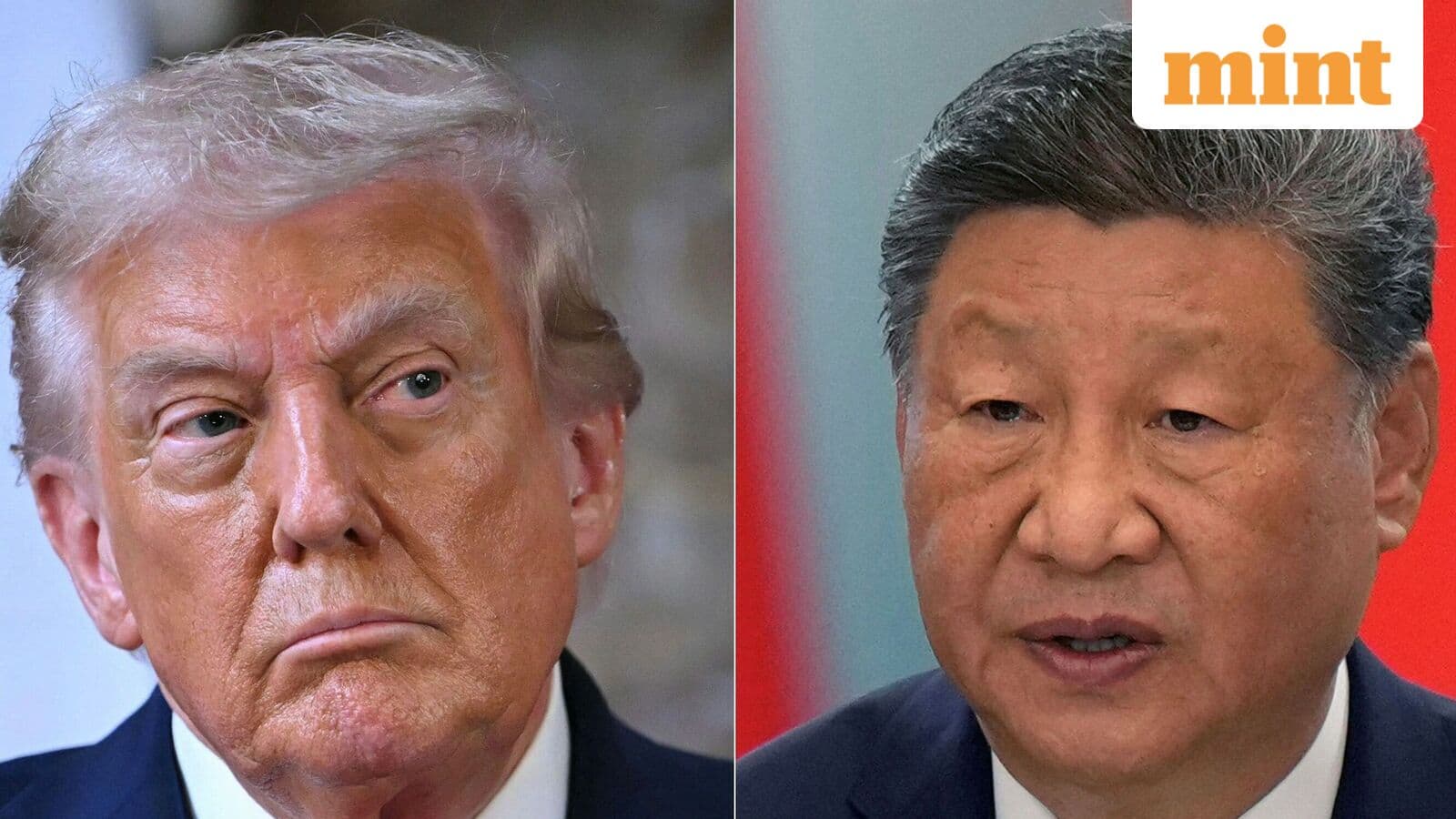
Image: Mint (Business)
Trump considers postponing his meeting with Xi Jinping amid Middle East tensions. What does this mean for U.S.-China relations? Click to learn more.
GlipzoIn a significant turn of events, President Donald Trump is considering postponing his highly anticipated meeting with Chinese President Xi Jinping, originally scheduled for late March to early April. This decision arises amid escalating tensions in the Middle East and a critical focus on the ongoing conflict, as reported by the BBC. Trump's comments at the White House indicate his commitment to overseeing U.S. military operations, suggesting that his presence is vital during this tumultuous time.
The planned meeting was to mark the second time Trump and Xi would convene since he assumed office in January 2017. Their first encounter following Trump's re-election occurred in October 2022 during the Asia-Pacific Economic Cooperation (APEC) summit in South Korea. The upcoming discussions were intended to address vital economic and political issues between the two global powers.
On Tuesday, Lin Jian, a spokesperson for China's foreign affairs, stated that discussions are ongoing between Washington and Beijing regarding the timing and logistics of Trump's visit to China. This statement came in response to rumors suggesting that the potential delay was linked to the Strait of Hormuz crisis—a strategic waterway crucial for global oil supply.
Beijing has categorically denied any connection between the postponement and events in the Strait of Hormuz, emphasizing that reports claiming otherwise are erroneous. Lin noted, “We have observed that the U.S. side has publicly clarified these false reports, indicating that they are entirely incorrect. The visit has nothing to do with the navigation issues in the Strait of Hormuz.”
The Strait of Hormuz plays a pivotal role in global oil logistics, accounting for nearly 20% of the world's oil supply. Recently, tensions escalated due to actions by Iran's Islamic Revolutionary Guard Corps (IRGC), which have led to disruptions in this vital passage. The closure of the Strait, following military actions by the U.S. and Israel against Iran, has sent shockwaves through international markets, raising fears of significant oil supply disruptions.
In a statement made on March 15, Trump hinted at the possibility of postponing the meeting should Beijing fail to assist the U.S. in reopening the Strait. However, he later clarified that his primary reason for contemplating a delay is to remain present during wartime operations. Trump remarked, “There’s no tricks to it either. It’s very simple. We’ve got a war going on. I think it’s important that I be here.”
As one of the largest consumers of Iranian energy, China has been vocal in its criticism of U.S. and Israeli military actions against Iran. The friction between these two economic giants has intensified, particularly in light of recent trade investigations initiated by the U.S. against China and several other nations over alleged unfair practices.
These developments come after a series of negotiations held in Paris, where representatives from both sides engaged in discussions surrounding investments, tariffs, and economic sanctions. According to Li Chenggang, the Chinese trade representative, both parties reached a consensus on multiple issues and expressed their intent to continue dialogue, despite the underlying tensions.
The potential delay of the Trump-Xi meeting raises concerns about the future trajectory of U.S.-China relations, particularly as both nations navigate a complex array of geopolitical challenges. The ongoing conflict in the Middle East, coupled with trade disputes, complicates the already delicate balance between cooperation and competition.
As the two largest economies in the world, the actions and decisions made by these leaders will not only impact bilateral relations but also have far-reaching effects on global markets and international stability. The world watches closely as this situation unfolds, with stakeholders hoping for a resolution that promotes peace and economic cooperation.
Looking ahead, the focus will be on how both leaders address these pressing issues. Will Trump ultimately decide to postpone the meeting, or will he find a way to balance domestic responsibilities with international diplomacy? As tensions in the Middle East continue to evolve, the implications for U.S.-China relations—and indeed global stability—remain uncertain. The upcoming weeks will be critical in determining the next steps for both nations.
In summary, the landscape of international relations is shifting, and all eyes are on the U.S. and China as they navigate these challenges amid mounting pressures from both domestic and global fronts.
Understanding the dynamics of the Trump-Xi meeting is crucial, as the outcomes could reshape not only U.S.-China relations but also influence global economic trends and geopolitical stability. The potential for cooperation or continued friction will have lasting implications for the international community.

Tensions soar as the US and Iran engage in air strikes near the Strait of Hormuz, raising concerns over global oil supply and regional stability.
BBC World
Trump's international interventions face serious stalemates. What will this mean for U.S. foreign policy? Explore the critical challenges ahead.
Indian Express
Tehran denies resignation of President Masoud Pezeshkian amid claims of IRGC influence. What does this mean for Iran's political stability? Click to learn more!
Indian Express