
Image: BBC World
El Salvador's mass trial of 486 alleged MS-13 gang members raises critical questions about justice, human rights, and the fight against crime. What’s next?
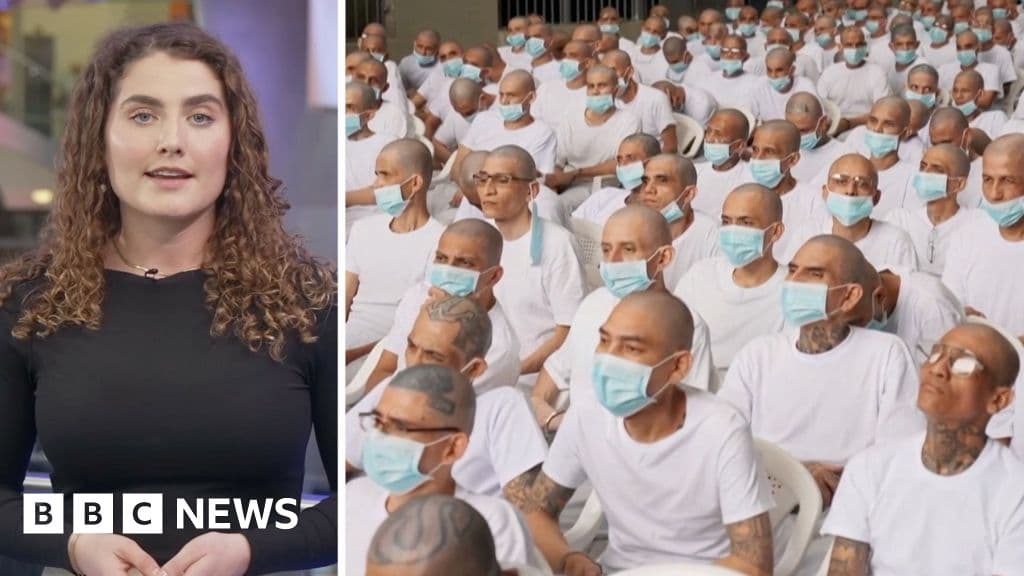
GlipzoA significant mass trial has commenced in El Salvador, involving 486 alleged members of the notorious MS-13 gang. This trial, which is being closely scrutinized, was announced by the Attorney General's office as part of a broader crackdown on gang violence in the country. The proceedings began recently, and footage released shows the defendants, many of whom are in prison, attending the trial via video link.
The accused face a staggering 47,000 charges, encompassing severe crimes such as murder, extortion, and drug trafficking. These alleged offenses occurred over a decade, from 2012 to 2022, highlighting the extensive influence and activities of the gang within El Salvador.
Despite the apparent push for justice, the mass trial has raised eyebrows among human rights organizations and United Nations experts. Critics argue that such trials compromise the right to defense and the presumption of innocence for the detainees. The UN has emphasized that mass judicial processes often lead to systematic violations of legal rights, a situation that could tarnish the integrity of the judicial system in El Salvador.
The Attorney General's office, however, insists that they possess compelling evidence against the accused, which they believe will enable them to secure maximum penalties for those found guilty. This bold stance reflects the government's commitment to confronting gang violence that has plagued the nation for years.
El Salvador has been grappling with rampant gang violence for decades, primarily attributed to MS-13 and its rival, Barrio 18. These gangs have been involved in various criminal activities that have led to an alarming rate of homicides and societal unrest. The government's crackdown on gang members aims to restore safety and order, but the method of mass trials has drawn both local and international criticism.
Recent years have seen a significant rise in arrests and detentions of suspected gang members, with the government's tough-on-crime stance manifesting in various forms, including the implementation of emergency measures that allow for faster trials and increased police powers.
As the trial unfolds, the world watches closely to see how the justice system in El Salvador navigates this complex situation. The outcome will not only affect the lives of the 486 defendants but also set a precedent for how the country handles gang-related crimes in the future.
The ramifications of mass trials extend beyond the courtroom. They touch upon issues of public safety, legal integrity, and human rights. As El Salvador attempts to stabilize its security landscape, the balance between enforcing law and order and respecting human rights will be a crucial theme in the discourse surrounding this mass trial.
This mass trial not only reflects El Salvador's struggle against gang violence but also raises fundamental questions about the fairness of judicial processes in the face of widespread crime. The international community's response to these trials will likely influence future policies and approaches taken by governments facing similar issues.
As this trial progresses, it will be important to observe how it impacts not only the accused but also the broader societal view on crime, punishment, and justice in El Salvador. The interplay between security measures and human rights will shape the future of the nation’s governance and its relationship with the international community.
In conclusion, the world is watching El Salvador as it navigates this critical moment in its legal and social history. The outcomes of these proceedings may not only redefine the country's approach to gang violence but also impact its global standing as a nation committed to justice and human rights.

Tensions soar as the US and Iran engage in air strikes near the Strait of Hormuz, raising concerns over global oil supply and regional stability.
BBC World
Trump's international interventions face serious stalemates. What will this mean for U.S. foreign policy? Explore the critical challenges ahead.
Indian Express
Tehran denies resignation of President Masoud Pezeshkian amid claims of IRGC influence. What does this mean for Iran's political stability? Click to learn more!
Indian Express