
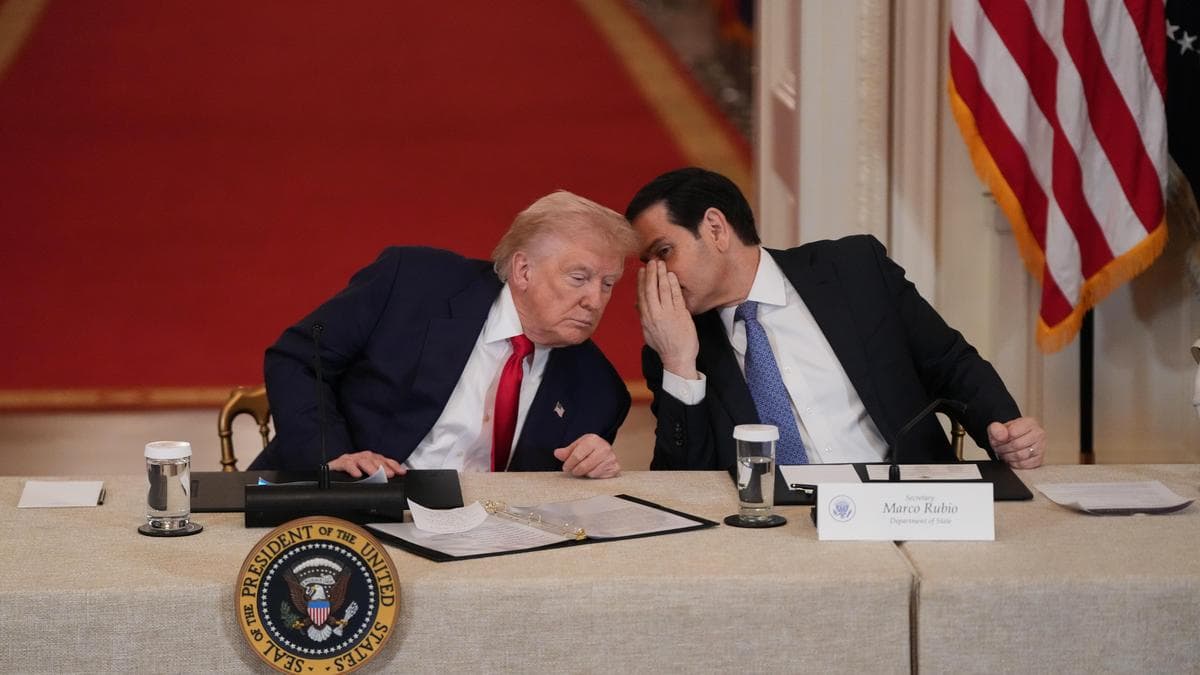
Image: The Hindu
Trump and Rubio push for leadership change in Cuba as the island faces a critical economic crisis exacerbated by recent U.S. sanctions. What’s next?
GlipzoOn March 17, 2026, U.S. President Donald Trump announced a series of actions aimed at Cuba’s socialist regime, promising that significant changes are on the horizon as the island grapples with a deepening economic crisis. This announcement follows Trump’s recent sanctions on Venezuela, which included halting crucial oil exports to Cuba, triggering another nationwide blackout for the beleaguered nation.
During a discussion with Secretary of State Marco Rubio, Trump emphasized the dire state of affairs in Cuba, stating, "Cuba right now is in very bad shape. And we'll be doing something with Cuba very soon." The urgency of the situation reflects the U.S. administration’s strategic interest in expanding its influence over the island, which has long been a point of contention between the two nations.
This latest push for change in Cuba comes on the heels of significant military actions taken by the Trump administration, including a raid that resulted in the capture of former Venezuelan President Nicolás Maduro. These events have raised expectations about what the U.S. might pursue next in its foreign policy, particularly concerning Cuba.
According to a U.S. official familiar with the negotiations between Washington and Havana, the Trump administration is pushing for the resignation of current Cuban President Miguel Díaz-Canel. However, there is no clarity on who might be positioned to take over leadership in the event of such a transition. Many Cubans view Díaz-Canel as a figurehead, with real power still held by revolutionary leader Raúl Castro and his family.
As the situation unfolds, experts are closely monitoring developments. Michael Bustamante, a Cuba expert and associate professor of history at the University of Miami, expressed skepticism about the end game for both the U.S. and Cuban administrations, stating, "Some pieces of this story as they're trickling out, don't add up to me. I can't quite figure out what the end game is here for either side."
Amidst the political turmoil, Cuba's infrastructure is visibly deteriorating. Following the blackout, some electricity was slowly being restored to hospitals and homes, but officials warned of potential further failures in the already crumbling power network. The government attributes its economic struggles to ongoing U.S. sanctions, which they argue exacerbate the energy crisis.
Rubio, who has Cuban heritage, openly criticized the Cuban economy, asserting, "They can't fix it. The island has an economy that doesn't work in a political and governmental system."
While a Cuban official recently suggested a willingness to engage in trade with U.S. companies, skeptics point out that such promises have been made in the past without substantial follow-through. Rubio stated, "They have to change dramatically. What they announced yesterday is not dramatic enough. It's not going to fix it."
In tandem with economic sanctions, the Trump administration is demanding the release of political prisoners in Cuba and advocating for political and economic reforms as prerequisites for lifting sanctions. Furthermore, Trump has floated the idea of a "friendly takeover" of Cuba, hinting at the possibility of a more favorable regime to U.S. interests.
As Cuba continues to wrestle with its power crisis, the human toll is increasingly evident. The island produces only 40% of its petroleum needs and is struggling to meet the energy demands of its population. The Ministry of Energy and Mines reported that power was being restored in several regions, including the town of Pinar del Río and the province of Holguín, with some systems beginning to operate again.
However, the damage has already been done. Residents in the capital, Havana, faced immense challenges, with only 5% of the electrical grid restored by late Monday, affecting around 42,000 customers. The instability has caused food shortages and widespread despair among the population.
Pedro Rámos, a 75-year-old retired mechanic from Old Havana, exemplifies the struggles many face. He shared his attempts to salvage food during the power outages, saying, "I want to see if we can rescue some food." Stories like Rámos' highlight the critical human aspect of the ongoing crisis, underscoring the urgent need for substantive change in Cuba.
As the U.S. administration intensifies its focus on Cuba, all eyes will be on the upcoming actions and reactions from the Cuban government. The situation remains fluid, and it is essential to consider the implications for both the Cuban people and U.S. foreign policy. The coming weeks may reveal whether the Trump administration’s strategies will yield the desired results or further entrench the existing challenges.
With ongoing negotiations, economic sanctions, and the call for leadership change, the international community will be closely watching how this situation unfolds. Many are left wondering: will Cuba's leadership be compelled to reform, or will the status quo prevail amidst increasing pressure from the U.S.?

Tensions soar as the US and Iran engage in air strikes near the Strait of Hormuz, raising concerns over global oil supply and regional stability.
BBC World
Trump's international interventions face serious stalemates. What will this mean for U.S. foreign policy? Explore the critical challenges ahead.
Indian Express
Tehran denies resignation of President Masoud Pezeshkian amid claims of IRGC influence. What does this mean for Iran's political stability? Click to learn more!
Indian Express