
Image: BBC World
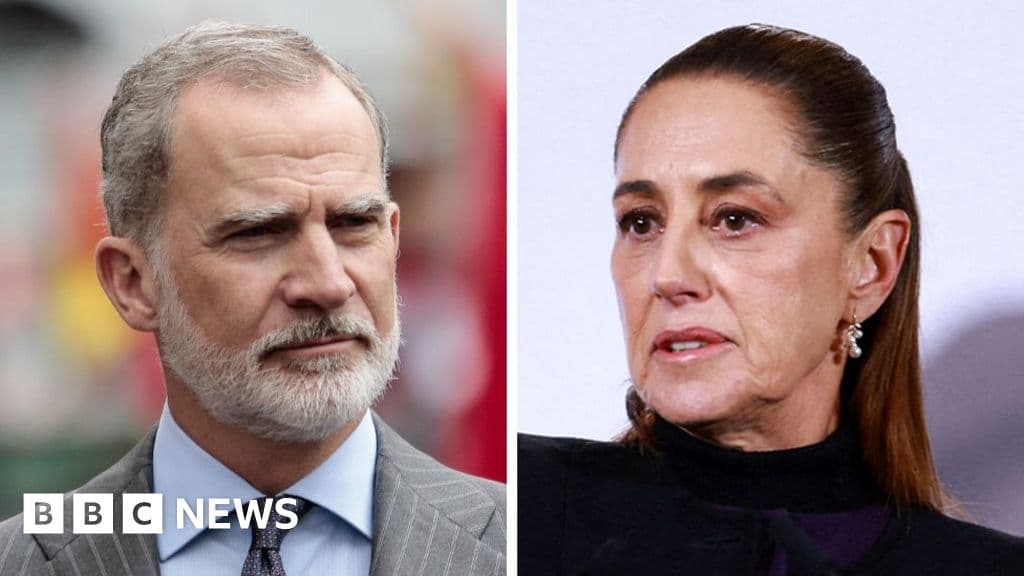
In a significant gesture aimed at mending relations between Spain and Mexico, King Felipe VI of Spain recently acknowledged the abuses committed during the Spanish conquest of Mexico. This acknowledgment has reignited a long-standing debate regarding the impact of colonialism on indigenous populations. The king's comments, made during a visit to an exhibition focused on indigenous women at the National Archaeological Museum in Madrid, have been both welcomed and criticized, reflecting the complex nature of historical narratives surrounding colonization.
King Felipe stated, "There are things that, when we study them, with our present-day criteria, our values, obviously cannot make us feel proud." This candid admission marks a pivotal moment, as it is the first time a reigning Spanish monarch has publicly recognized the harmful effects of colonization on indigenous peoples. His words came in the presence of Quirino Ordaz, Mexico's ambassador to Spain, emphasizing the diplomatic significance of the occasion.
The arrival of Spaniards in the Americas during the late 15th century led to the widespread dissemination of Christianity and the Spanish language, forever altering the cultural landscape of the continent. However, this period also witnessed the decimation of countless indigenous communities due to military conquests and the spread of diseases brought by the Europeans. The fall of Tenochtitlán in 1521, led by Hernán Cortés, marked a crucial turning point in this dark chapter of history.
In recent years, the relationship between Spain and Mexico has been strained over the legacy of these historical events. In 2019, former Mexican President Andrés Manuel López Obrador demanded an official apology from Spain for the injustices faced by indigenous people during the conquest. Fast forward to 2024, and the current president, Claudia Sheinbaum, notably did not extend an invitation to King Felipe for her inauguration, indicating ongoing diplomatic tensions. Nonetheless, Sheinbaum acknowledged the king's recent comments as a positive step forward, stating, "It is a gesture of reconciliation by the king in terms of acknowledging excesses and exterminations that happened during the Spaniards' arrival."
The king's acknowledgment has drawn a mixed response from political leaders. While Sheinbaum welcomed the remarks, urging further dialogue on the subject, the Spanish political right expressed caution. Alberto Núñez Feijóo, leader of the conservative People's Party (PP), cautioned against interpreting historical events through a contemporary lens, describing such views as "crazy." He emphasized pride in Spain's legacy, arguing that the cultural and linguistic contributions of Spain to the New World should not be overshadowed by the darker aspects of its history.
In contrast, Elma Saiz, a minister in Spain’s Socialist-led government, fully endorsed King Felipe's statements, suggesting that they challenge those who deny historical realities. The far-right Vox party also weighed in, characterizing the conquest as the

Tensions soar as the US and Iran engage in air strikes near the Strait of Hormuz, raising concerns over global oil supply and regional stability.
BBC World
Trump's international interventions face serious stalemates. What will this mean for U.S. foreign policy? Explore the critical challenges ahead.
Indian Express
Tehran denies resignation of President Masoud Pezeshkian amid claims of IRGC influence. What does this mean for Iran's political stability? Click to learn more!
Indian Express