
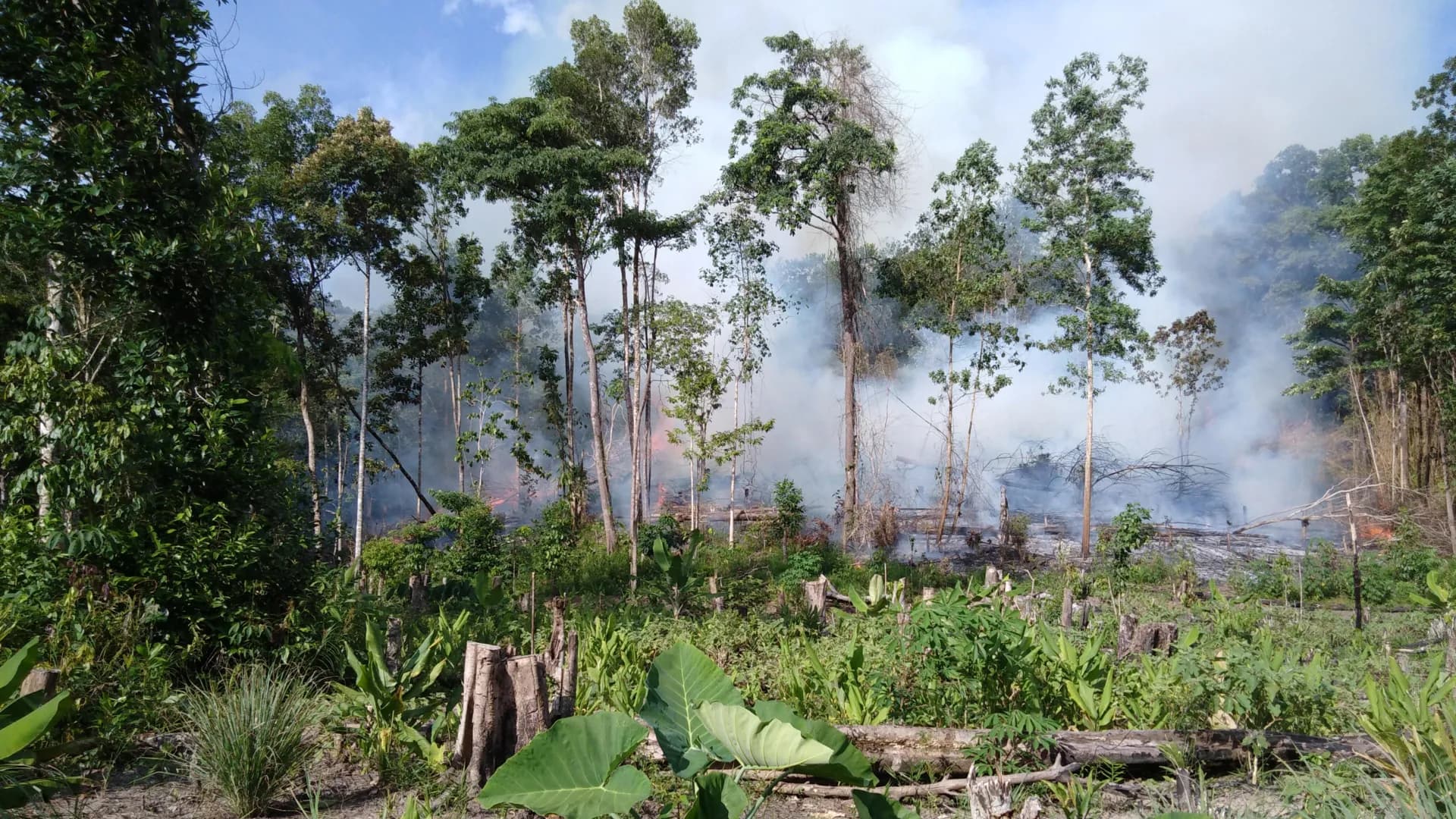
Image: Science Daily
Discover how recent research reveals a shocking spike in wildfires in tropical peatlands, marking a significant shift from 2000 years of fire patterns.
GlipzoRecent research has unveiled a dramatic increase in wildfires within tropical peatlands, reaching a peak not seen in 2,000 years. This alarming trend, primarily observed during the 20th century, marks a significant shift from historical wildfire patterns, raising urgent questions about the impact on global carbon emissions and climate change.
Peatlands, which are vital ecosystems, serve as massive reservoirs of carbon, holding more carbon than all the world's forests combined. When these areas ignite, they can emit substantial amounts of stored carbon into the atmosphere, exacerbating the ongoing climate crisis. While wildfires have surged across tropical regions recently, the understanding of how these fires have evolved over extended periods remains limited.
To gain insights into the fire history of tropical peatlands, researchers have conducted a thorough analysis of charcoal remnants found in peat deposits throughout regions such as Central and South America, Africa, Southeast Asia, and Australasia. These preserved records have enabled scientists to reconstruct wildfire activity extending back over 2,000 years.
The results reveal a strong correlation between peatland fires and climate conditions, particularly highlighting the influence of prolonged and intense droughts. This historical context is crucial for understanding the recent spike in wildfire occurrences.
The findings from the study indicate that, for more than 1,000 years, wildfire activity in tropical peatlands experienced a significant decline. This trend aligned with fluctuations in global temperatures and other natural climatic factors. However, the landscape dramatically changed in the 20th century when wildfire activity began to rise sharply.
This reversal in trend suggests that human activities have significantly contributed to the uptick in wildfires. Researchers noted marked differences in fire activity between various regions, pointing to anthropogenic factors as the primary driver of this alarming trend.
The surge in wildfires has been particularly notable in Southeast Asia and parts of Australasia. In these areas, human actions such as: - Draining peatlands for agricultural use - Clearing forests for land development - Transforming natural landscapes into urban areas
These activities have rendered peat soils increasingly susceptible to ignition. Conversely, more isolated peatland regions in South America and Africa did not experience the same level of wildfire increase. However, Dr. Yuwan Wang, the study's lead author, warns that as population growth and agricultural expansion continue, these regions might also face escalating wildfire risks in the future.
Dr. Wang emphasizes the urgent need for conservation efforts to safeguard these carbon-rich ecosystems. "To avoid large carbon emissions that further contribute to global warming, we urgently need to protect these carbon-dense ecosystems," he stated during the study's release.
He advocates for a comprehensive approach, stating that "a reduction in tropical peatland burning could be achieved through peatland conservation and promoting sustainable resource management and ecosystem restoration." Such initiatives require collaboration across various sectors and must be scaled appropriately to have a meaningful impact.
The study, titled "Unprecedented burning in tropical peatlands during the 20th century compared to the previous two millennia," has been published in Global Change Biology. Its findings underscore the urgent need for action to mitigate the risks associated with increased wildfire activity in these vital regions.
As the world grapples with the consequences of climate change, the fate of tropical peatlands hangs in the balance. Awareness and proactive measures are essential to prevent further degradation of these ecosystems, which play a crucial role in regulating global carbon levels.
Moving forward, the focus must be on the implementation of policies that prioritize the protection of peatlands. Monitoring and research will continue to play a critical role in understanding fire dynamics in these ecosystems. As we witness the effects of climate change unfold, the stakeholders must engage in sustainable practices that not only conserve these regions but also promote their restoration.
Continued studies will be vital in tracking the health of peatlands globally and addressing the factors that contribute to their vulnerability to wildfires. The future of our planet and its climate may very well depend on the steps taken today to protect these critical carbon sinks.
The escalating wildfires in tropical peatlands not only threaten biodiversity but also accelerate climate change. By understanding the historical context and current trends, we can better address the environmental challenges we face and work towards effective solutions that benefit both the planet and humanity.

Discover how the brain protein Menin could be the key to halting cognitive decline with new research that uncovers its vital role in aging.
Indian Express
A new 'killer fungus' discovered in the UK targets invasive heath-star moss, offering hope for restoring native habitats. Will it turn the tide against invasives?
BBC Science
A Blue Origin rocket exploded during a test in Florida, prompting investigations. All personnel are safe. What does this mean for the future of space travel?
BBC Business