
Image: BBC Science
Discover how conservationists have revived the rare pine hoverfly in Cairngorms National Park, potentially outnumbering local humans. Learn more!
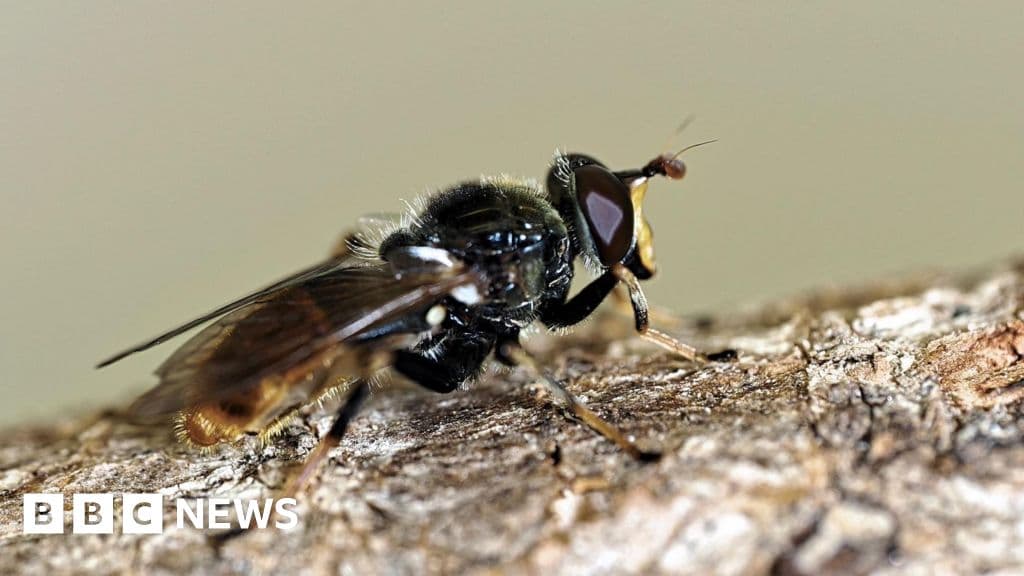
GlipzoA remarkable conservation success story is unfolding in the Cairngorms National Park, where the population of a critically endangered insect, the pine hoverfly, is on the rise. Conservationists report that this rare fly, which was once teetering on the brink of extinction, could now potentially outnumber the local human population. Just seven years ago, only 50 pine hoverflies were believed to exist within a single woodland area, but thanks to dedicated efforts, their numbers have drastically increased.
The pine hoverfly is not just any insect; it is a vital part of the ecosystem in the Cairngorms, the last refuge for this species in the UK. The conservation initiative began in 2018, driven by the Royal Zoological Society of Scotland (RZSS) in collaboration with the Rare Invertebrates in the Cairngorms (RIC) project and local landowners. Their innovative approach has involved breeding the flies in unconventional containers, such as jam jars and hummus pots, to simulate the natural conditions necessary for the larvae's survival.
The breeding program has proven to be a game changer. Conservationists have successfully released 30,000 pine hoverflies back into their natural habitat, a figure that astonishingly surpasses the total human population residing in the park. This includes substantial releases of nearly 7,000 larvae in March and over 3,000 in October 2021. The program's objective is to bolster the wild population and ensure the species' long-term survival.
The breeding-for-release center at the Highland Wildlife Park, located in Kincraig near Aviemore, has become a hub for these efforts. Here, the larvae are nurtured under carefully controlled conditions, with a focus on replicating the unique environment they require.
One of the critical challenges of the pine hoverfly's conservation is replicating the specific habitat needed for their larvae to thrive. In the wild, these larvae dwell in decayed holes found in old pine trees, feeding on a nutrient-rich mix of bacteria. To recreate this essential environment in captivity, the conservation team has ingeniously utilized jam jars filled with a concoction of pine wood chippings and rainwater.
The temperature and humidity of these breeding jars are meticulously monitored, and damp moss is used to seal the jars, ensuring the larvae develop in conditions as close to their natural habitat as possible. Conservationists believe that this innovative method has played a vital role in the successful reintroduction of the species.
The successful sighting of an adult pine hoverfly in the wild in 2022 marked a significant milestone, as it was the first instance in a decade. Georgina Lindsay, field conservation manager at RZSS, emphasized the importance of this reintroduction project, stating, "This milestone is emblematic of so much hard work and dedication, and a tribute to collaborative work."
The RIC project, under the management of NatureScot and supported by the Scottish government's Nature Restoration Fund, aims to expand knowledge about threatened invertebrate species in the Cairngorms. By working closely with landowners, the RIC strives to protect and enhance the habitats crucial for the survival of these species, thereby promoting biodiversity in the region.
The resurgence of the pine hoverfly in the Cairngorms is not just a localized success story; it serves as a beacon of hope for conservation efforts worldwide. The project highlights the importance of collaboration between organizations, local communities, and government bodies in preserving biodiversity. The innovative breeding techniques and habitat restoration efforts employed here can be models for similar projects aimed at saving other endangered species.
As conservationists look to the future, the focus will be on monitoring the released populations and ensuring that the necessary conditions for their survival remain intact. The ongoing work of the RIC and RZSS will be crucial in understanding the broader implications of their findings on invertebrate conservation in different ecosystems.
As the pine hoverfly continues to establish itself in the Cairngorms, stakeholders will keep a close eye on the population dynamics and health of these insects. Future initiatives may involve further habitat restoration, research on the ecological role of the pine hoverfly, and strategies to mitigate any potential threats to their newly established populations.
In conclusion, the story of the pine hoverfly’s recovery is a testament to the power of dedicated conservation work. It serves as a reminder that with innovative practices and community involvement, we can indeed turn the tide for endangered species and contribute to the preservation of our planet’s biodiversity. The Cairngorms National Park stands as a living example of what can be achieved when we come together for a cause that transcends individual interests and focuses on the health of our environment.

Discover how the brain protein Menin could be the key to halting cognitive decline with new research that uncovers its vital role in aging.
Indian Express
A new 'killer fungus' discovered in the UK targets invasive heath-star moss, offering hope for restoring native habitats. Will it turn the tide against invasives?
BBC Science
A Blue Origin rocket exploded during a test in Florida, prompting investigations. All personnel are safe. What does this mean for the future of space travel?
BBC Business