Glipzo
WorldTechnologyBusinessSportsEntertainmentScienceHealthPolitics
Glipzo
WorldTechnologyBusinessSportsEntertainmentScienceHealthPolitics
  1. Home
  2. /
  3. Science
  4. /
  5. Shocking Divide: Uganda's Chimpanzee Population in 'Civil War'
Shocking Divide: Uganda's Chimpanzee Population in 'Civil War'

Image: BBC World

Science
Saturday, April 11, 20264 min read

Shocking Divide: Uganda's Chimpanzee Population in 'Civil War'

Discover the shocking divide among Uganda's chimpanzees as researchers reveal a violent 'civil war' impacting their social structure and survival.

Glipzo News Desk|Source: BBC World
Share
Glipzo

Key Highlights

  • Uganda's Ngogo chimpanzees are in a shocking civil war.
  • 24 killings recorded since 2018, including 17 infants.
  • The study highlights the role of group dynamics in conflict.
  • Chimpanzees' violence prompts reevaluation of human war origins.
  • Researchers urge learning from primate behavior to prevent human conflict.

In this article

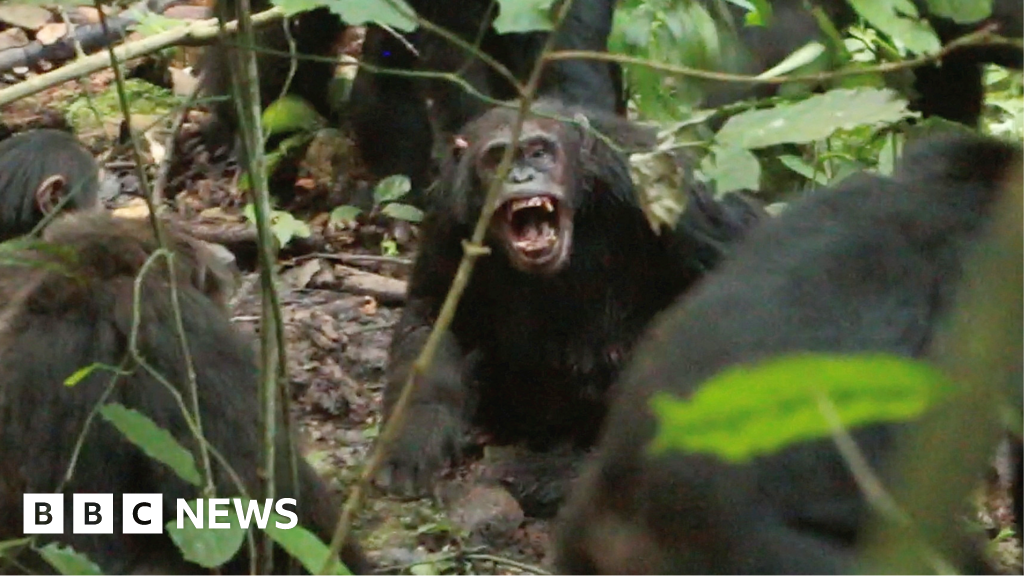
  • Chimpanzees Engage in Unprecedented Conflict in Uganda The **largest group of wild chimpanzees** in the world, residing in **Kibale National Park** in Uganda, has been embroiled in a fierce **'civil war'** for the past eight years. This alarming development has left researchers puzzled, as the once peaceful community of **Ngogo chimpanzees** has fractured into hostile factions. Since the conflict erupted in 2018, scientists have documented **24 killings**, of which **17 victims were infants**.
  • The Evolution of Hostility Among the Ngogo Chimpanzees Historically, the nearly **200 Ngogo chimpanzees** lived in a unified community, divided only into two subgroups known as **Western** and **Central**. For decades, these groups coexisted harmoniously. However, a noticeable shift began in **June 2015**, when a confrontation resulted in the Western group fleeing, chased by their Central counterparts. This marked the beginning of a new era of hostility.
  • The Brutal Reality: Death Toll and Contributing Factors In the aftermath of the split, at least **seven adult males** and **17 infants** from the Central group were killed in targeted assaults, but researchers believe the actual death toll could be higher. The study identifies several contributing factors to this violence, notably: - **Group Size:** Larger groups may compete more fiercely for resources. - **Resource Competition:** Scarcity can exacerbate tensions between groups. - **Male-Male Competition:** This may drive aggressive behavior related to reproduction.
  • Insights Into Human Conflict from Chimpanzee Behavior The implications of the Ngogo chimpanzees' conflict extend beyond the animal kingdom. Sandel suggests that if chimpanzees, genetically one of humanity's closest relatives, can engage in violence based on group affiliation—without the influence of human constructs like religion or politics—then **relational dynamics** might play a more significant role in human conflicts than previously understood.
  • Why This Research Matters This groundbreaking study raises critical questions about the social structures of chimpanzees and their relevance to understanding human behavior. As researchers continue to study the Ngogo chimpanzees, several key takeaways emerge: - The importance of **social cohesion** in preventing violence. - The potential consequences of **group polarization** on interpersonal relationships. - The necessity for humans to reflect on their own social conflicts through the lens of primate behavior.
  • Looking Ahead: Future Research Directions As the Ngogo chimpanzees continue to navigate their conflict, future research will likely focus on the long-term impacts of these violent encounters on both the surviving members of each group and the broader ecosystem. Scientists may investigate how these divisions affect mating patterns, resource allocation, and overall community dynamics.

Chimpanzees Engage in Unprecedented Conflict in Uganda The **largest group of wild chimpanzees** in the world, residing in **Kibale National Park** in Uganda, has been embroiled in a fierce **'civil war'** for the past eight years. This alarming development has left researchers puzzled, as the once peaceful community of **Ngogo chimpanzees** has fractured into hostile factions. Since the conflict erupted in 2018, scientists have documented **24 killings**, of which **17 victims were infants**.

Lead researcher Aaron Sandel, an anthropologist from the University of Texas, is at the forefront of this critical study, recently published in the prestigious journal Science. Sandel and his colleagues are now investigating how this strife among chimpanzees may provide insights into the origins of early human conflict. He notes, “These were chimps that would hold hands. Now they’re trying to kill each other.”

The Evolution of Hostility Among the Ngogo Chimpanzees Historically, the nearly **200 Ngogo chimpanzees** lived in a unified community, divided only into two subgroups known as **Western** and **Central**. For decades, these groups coexisted harmoniously. However, a noticeable shift began in **June 2015**, when a confrontation resulted in the Western group fleeing, chased by their Central counterparts. This marked the beginning of a new era of hostility.

Prior to this incident, chimpanzees exhibited typical social behaviors: post-conflict, they would often groom one another and maintain cooperative interactions. In contrast, after the 2015 clash, a significant six-week avoidance period emerged, during which encounters became less frequent and increasingly aggressive. As tensions escalated, by 2018, the Western group began launching attacks on Central chimpanzees, leading to the tragic loss of life.

The Brutal Reality: Death Toll and Contributing Factors In the aftermath of the split, at least **seven adult males** and **17 infants** from the Central group were killed in targeted assaults, but researchers believe the actual death toll could be higher. The study identifies several contributing factors to this violence, notably: - **Group Size:** Larger groups may compete more fiercely for resources. - **Resource Competition:** Scarcity can exacerbate tensions between groups. - **Male-Male Competition:** This may drive aggressive behavior related to reproduction.

Sandel and his team argue that these elements are likely exacerbated by deeper relational dynamics that reflect the chimpanzees' changing social structures. The researchers emphasize the need to reconsider our understanding of human conflict through the lens of these primate behaviors.

Insights Into Human Conflict from Chimpanzee Behavior The implications of the Ngogo chimpanzees' conflict extend beyond the animal kingdom. Sandel suggests that if chimpanzees, genetically one of humanity's closest relatives, can engage in violence based on group affiliation—without the influence of human constructs like religion or politics—then **relational dynamics** might play a more significant role in human conflicts than previously understood.

James Brooks, a researcher at the German Primate Center, echoes this sentiment, warning that the divisions seen in chimpanzees serve as a reminder of the potential dangers that can arise from group polarization. In his commentary within the Science journal, he urges humanity to learn from the behaviors of other species, stressing that while our evolutionary history informs our behavior, it does not dictate our future.

Why This Research Matters This groundbreaking study raises critical questions about the social structures of chimpanzees and their relevance to understanding human behavior. As researchers continue to study the Ngogo chimpanzees, several key takeaways emerge: - The importance of **social cohesion** in preventing violence. - The potential consequences of **group polarization** on interpersonal relationships. - The necessity for humans to reflect on their own social conflicts through the lens of primate behavior.

Looking Ahead: Future Research Directions As the Ngogo chimpanzees continue to navigate their conflict, future research will likely focus on the long-term impacts of these violent encounters on both the surviving members of each group and the broader ecosystem. Scientists may investigate how these divisions affect mating patterns, resource allocation, and overall community dynamics.

Understanding the underlying causes of this conflict could also inform conservation strategies aimed at preserving not only chimpanzee populations but also the delicate balance of their habitats. As researchers observe these primates in their natural environment, the lessons learned may ultimately contribute to broader discussions on conflict resolution and social unity within human societies.

In conclusion, the Ngogo chimpanzees' plight serves as a poignant reminder of the fragility of social bonds, whether in the animal kingdom or among humans. As we strive to learn from the past, we must remain vigilant in addressing the divisions that threaten our own communities.

For continued updates on the Ngogo chimpanzees and their ongoing social dynamics, stay tuned to scientific publications and conservation news outlets.

Did you find this article useful? Share it!

Share

Related Articles

Critical Consultation for Golden Eagle Reintroduction in England
Science
Apr 14, 2026

Critical Consultation for Golden Eagle Reintroduction in England

Discover the critical consultation for the golden eagle reintroduction in northern England, aiming to restore this majestic species by 2027.

BBC Science
Transforming Coastal Ecosystems with Floating Wetlands
Science
Apr 14, 2026

Transforming Coastal Ecosystems with Floating Wetlands

Discover how floating wetlands aim to restore vital coastal ecosystems in the UK, offering a sustainable solution to environmental degradation.

BBC Science
Surrey's Blue Tit Leads Birdwatch Amid National Decline
Science
Apr 14, 2026

Surrey's Blue Tit Leads Birdwatch Amid National Decline

Discover why Surrey's blue tit is the top bird in a new survey while national trends show alarming declines in other species. Find out what this means.

BBC Science

Categories

  • World
  • Technology
  • Business
  • Sports

More

  • Entertainment
  • Science
  • Health
  • Politics

Explore

  • Web Stories
  • About Us
  • Contact

Legal

  • Privacy Policy
  • Terms of Service

© 2026 Glipzo. All rights reserved.