
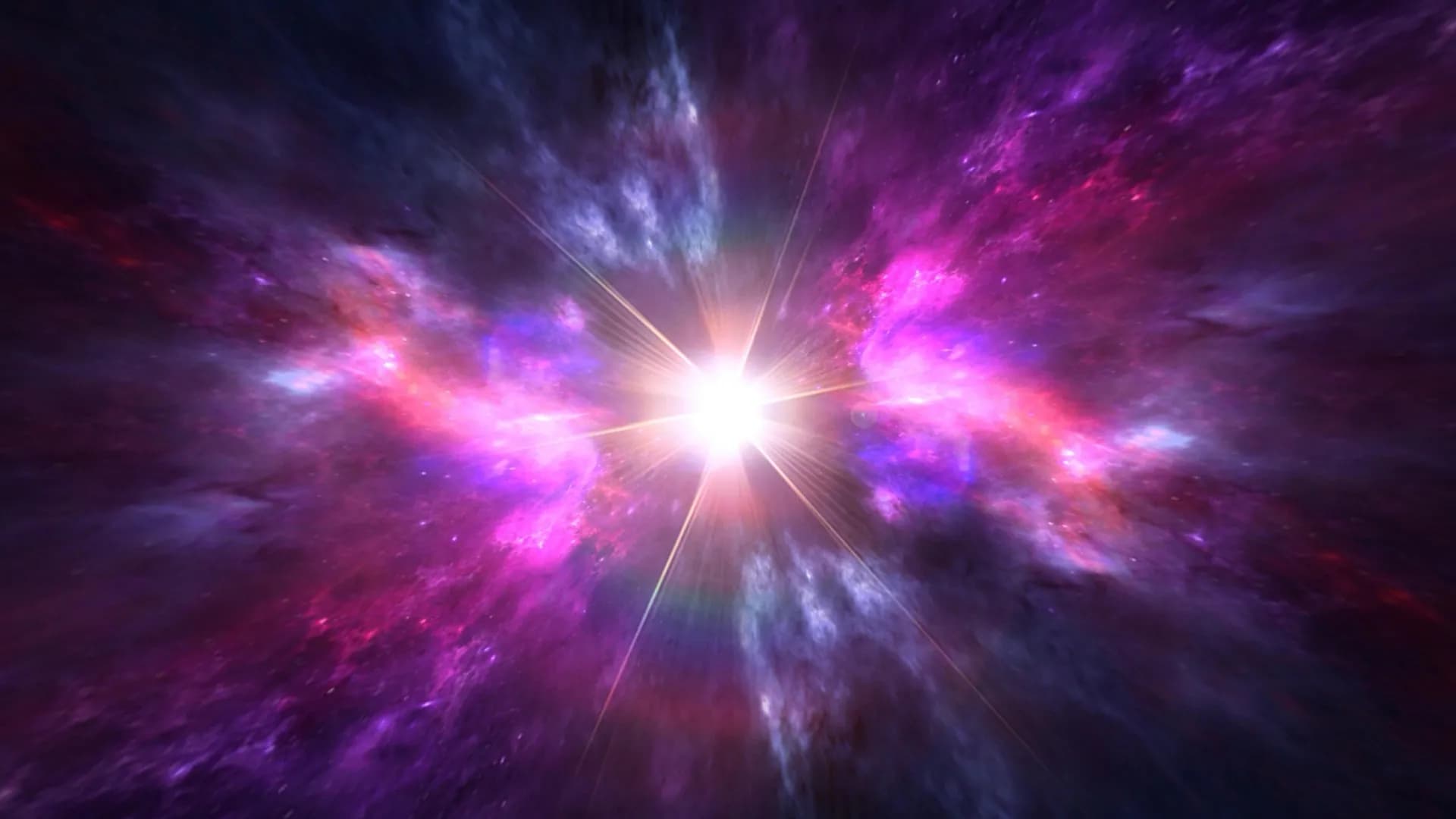
Image: Science Daily
Astronomers discover a supernova from 10 billion years ago that may reveal secrets about dark energy and the universe's expansion.
GlipzoAstronomers are on the brink of a groundbreaking revelation that could shed light on one of the universe's most perplexing enigmas: dark energy. This mysterious force is believed to account for approximately 68% of the cosmos, yet its true nature remains undiscovered. Recent findings suggest that a rare supernova from over 10 billion years ago could be the key to unlocking secrets about this elusive phenomenon.
The universe is in a state of constant expansion, and dark energy is thought to be the driving force behind this acceleration. Despite its significant role, scientists have struggled to understand what dark energy actually is or how it influences cosmic growth. The recent identification of an extraordinary supernova in the early universe may finally provide vital insights into this cosmic conundrum.
Researchers have pinpointed a supernova that was not only exceptionally bright but also had its light amplified by a galaxy situated directly between the explosion and Earth. The gravitational pull of this galaxy bent the light traveling from the supernova, resulting in a phenomenon known as gravitational lensing. This effect made the distant supernova appear even more luminous than it originally was.
Dr. Daniel Perley, an astrophysicist from Liverpool John Moores University, remarked, "No one has found a supernova like this before, and the nature of the system means it may be able to help solve some big problems in astrophysics such as the nature of the force that drives the expansion of the universe."
The galaxy's position between Earth and the supernova is pivotal for this discovery. Jacob Wise, a PhD candidate at the Astrophysics Research Institute, elaborated on the phenomenon: "We are seeing the light from this distant supernova split into multiple images, what we call 'gravitationally lensed.'" This means that the light takes different paths to reach us, leading to varying travel times.
Because supernovae can shine for several months, astronomers can observe these multiple images of the same explosion simultaneously. Each image represents the supernova at a slightly different moment in its lifecycle, depending on the path length the light traveled. Dr. Perley added, "What's exciting about that is that the amount of time difference between different images depends on the expansion rate of the universe."
The research team, which includes collaborators from Caltech, Stockholm University, and other global institutions, is focused on measuring these time delays with high precision. Accurate measurements could illuminate how swiftly the universe is expanding and provide essential information regarding dark energy, the force believed to be accelerating this expansion.
The implications of this research extend beyond understanding dark energy; it may also help resolve the Hubble Tension—a significant conflict in astrophysics regarding the universe's expansion rate. Different methodologies yield conflicting values for the Hubble constant, a crucial number that describes how quickly the universe is expanding.
The Hubble Tension has emerged as a significant puzzle for astronomers. Observations of the afterglow of the Big Bang yield one value for the Hubble constant, while studies of nearby galaxies provide a different figure. Dr. Perley believes that observations of this unique supernova could serve as a potential tiebreaker in this ongoing debate, stating, "Studies of lensed supernovae could indicate which of these two numbers we should really believe."
The brightness of this supernova enabled astronomers to detect it from vast distances using medium-sized ground-based telescopes. Notably, the Zwicky Transient Facility in California was the first to spot the supernova. However, it was the Liverpool Telescope that first captured the multiple images, confirming the gravitational lensing effect.
After its initial detection, the supernova was further examined using some of the most advanced observatories worldwide, including the Keck Telescopes in Hawaii and the Hubble Space Telescope. These powerful instruments allow scientists to study the supernova in unprecedented detail, enhancing our understanding of cosmic events and their implications for universal expansion.
The discovery of this unique supernova is not just an academic exercise; it has profound implications for our understanding of the universe. As researchers continue to analyze the light from the supernova, they hope to gain insights that could redefine our comprehension of dark energy and the fundamental workings of the cosmos.
The ongoing research signifies a pivotal moment in cosmology. By unlocking the secrets of dark energy, we may be able to answer critical questions about the fate of the universe and our place within it. As the study progresses, the scientific community eagerly anticipates what revelations the data will unveil and how they will reshape our understanding of the universe's expansion.
As astronomers delve deeper into the data gathered from this remarkable supernova, the next steps will involve detailed measurements of the time delays between the different images. These findings could either validate existing theories about dark energy or challenge our current understanding, leading to a potential paradigm shift in cosmology.
The excitement surrounding this discovery highlights the importance of continued investment in astronomical research and technology. With the collaboration of international observatories and cutting-edge technology, the quest to unravel the mysteries of dark energy is more promising than ever. Observers and scientists alike will be watching closely to see how these developments unfold in the coming months and years.

Discover how the brain protein Menin could be the key to halting cognitive decline with new research that uncovers its vital role in aging.
Indian Express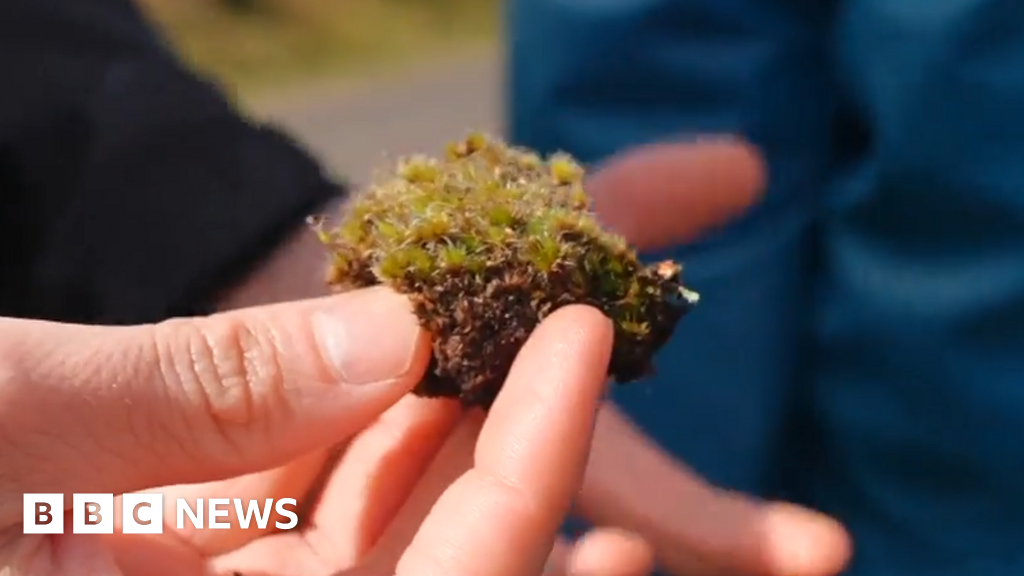
A new 'killer fungus' discovered in the UK targets invasive heath-star moss, offering hope for restoring native habitats. Will it turn the tide against invasives?
BBC Science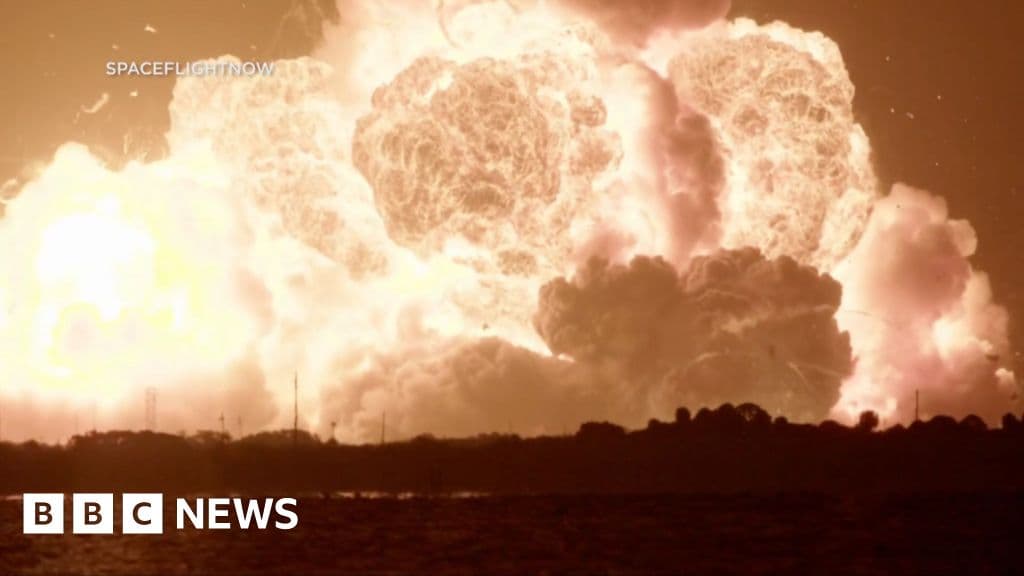
A Blue Origin rocket exploded during a test in Florida, prompting investigations. All personnel are safe. What does this mean for the future of space travel?
BBC Business