
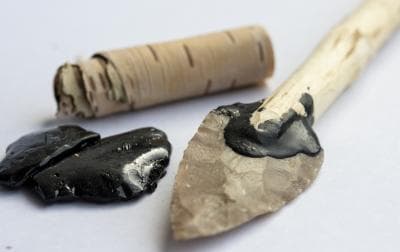
Image: Ars Technica
Neanderthals may have used birch tar as an antiseptic, revealing ancient medicinal practices aligned with modern Indigenous knowledge. Discover the implications.
GlipzoRecent research has unveiled that Neanderthals may have utilized birch tar not only as an adhesive for crafting tools and weapons but also as a potential antiseptic treatment. This ancient practice, similar to methods still used by several modern Indigenous cultures, highlights the sophisticated understanding of natural remedies possessed by these early humans.
The Mi’kmaq of eastern Canada, among other Indigenous groups, have been known to use birch tar to treat skin infections and prevent wounds from festering. This connection between Neanderthal ingenuity and contemporary Indigenous knowledge underscores the continuity of herbal medicine across generations. With evidence from archaeological sites demonstrating that Neanderthals were adept at extracting birch tar, a recent study has taken a closer look at its potential medicinal properties.
In a groundbreaking study led by archaeologist Tjaark Siemssen from the University of Cologne and University of Oxford, researchers sought to understand how effective birch tar could be against common bacterial strains. They specifically tested the tar against Staphylococcus aureus, notorious for causing skin infections, and Escherichia coli, a common cause of food poisoning.
The team collected birch bark from species found at Neanderthal sites and experimented with various extraction methods: - Burning birch bark near a flat rock to collect the resin. - Heating the bark in a clay container buried in dirt for optimal extraction. - A modern method involving a tin can instead of clay.
These methods reflect traditional practices that have been passed down through Indigenous cultures, suggesting a long-standing relationship with birch tar beyond mere utility.
The results were intriguing. While birch tar did not inhibit the growth of E. coli, it showed promising results against S. aureus. The effectiveness varied based on the birch species and the tar concentration. Notably, tar extracted from the silver birch (Betula pendula) demonstrated a significant antibacterial response, while other samples yielded mixed results.
This research not only validates Indigenous knowledge but also suggests that the use of birch tar as an antimicrobial agent could be much older than previously acknowledged. Siemssen and his colleagues noted, “Our findings not only reinforce what past studies have reported, but they also echo traditional knowledge.” This statement implies that the potential medicinal uses of birch tar may have been discovered independently across different cultures and eras.
So, what makes birch tar effective against certain bacteria? One key factor is its composition, which contains phenolic derivatives—ring-shaped molecules commonly found in plants. These compounds are widely used in contemporary antiseptics and are effective against Gram-positive bacteria, such as S. aureus, due to their ability to penetrate the outer membranes of these cells.
Interestingly, Gram-negative bacteria like E. coli possess an additional protective layer that renders them less susceptible to the compounds found in birch tar. Alongside phenolic compounds, birch tar may also contain terpenes and terpenoids, which help protect plants from insects and infections, further contributing to its antimicrobial properties.
The implications of this research extend beyond understanding Neanderthal practices; they bridge the gap between ancient knowledge and modern scientific inquiry. By validating traditional methods of healing, this study calls attention to the importance of integrating Indigenous wisdom into contemporary medical practices.
Moreover, these findings prompt a reevaluation of how we view ancient cultures. Neanderthals, often depicted as brutish and primitive, exhibited a complex understanding of their environment, utilizing available resources to care for their health and well-being.
Looking ahead, this research opens new avenues for exploration. Future studies could investigate the specific chemical components of birch tar and their mechanisms of action against various bacterial strains. There’s also potential to explore the historical and cultural contexts of birch tar use across different Indigenous groups, as well as its applications in modern medicine.
As we continue to uncover the practices of ancient peoples, we may discover even more about the relationship between humans and their environment. The legacy of Neanderthals and their innovative use of natural resources serves as a reminder that sometimes, the past holds the key to solving modern health challenges.
Ultimately, this research not only enhances our understanding of Neanderthal life but also emphasizes the timeless wisdom found in traditional healing practices, urging us to appreciate and learn from the knowledge of those who came before us.

Discover how the brain protein Menin could be the key to halting cognitive decline with new research that uncovers its vital role in aging.
Indian Express
A new 'killer fungus' discovered in the UK targets invasive heath-star moss, offering hope for restoring native habitats. Will it turn the tide against invasives?
BBC Science
A Blue Origin rocket exploded during a test in Florida, prompting investigations. All personnel are safe. What does this mean for the future of space travel?
BBC Business