

Image: Science Daily
New research reveals life rebounded unexpectedly fast after the Chicxulub asteroid impact, challenging previous beliefs about recovery timelines.
GlipzoApproximately 66 million years ago, a cataclysmic asteroid collided with Earth, leading to the extinction of the dinosaurs and a vast array of other species. This event, known as the Chicxulub impact, triggered global wildfires, drastic climate changes, and a collapse of ecosystems. However, recent research indicates that life on Earth began to recover and evolve at an astonishingly fast rate, challenging long-standing beliefs about the timeline of recovery after such a catastrophic event.
A groundbreaking study spearheaded by researchers at The University of Texas at Austin and published in the journal Geology reveals that new species of plankton emerged in the oceans less than 2,000 years following the asteroid impact. According to Chris Lowery, the lead author of the study and a research associate professor at the University of Texas Institute for Geophysics (UTIG), this rapid pace of evolution is considered exceptionally quick compared to traditional expectations based on fossil records, which typically indicate that new species take millions of years to form.
"It's ridiculously fast," said Lowery. This new insight not only sheds light on the speed of evolution post-extinction but also highlights how rapidly the environment began to recuperate in the aftermath of the Chicxulub event.
Previously, studies conducted by Lowery and his team had revealed that certain surviving organisms returned to the Gulf of Mexico region relatively soon after the asteroid strike. However, the prevailing scientific consensus held that new species did not surface until tens of thousands of years later. This earlier assumption was based on the belief that sediment layers accumulated at a consistent rate post-extinction, similar to pre-impact conditions.
The mass extinction event is delineated by a global geological layer formed from debris propelled into the atmosphere during the impact, known as the K/Pg boundary. Lowery and his colleagues argue that this assumption neglected significant environmental changes that took place as ecosystems collapsed both on land and in the oceans. Notably, mass die-offs transformed sediment accumulation patterns, leading to inaccuracies in dating the fossils found within these layers.
During the extinction event, many species of calcareous plankton that typically settled to the ocean floor vanished. Concurrently, the destruction of vegetation on land led to increased erosion, which contributed to a greater influx of sediments into the oceans. These combined factors significantly influenced sediment accumulation rates across various regions.
As a result, relying solely on sedimentation rates to date fossils proved inadequate. The changes in sediment dynamics necessitated a reevaluation of the ages of tiny fossils preserved in these geological layers.
To establish a more precise timeline for the emergence of new species, the research team turned to a previously published isotope marker found within the K/Pg boundary. This specific marker serves as a more dependable means for measuring the passage of time in the geological record, thus enabling scientists to accurately pinpoint when various plankton species first appeared.
The isotope in question, Helium-3, accumulates in ocean sediments at a consistent rate. When sedimentation occurs slowly, higher concentrations of Helium-3 can be detected, whereas more rapid sediment accumulation results in lower concentrations. By analyzing this isotope, researchers can more accurately estimate the time elapsed during sediment formation.
Using Helium-3 data from six locations along the K/Pg boundary across Europe, North Africa, and the Gulf of Mexico, the team calculated improved sedimentation rates. This analysis allowed them to determine the age of sediments, particularly where a new plankton species, a foraminifera named Parvularugoglobigerina eugubina (P. eugubina), first appeared in the fossil record. The emergence of P. eugubina is often utilized as an indicator of ecosystem recovery following the extinction.
The findings revealed that this plankton species evolved between 3.5 and 11 thousand years after the Chicxulub impact, signifying a remarkable turnaround in marine ecosystems. This discovery suggests that life not only persisted through the catastrophic event but also adapted and thrived in a remarkably short period.
The rapid emergence of new species following such a significant extinction event challenges the notion that biological recovery is a slow and gradual process. This research provides critical insights into the resilience of life and the intricate dynamics of ecosystem recovery.
Understanding the recovery dynamics following the Chicxulub impact is essential for several reasons. It enhances our comprehension of evolutionary processes and the adaptability of life in the face of catastrophic challenges. Moreover, this research may inform conservation efforts today by highlighting how ecosystems can rebound after severe disruptions.
As we look ahead, it will be crucial to monitor how contemporary environmental threats, such as climate change and habitat destruction, affect the resilience of species and ecosystems. The findings from this study underscore the importance of protecting biodiversity and maintaining healthy ecosystems to ensure that life on Earth can continue to adapt and thrive in the future.

Discover how the brain protein Menin could be the key to halting cognitive decline with new research that uncovers its vital role in aging.
Indian Express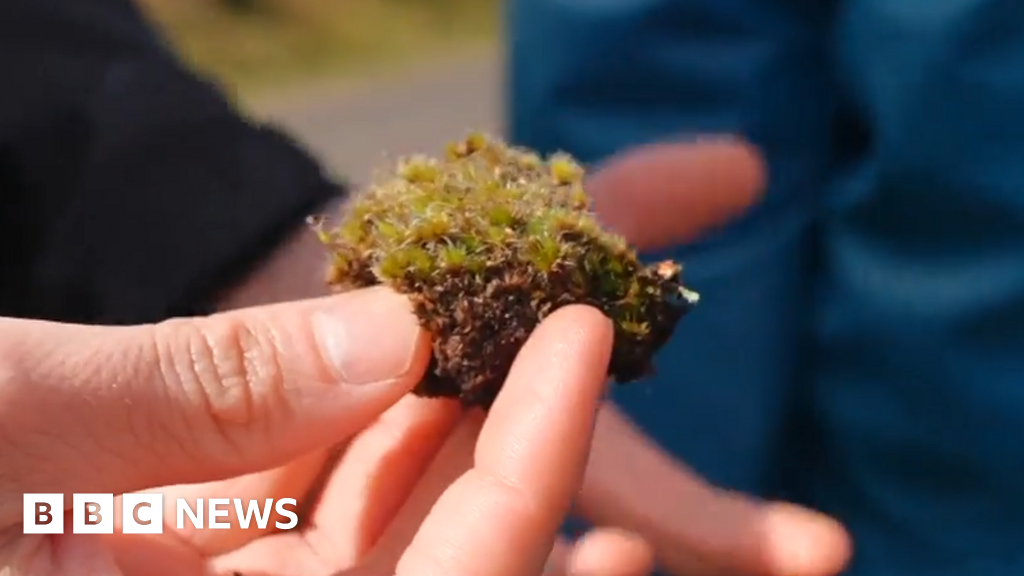
A new 'killer fungus' discovered in the UK targets invasive heath-star moss, offering hope for restoring native habitats. Will it turn the tide against invasives?
BBC Science
A Blue Origin rocket exploded during a test in Florida, prompting investigations. All personnel are safe. What does this mean for the future of space travel?
BBC Business