Glipzo
WorldTechnologyBusinessSportsEntertainmentScienceHealthPolitics
Glipzo
WorldTechnologyBusinessSportsEntertainmentScienceHealthPolitics
  1. Home
  2. /
  3. Science
  4. /
  5. Shocking Discovery: Dinosaurs with Wings That Couldn't Fly
Shocking Discovery: Dinosaurs with Wings That Couldn't Fly

Image: Science Daily

Science
Wednesday, March 18, 20264 min read

Shocking Discovery: Dinosaurs with Wings That Couldn't Fly

Discover how a new study reveals dinosaurs with wings that couldn't fly, reshaping our understanding of flight evolution in ancient species.

Glipzo News Desk|Source: Science Daily
Share
Glipzo

Key Highlights

  • Dinosaurs once thought to fly were actually flightless.
  • Rare fossils of Anchiornis reveal feather color and structure.
  • Molting patterns indicate loss of flight capabilities.
  • New insights challenge previous beliefs about avian evolution.

In this article

  • Unveiling the Mystery of Flightless Dinosaurs In a groundbreaking study, researchers have uncovered that certain dinosaurs, despite having wings, were incapable of flight. This revelation comes from a team led by **Dr. Yosef Kiat** at the **School of Zoology** and **Steinhardt Museum of Natural History** at **Tel Aviv University**. Their analysis of rare fossils from **eastern China** offers a glimpse into the lives of these creatures from **160 million years ago**, fundamentally altering our understanding of the evolution of flight in both dinosaurs and modern birds.
  • The Evolutionary Path of Feathers Feathers have long been considered a hallmark of avian evolution, but their origins are complex. Dinosaurs diverged from other reptiles approximately **240 million years ago**. Soon after, many species began to develop feathers, which served essential functions such as temperature regulation and, eventually, flight.
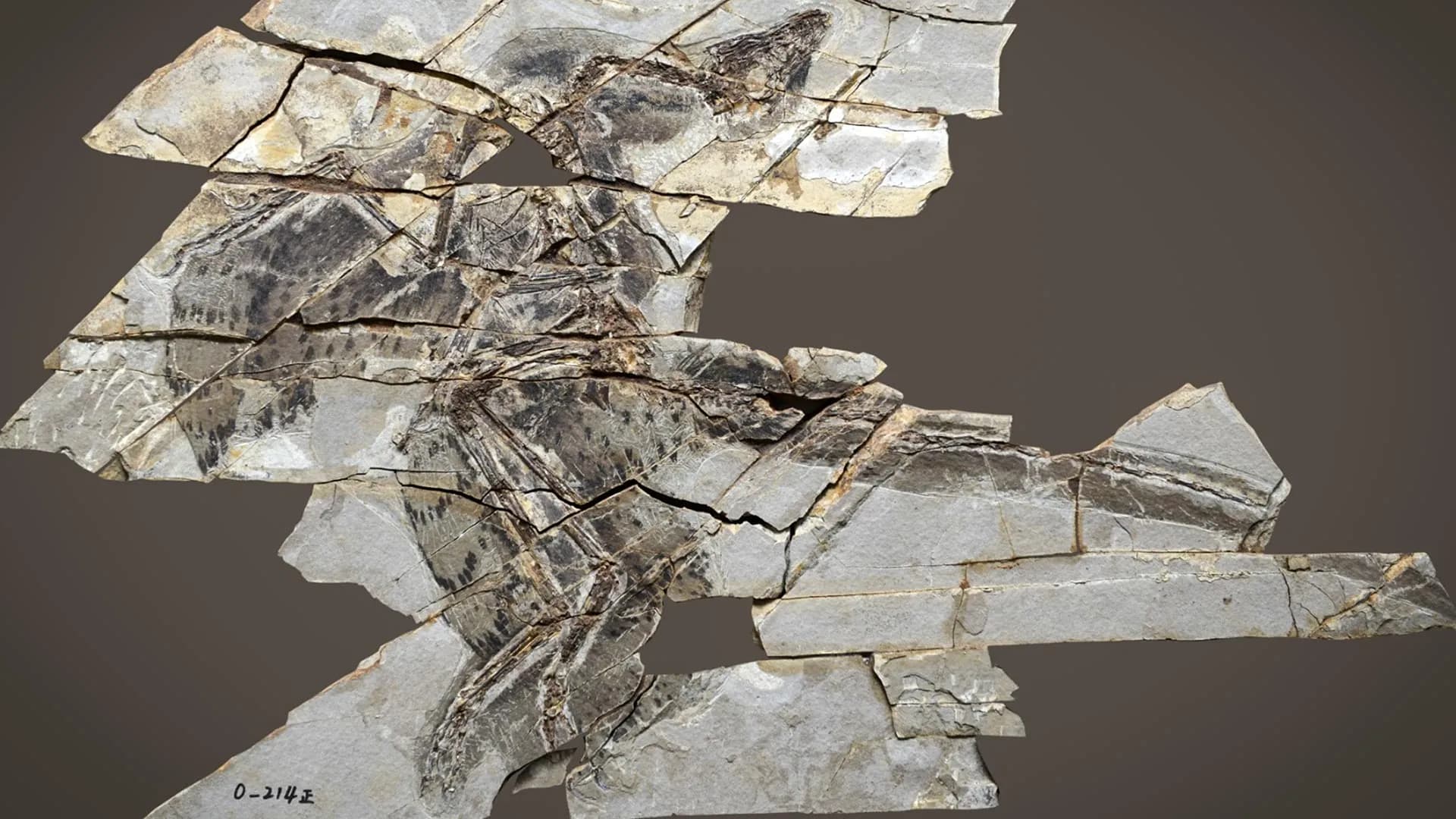
  • Rare Fossils: A Window into the Past The study focused on **nine extraordinary fossils** of **Anchiornis**, a feathered Pennaraptoran dinosaur. These fossils are particularly unique because they preserved not only the feathers but also their original colors, which is a rarity in paleontology. The exceptional fossilization conditions in eastern China allowed researchers to see that the fossils exhibited wing feathers that were predominantly **white** with distinct **black spots** at the tips.
  • Understanding Molting Patterns and Flight Dr. Kiat elaborates on the significance of feather growth and molting patterns in determining flight capabilities. Feathers undergo a growth period of **two to three weeks**, during which they develop from living material attached to a blood supply. Once fully grown, they detach and become nonliving, eventually wearing out and being replaced through a process known as **molting**.
  • The Irregularities Found in Anchiornis Upon examining the fossilized feathers of Anchiornis, researchers noted a continuous line of black spots along the edges of the wings. Furthermore, some developing feathers displayed misaligned black spots, indicating that they were still in the growth phase. The molting analysis revealed irregular patterns, suggesting that Anchiornis did not possess the ability to fly.
  • Why This Matters The implications of this research extend far beyond just understanding a single species. It challenges long-held beliefs about the evolution of flight in dinosaurs and birds, suggesting a more intricate and diverse evolutionary path. This complexity could reshape how scientists approach the study of avian evolution and the environmental factors that influenced it.
  • Looking Ahead: What’s Next for Paleontology? The findings from Dr. Kiat’s team signal a new direction in paleontological research, focusing on the evolutionary trajectories of flightless species. Future studies may delve deeper into the environmental and biological factors that led to the loss of flight in certain dinosaur lineages.

Unveiling the Mystery of Flightless Dinosaurs In a groundbreaking study, researchers have uncovered that certain dinosaurs, despite having wings, were incapable of flight. This revelation comes from a team led by **Dr. Yosef Kiat** at the **School of Zoology** and **Steinhardt Museum of Natural History** at **Tel Aviv University**. Their analysis of rare fossils from **eastern China** offers a glimpse into the lives of these creatures from **160 million years ago**, fundamentally altering our understanding of the evolution of flight in both dinosaurs and modern birds.

The study reveals that feather molting patterns in these dinosaurs may hold the key to understanding their flight capabilities. As Dr. Kiat noted, “Feather molting seems like a small technical detail — but when examined in fossils, it can change everything we thought about the origins of flight.” This suggests that the journey towards flight was more intricate and varied than previously recognized.

The Evolutionary Path of Feathers Feathers have long been considered a hallmark of avian evolution, but their origins are complex. Dinosaurs diverged from other reptiles approximately **240 million years ago**. Soon after, many species began to develop feathers, which served essential functions such as temperature regulation and, eventually, flight.

Around 175 million years ago, a group of feathered dinosaurs known as Pennaraptora emerged. These creatures are thought to be the ancestors of modern birds, surviving the mass extinction that marked the end of the Mesozoic era 66 million years ago. While it is believed that Pennaraptora evolved feathers to aid in flight, environmental changes may have led some of these species to lose that ability over time, akin to today’s flightless birds, such as ostriches and penguins.

Rare Fossils: A Window into the Past The study focused on **nine extraordinary fossils** of **Anchiornis**, a feathered Pennaraptoran dinosaur. These fossils are particularly unique because they preserved not only the feathers but also their original colors, which is a rarity in paleontology. The exceptional fossilization conditions in eastern China allowed researchers to see that the fossils exhibited wing feathers that were predominantly **white** with distinct **black spots** at the tips.

This preserved coloration has given researchers a remarkable opportunity to analyze the structure and growth of feathers beyond what is typically possible with fossilized remains. The findings provide essential insights into how these dinosaurs lived and adapted in their environment.

Understanding Molting Patterns and Flight Dr. Kiat elaborates on the significance of feather growth and molting patterns in determining flight capabilities. Feathers undergo a growth period of **two to three weeks**, during which they develop from living material attached to a blood supply. Once fully grown, they detach and become nonliving, eventually wearing out and being replaced through a process known as **molting**.

Molting patterns can reveal much about an animal's ability to fly. Birds that rely on flight typically exhibit a systematic and gradual molting process that maintains wing symmetry, allowing them to continue flying during feather replacement. In contrast, flightless birds tend to have more irregular and random molting patterns, indicating a loss of flight capability.

The Irregularities Found in Anchiornis Upon examining the fossilized feathers of Anchiornis, researchers noted a continuous line of black spots along the edges of the wings. Furthermore, some developing feathers displayed misaligned black spots, indicating that they were still in the growth phase. The molting analysis revealed irregular patterns, suggesting that Anchiornis did not possess the ability to fly.

This evidence serves as a critical piece in the puzzle of avian evolution, suggesting that some dinosaurs may have developed flight capabilities only to lose them later in their evolutionary history.

Why This Matters The implications of this research extend far beyond just understanding a single species. It challenges long-held beliefs about the evolution of flight in dinosaurs and birds, suggesting a more intricate and diverse evolutionary path. This complexity could reshape how scientists approach the study of avian evolution and the environmental factors that influenced it.

As researchers continue to explore the rich fossil record and uncover more about these ancient creatures, we can expect further revelations that may redefine our understanding of life on Earth during the age of dinosaurs.

Looking Ahead: What’s Next for Paleontology? The findings from Dr. Kiat’s team signal a new direction in paleontological research, focusing on the evolutionary trajectories of flightless species. Future studies may delve deeper into the environmental and biological factors that led to the loss of flight in certain dinosaur lineages.

As fossil discoveries continue to emerge from regions like eastern China, the scientific community is poised to learn more about the intricacies of dinosaur evolution. It will be fascinating to watch how these insights shape our understanding of how the ancestors of modern birds adapted and evolved over millions of years.

Did you find this article useful? Share it!

Share

Related Articles

Shocking Decline: UK Butterflies Face Major Threats
Science
Apr 15, 2026

Shocking Decline: UK Butterflies Face Major Threats

A 50-year survey reveals over half of the UK's butterfly species are declining, highlighting urgent conservation needs amid habitat loss and climate change.

BBC Science
Exclusive Footage: Historic Hatch Opening of Artemis II Orion
Science
Apr 15, 2026

Exclusive Footage: Historic Hatch Opening of Artemis II Orion

Catch the historic moment as the hatch of Artemis II's Orion capsule opens, reuniting astronauts with a cheering recovery crew after their groundbreaking mission.

BBC Science
Critical Consultation for Golden Eagle Reintroduction in England
Science
Apr 14, 2026

Critical Consultation for Golden Eagle Reintroduction in England

Discover the critical consultation for the golden eagle reintroduction in northern England, aiming to restore this majestic species by 2027.

BBC Science

Categories

  • World
  • Technology
  • Business
  • Sports

More

  • Entertainment
  • Science
  • Health
  • Politics

Explore

  • Web Stories
  • About Us
  • Contact

Legal

  • Privacy Policy
  • Terms of Service

© 2026 Glipzo. All rights reserved.