
Image: The Hindu
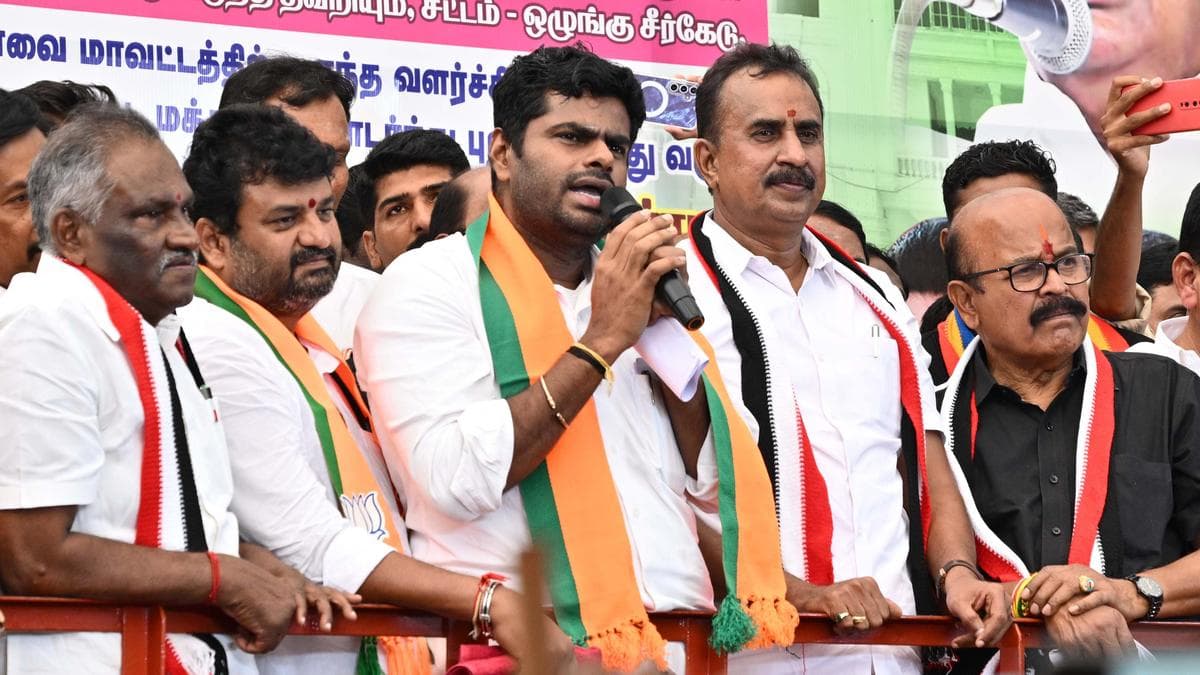
K. Annamalai criticizes CM Stalin at a protest in Coimbatore, highlighting alarming crime statistics and government unfulfilled promises on job creation.
GlipzoIn a fiery protest held in Coimbatore on March 17, 2026, K. Annamalai, the former State president of the Bharatiya Janata Party (BJP), made headlines with his scathing remarks about Tamil Nadu's Chief Minister, M.K. Stalin. Annamalai accused Stalin of becoming a ‘reels’ Chief Minister, seemingly more focused on social media fame than addressing critical issues plaguing the state.
During the protest, Annamalai highlighted alarming statistics, stating that 8,008 murders and 2,080 sexual assaults on minors had occurred in Tamil Nadu over the past five years. He emphasized that the state has recorded the highest number of sexual assaults in the country, with a staggering 39,999 cases reported in the same timeframe. Such figures paint a grim picture of the deteriorating law and order situation in Tamil Nadu.
Annamalai did not hold back, stating, "The law and order situation has significantly worsened under DMK rule. The only thing we have is a Director General of Police (DGP) managing the situation. This is unacceptable."
The BJP leader's comments come on the heels of a broader protest organized by the AIADMK, led by Edappadi K. Palaniswami, which called for a united front to address women's safety in Tamil Nadu. The protest underscored growing concerns regarding violence against women, with Annamalai asserting that the state government has failed to protect its citizens.
In addition to crime statistics, Annamalai criticized the DMK government for not fulfilling its promises, particularly regarding job creation. According to him, the DMK had pledged 3.5 lakh government jobs upon coming to power but has only managed to provide 43,000 positions. This shortfall has left many young people frustrated and disillusioned with the current administration.
He also pointed out that despite seizing 65,618 kg of drugs in the last five years, the issue of synthetic drug use is escalating in the state. Annamalai warned that the rising drug culture is another symptom of the government's failure to maintain public safety and well-being.
The protest held in Coimbatore was not just a political gathering; it was a clarion call for action regarding women's safety. Annamalai's remarks resonate deeply with the public, especially in a society where sexual violence remains a pressing issue.
The AIADMK's mobilization reflects a growing awareness and demand for accountability from the government. Annamalai's statements may serve to galvanize public sentiment against the DMK, especially among women and youth who feel vulnerable in the current environment.
As the political landscape in Tamil Nadu continues to evolve, the ramifications of Annamalai's critique could be significant. The AIADMK's push for women’s safety and the demand for government accountability may gain momentum in the coming months. With elections on the horizon, both the DMK and AIADMK will likely need to address these pressing concerns more effectively to retain public support.
The focus on crime rates and government accountability will remain a hot topic as citizens expect tangible actions rather than mere promises. The public's response to Annamalai's statements could influence the upcoming political strategies employed by both parties.
The issues raised during the protest underscore the urgent need for a shift in how government priorities are handled. With rising crime rates and unfulfilled promises, Tamil Nadu's political leaders must be vigilant and responsive to the needs of their constituents. As citizens demand better governance and safety, the political narrative in Tamil Nadu is likely to shift, making the next few months critical for both the DMK and AIADMK.
In conclusion, K. Annamalai’s remarks serve as a wake-up call for the state government, highlighting the critical issues of crime and job creation that cannot be ignored any longer. The future of Tamil Nadu may depend on how effectively these concerns are addressed in the near term.

Tensions soar as the US and Iran engage in air strikes near the Strait of Hormuz, raising concerns over global oil supply and regional stability.
BBC World
Trump's international interventions face serious stalemates. What will this mean for U.S. foreign policy? Explore the critical challenges ahead.
Indian Express
Tehran denies resignation of President Masoud Pezeshkian amid claims of IRGC influence. What does this mean for Iran's political stability? Click to learn more!
Indian Express