

Image: Science Daily
Discover how scientists found giant plumes in Greenland’s ice sheet, uncovering new insights into ice dynamics and potential impacts on sea level rise.
GlipzoIn a groundbreaking discovery, researchers have identified massive swirling structures hidden beneath the Greenland ice sheet, a finding that could reshape our understanding of ice dynamics and climate change. For over a decade, these enigmatic formations have puzzled scientists, but a team from the University of Bergen (UiB) has finally cracked the case. Their innovative research proposes that these plumes are generated through a process known as thermal convection—a mechanism typically associated with the Earth’s mantle rather than ice.
The implications of this discovery are profound. The study, which will be published in the journal The Cryosphere, highlights how temperature variations within the ice can lead to a slow, circulating movement reminiscent of a pot of boiling water. Professor Andreas Born, who has dedicated more than 15 years to studying ice sheets in the Northern Hemisphere, emphasized the significance of understanding these processes in predicting future changes in the Greenland ice sheet.
Born described the discovery as both fascinating and wild. "We typically think of ice as a solid material, so the discovery that parts of the Greenland ice sheet actually undergo thermal convection is astonishing," he stated. The research team, which includes lead author Robert Law, a glaciologist at UiB, was able to use mathematical models akin to those used for studying continental drift to analyze the plume structures.
Law pointed out that while the notion of convection in ice might seem counterintuitive, the physics aligns perfectly when considering ice's unique properties. "Finding that thermal convection can happen within an ice sheet goes slightly against our intuition and expectations. Ice is at least a million times softer than the Earth's mantle, though, so the physics just work out. It's like an exciting freak of nature," he explained. The study's acceptance as a 'highlight paper' by The Cryosphere editors underscores its significance in the scientific community.
The research unveils that the ice located deep within northern Greenland may be approximately ten times softer than previously thought. However, this revelation does not directly equate to faster melting of the ice sheet. Law clarified, "Improving our understanding of ice physics is a really major way to be more certain about the future, but on its own, softer ice does not necessarily mean that the ice will melt faster or that sea level rise will be higher. We need further studies to fully isolate that."
This nuance is crucial as the Greenland ice sheet frequently appears in discussions surrounding climate change, geopolitics, and mining. The findings from this study do not suggest imminent catastrophic changes in Greenland but rather highlight the complexity and dynamism of the ice sheet.
Greenland's ice sheet is not just a significant geological feature; it is also a repository of history. According to Law, the ice sheet is over one thousand years old and holds a unique cultural significance as the only ice sheet on Earth with a permanent population at its margins. "The more we learn about the hidden processes inside the ice, the better prepared we'll be for the changes coming to coastlines around the world," he remarked.
The research conducted by the University of Bergen was a collaborative effort, involving experts from NASA Goddard Space Flight Center, University of Oxford, and ETH Zurich. The team focused on understanding the plume-like structures detected deep within the Greenland ice sheet and what their existence reveals about the softness and movement of the ice. Their findings point toward the significance of thermal convection in shaping the behavior of ice, providing insights that may refine future predictions regarding sea-level rise and ice sheet mass balance.
As the world grapples with the reality of climate change, understanding the dynamics of the Greenland ice sheet becomes increasingly important. The newly discovered plumes and their formation through thermal convection may not only improve predictions about future ice sheet behavior but also inform global strategies for addressing rising sea levels.
In summary, the research from UiB illuminates a previously hidden aspect of Greenland's ice dynamics. It suggests that while the ice may be softer than expected, the relationship between ice softness and melting rates is complex and requires more investigation. As scientists continue to explore these mysteries, the findings will be crucial in preparing for the impacts of climate change on coastal communities worldwide.
As we look to the future, the ongoing study of Greenland's ice sheet will remain a vital area of research. The next steps for scientists will involve further exploration of the mechanisms at play within the ice, helping to build a clearer picture of how these processes may influence sea level rise in the coming years.

Discover how the brain protein Menin could be the key to halting cognitive decline with new research that uncovers its vital role in aging.
Indian Express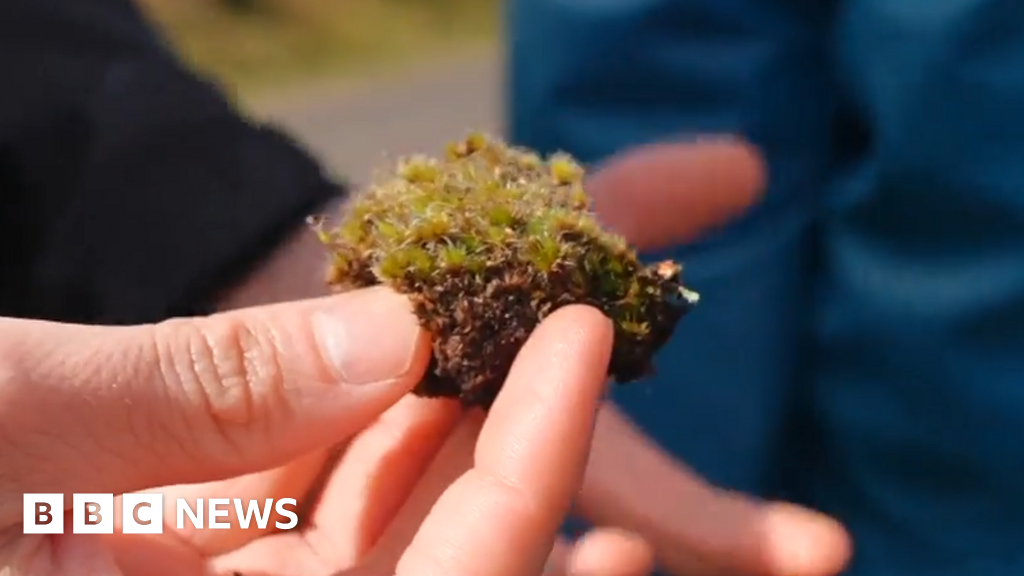
A new 'killer fungus' discovered in the UK targets invasive heath-star moss, offering hope for restoring native habitats. Will it turn the tide against invasives?
BBC Science
A Blue Origin rocket exploded during a test in Florida, prompting investigations. All personnel are safe. What does this mean for the future of space travel?
BBC Business