
Image: Science Daily
Discover how a groundbreaking study reveals the MraZ protein's vital role in bacterial cell division, paving the way for new antibiotic strategies.
GlipzoA remarkable breakthrough has emerged from a recent study led by David Reverter at Universitat Autònoma de Barcelona (UAB), shedding light on the intricate processes involved in bacterial cell division. Published in Nature Communications, this research uncovers the role of the MraZ protein in regulating how bacteria divide, a fundamental process for all forms of life.
Understanding bacterial cell division is crucial, as it provides insights into how these microorganisms reproduce and grow. In most bacteria, this process is orchestrated by the dcw gene cluster, a group of genes that code for essential proteins involved in division and cell wall synthesis. The findings from Reverter's team are expected to have far-reaching implications in microbiology and medicine, particularly in developing new antibacterial strategies.
The dcw operon comprises a series of genes that are vital for bacterial proliferation. These genes are activated by transcription factors, which are proteins that bind to specific regions of DNA known as promoters. The promoter serves as the starting point for transcription, marking the location where the genetic instructions for protein synthesis begin.
Among the transcription factors, MraZ stands out as the first gene in the dcw operon across various bacterial species. When activated, MraZ initiates the transcription of genes that produce proteins necessary for cell division. Essentially, MraZ functions as a master regulator, controlling the operon's activity and influencing the division process in bacteria.
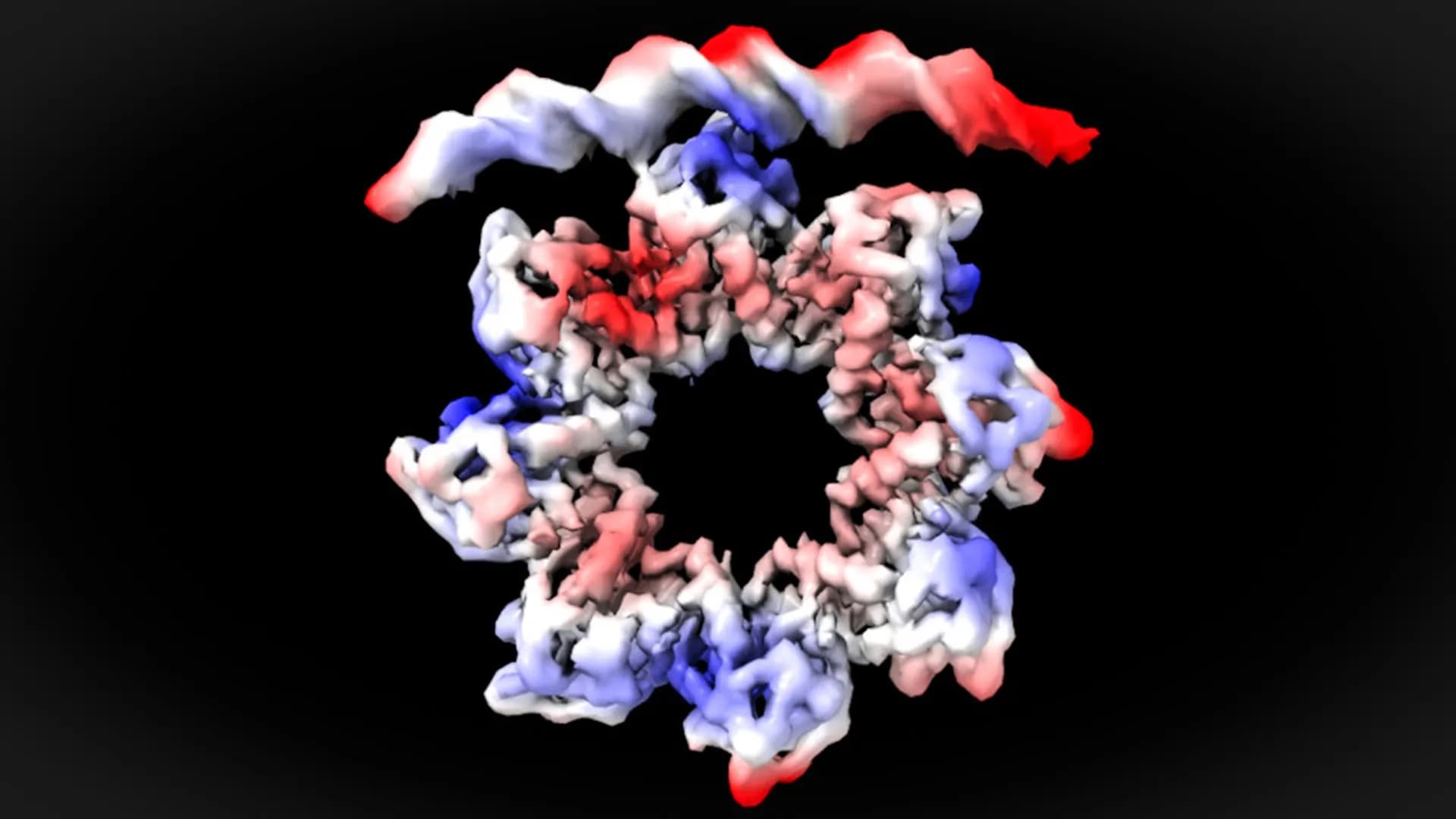
The UAB research group, under Reverter’s leadership, utilized cutting-edge structural biology techniques to decipher how MraZ regulates the dcw operon. Through X-ray crystallography and cryo-electron microscopy, the researchers examined the interaction between the MraZ transcription factor and the promoter region of the dcw operon in Mycoplasma genitalium, a bacterium renowned for its minimal genome.
By focusing on the promoter, which contains four repeating sequences or “boxes” made up of six nucleotides, the team achieved near-atomic resolution of the binding interactions. Their observations revealed that the MraZ protein, which forms a donut-shaped octamer, undergoes a remarkable transformation to interact effectively with the promoter.
David Reverter elaborates on this finding: “The MraZ protein is an octamer formed by eight identical subunits joined in the shape of a donut. However, to regulate cell division, we see how the donut breaks and deforms in such a way that four of the subunits can join the four boxes of the promoter.” This unexpected structural change is critical for the protein's ability to activate transcription and ultimately drive cell division.
The ability to visualize MraZ's interaction with promoter DNA marks a significant advancement in microbiological research. Prior to this study, much of the understanding of bacterial cell division came from biochemical experiments and computational models, which often lack the precision offered by direct observation.
Reverter notes the implications of this discovery, suggesting that the regulatory mechanisms identified are likely to be common across many bacterial species. “This system is universal to most bacteria, since all MraZ proteins are very similar, have the same octamer structure, and the DNA sequences of the promoters of the operons that regulate cell division are also similar,” he states. Such universality could mean that future research could target this mechanism for the development of new antibiotics.
This landmark study was a collaborative effort, with contributions from various experts in the field of microbiology and structural biology. The integration of diverse skills and knowledge from multiple institutions has allowed for a comprehensive understanding of the molecular dynamics at play in bacterial division.
The findings not only highlight the intricate workings of bacterial life but also underscore the importance of interdisciplinary collaboration in advancing scientific knowledge. As researchers continue to unravel the complexities of bacterial behavior, the potential for innovative solutions to combat bacterial infections grows.
Looking ahead, the implications of this research are vast. With the regulatory system of MraZ elucidated, future studies could focus on how to manipulate this mechanism to develop novel antibacterial strategies. Understanding the detailed interactions at the molecular level opens new pathways for therapeutic interventions that could prevent bacterial growth and division.
As scientists delve deeper into the molecular biology of bacteria, we may witness significant advancements in the fight against antibiotic resistance. This research is a crucial step toward understanding how to outsmart bacteria that pose threats to human health, paving the way for innovative treatments and preventative measures in the future.
The discovery of how MraZ regulates bacterial cell division not only enhances our understanding of microbial life but also holds potential for significant medical advancements. As antibiotic resistance becomes an increasingly pressing global issue, insights gained from this research could lead to the development of new strategies to combat harmful bacteria and protect public health.
By understanding the fundamental mechanisms of bacterial reproduction, we equip ourselves with the knowledge to confront one of the most pressing challenges in modern medicine.

Discover how the brain protein Menin could be the key to halting cognitive decline with new research that uncovers its vital role in aging.
Indian Express
A new 'killer fungus' discovered in the UK targets invasive heath-star moss, offering hope for restoring native habitats. Will it turn the tide against invasives?
BBC Science
A Blue Origin rocket exploded during a test in Florida, prompting investigations. All personnel are safe. What does this mean for the future of space travel?
BBC Business