
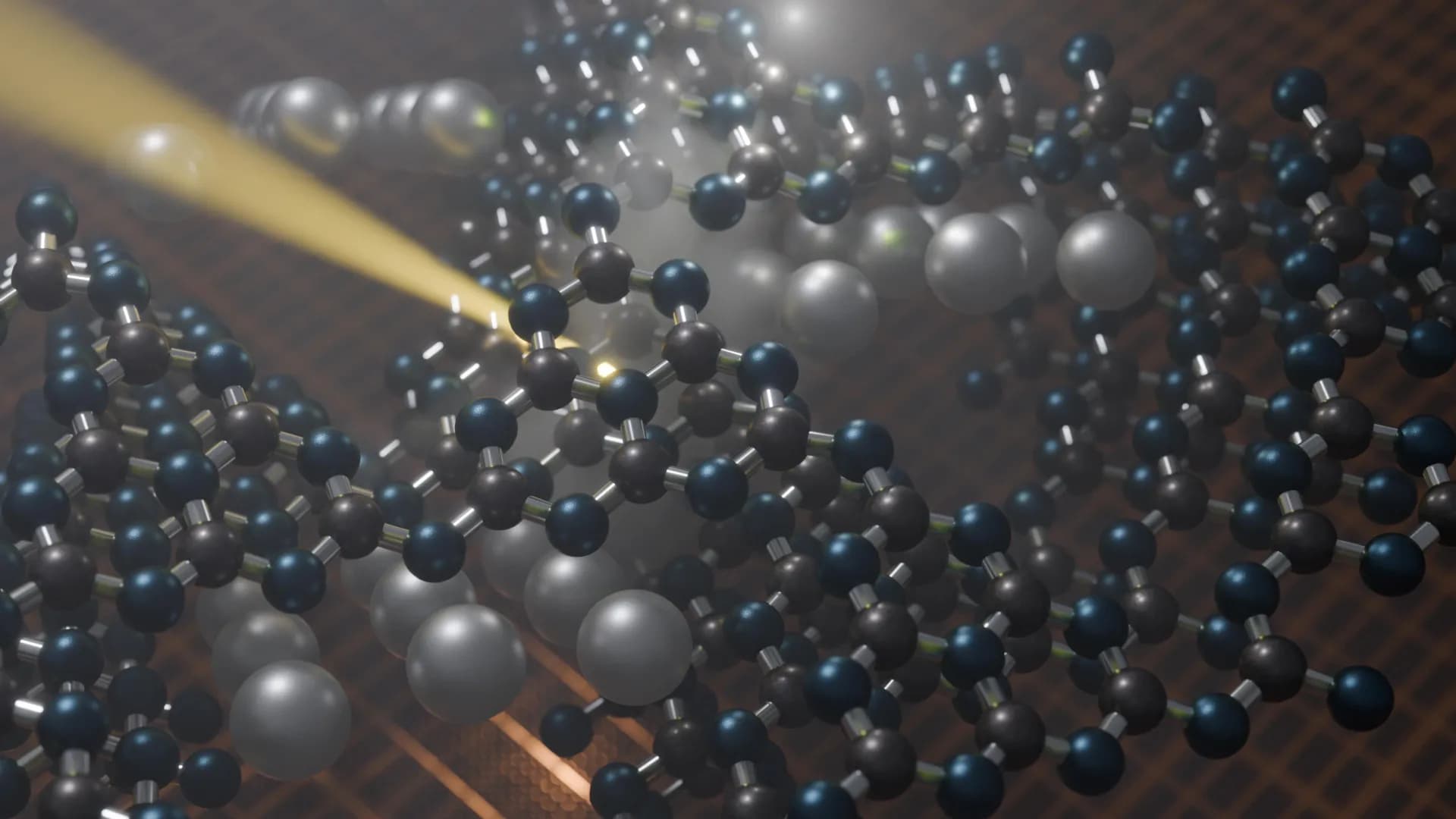
Image: Science Daily
Discover how researchers are transforming sunlight into chemical fuel using innovative polyheptazine imides, a breakthrough in photocatalysis technology.
GlipzoThe research team has now introduced a reliable theoretical framework that not only addresses this challenge but also has been validated through empirical measurements on actual material samples. This development is expected to propel research on polyheptazine imides forward and ignite rapid advancements in the field of photocatalysis.
The practical advantages of carbon nitride materials are numerous. They are: - Cost-effective to produce - Non-toxic and environmentally friendly - Thermally stable, ensuring durability in various conditions
However, earlier iterations of these materials faced challenges in photocatalytic efficiency due to limitations in internal charge separation. When a photon interacts with the material, it can excite an electron, leaving behind a positively charged hole. If the electron recombines with the hole too quickly, the energy is dissipated as heat or light rather than being harnessed for chemical reactions.
Dr. Zahra Hajiahmadi, the study's lead author, emphasizes the significance of modifying polyheptazine imides. "Polyheptazine imides containing positively charged metal ions exhibit markedly improved charge separation. This feature renders them highly suitable for practical applications."
Designing an effective polyheptazine imide catalyst for specific reactions necessitates meticulous control over numerous structural aspects. Given the vast number of potential material combinations, laboratory testing of every candidate is impractical. Hence, computational methods are vital for narrowing down the options.
Prof. Thomas D. Kühne, the director of CASUS and senior author of the study, highlights the complexity of the design space: "One can, for example, add functional groups on the surface or substitute specific nitrogen or carbon atoms with oxygen or phosphorus atoms." Kühne’s team is focused on developing advanced numerical techniques that efficiently and accurately replicate the chemical and physical behaviors of these intricate materials.
This comprehensive analysis paves the way for understanding how specific metal ions can optimize the photocatalytic properties of polyheptazine imides. By unlocking this knowledge, researchers can design more effective catalysts that can significantly improve energy conversion processes.
The implications of this research extend beyond academic interest; they resonate with urgent global needs for sustainable energy sources. As the world grapples with climate change and depleting fossil fuels, the ability to harness sunlight for energy production could represent a critical step forward.
In summary, the future of photocatalysis looks promising, particularly with the breakthroughs involving polyheptazine imides. Observing how these materials evolve and their applications in real-world scenarios will be crucial in the coming years.

Discover how the brain protein Menin could be the key to halting cognitive decline with new research that uncovers its vital role in aging.
Indian Express
A new 'killer fungus' discovered in the UK targets invasive heath-star moss, offering hope for restoring native habitats. Will it turn the tide against invasives?
BBC Science
A Blue Origin rocket exploded during a test in Florida, prompting investigations. All personnel are safe. What does this mean for the future of space travel?
BBC Business