
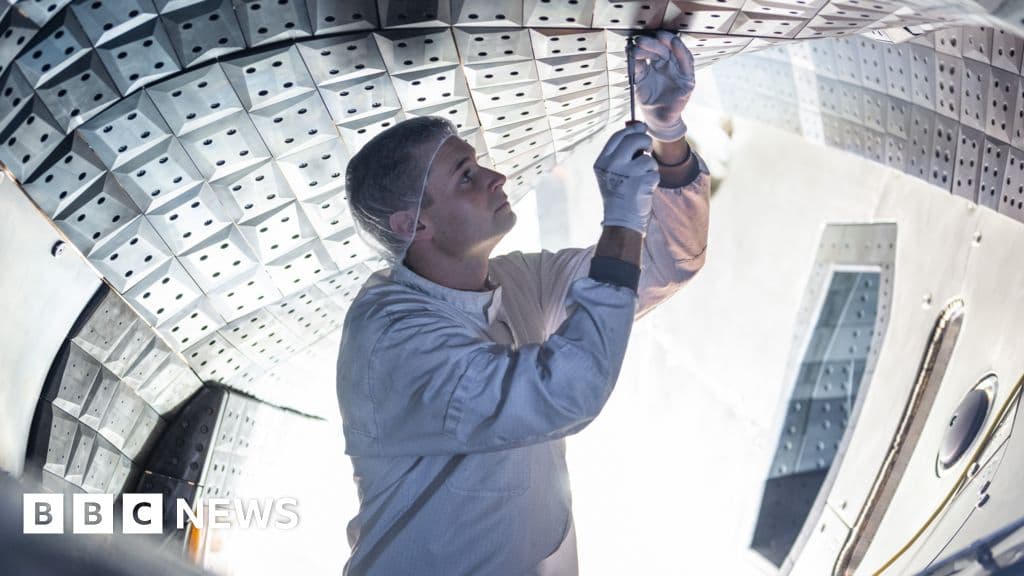
Image: BBC Business
Explore how Proxima Fusion's daring stellarator project could revolutionize clean energy with its innovative approach to nuclear fusion.
GlipzoIn a world where clean energy solutions are more crucial than ever, Proxima Fusion is taking a daring step forward in the quest for sustainable electricity. Founded by Francesco Sciortino, the Munich-based company is tackling the formidable challenge of nuclear fusion—an endeavor that many deem impossible.
Nuclear fusion seeks to replicate the processes that power the Sun, offering the tantalizing promise of abundant, affordable, and emission-free energy. Yet, the road to a viable fusion power station is fraught with challenges, making Proxima's innovative approach all the more compelling.
Fusion involves the merging of hydrogen nuclei, a process that releases vast amounts of energy. On the Sun, gravitational forces create the necessary conditions for this reaction to sustain itself. However, achieving fusion on Earth requires significantly higher temperatures—much hotter than those found in the Sun's core.
To induce fusion, a fuel mixture of tritium and deuterium is heated until it transforms into a plasma, a state of matter where electrons are separated from nuclei. This plasma must then be carefully manipulated to spark the fusion reaction.
While many fusion efforts focus on the tokamak design—a doughnut-shaped device that uses powerful magnets to contain plasma—Proxima is breaking new ground with its stellarator design. Sciortino describes the tokamak as a "beast" and the stellarator as a "little cat," emphasizing the latter's complexity and elegance.
The stellarator's intricate design, though challenging to construct, may yield significant long-term benefits, making it easier to maintain the extreme conditions required for fusion. Proxima's stellarator, named Alpha, draws from decades of research conducted at Germany’s Max Planck Institute for Plasma Physics and its well-regarded stellarator, the W7-X.
Proxima Fusion is not only focused on Alpha but also aims to develop a more advanced fusion power plant known as Stellaris. To achieve these ambitious goals, the company is in the process of securing substantial investments. Recently, Proxima secured €400 million (£340 million; $460 million) in funding from the state of Bavaria and is pursuing an additional $1 billion from the federal government, with a decision anticipated next year.
As Proxima pursues its vision, it faces competition from over 53 groups worldwide dedicated to fusion technology, as reported by the Fusion Industry Association (FIA). One notable competitor is the UK-based STEP (Spherical Tokamak for Energy Production) project, which aims to construct a prototype fusion power plant at a former coal-fired power station in West Burton, Yorkshire.
Ryan Ramsey, the director of Organizational Performance at STEP, notes that tokamaks benefit from a strong experimental foundation, having demonstrated better plasma performance more closely aligned with the requirements for a functioning fusion power plant. The simpler magnetic geometry of tokamaks also makes them easier and less expensive to build and maintain.
Sciortino is acutely aware of the obstacles Proxima faces, especially in designing the complex magnets necessary for the stellarator. He admits that he often "loses sleep" worrying about whether his team can build these intricate components at a pace and cost that will make their fusion project feasible.
The race towards achieving functional nuclear fusion is not just a scientific challenge; it has significant implications for the future of energy production. Successful fusion technology could lead to a dramatic reduction in carbon emissions and a sustainable energy source that could power the world for generations.
As Proxima Fusion continues its journey, the outcomes of its investments and technological advancements will be critical in determining the viability of stellarators as a reliable energy source.
The coming months will be pivotal for Proxima Fusion as they await government funding decisions and push forward with their innovative stellarator design. Key milestones to watch include: - Funding Announcements: Updates on federal funding will clarify Proxima’s financial future. - Development Progress: Advancements in the Alpha stellarator’s construction and testing could set the stage for a new era in fusion energy. - Industry Developments: Watching how competing projects evolve will provide insight into the broader fusion landscape and the potential for collaborative efforts.
In a world increasingly aware of the urgent need for sustainable energy solutions, Proxima Fusion's journey could redefine the future of electricity generation. As they strive to turn their "dumb machine" into a groundbreaking energy source, the implications of their success or failure will resonate far beyond the laboratory walls.

Discover how the brain protein Menin could be the key to halting cognitive decline with new research that uncovers its vital role in aging.
Indian Express
A new 'killer fungus' discovered in the UK targets invasive heath-star moss, offering hope for restoring native habitats. Will it turn the tide against invasives?
BBC Science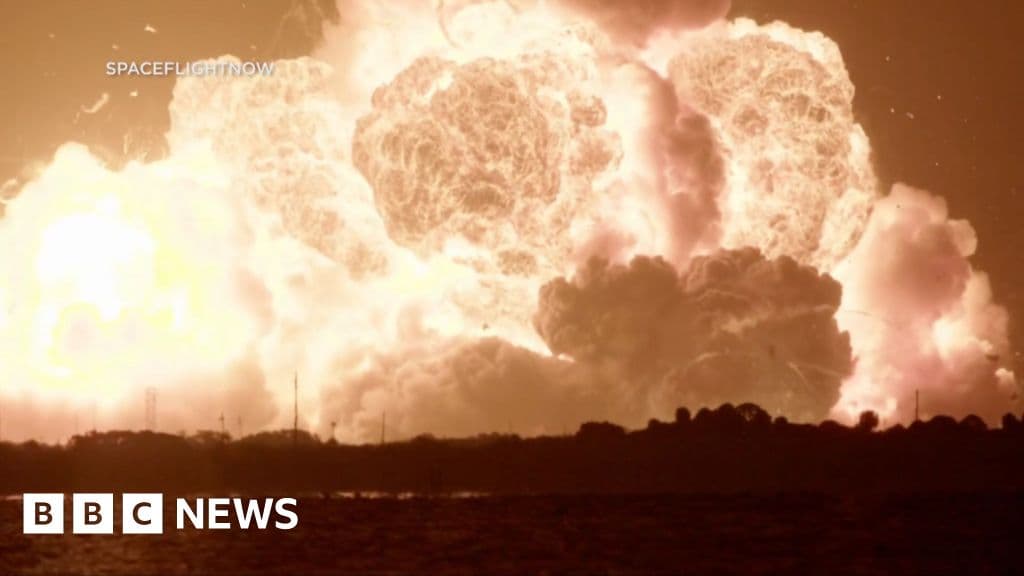
A Blue Origin rocket exploded during a test in Florida, prompting investigations. All personnel are safe. What does this mean for the future of space travel?
BBC Business