

Image: Science Daily
Astronomers reveal a groundbreaking discovery of an atmosphere on ancient super Earth TOI-561 b, challenging existing theories on atmospheric retention.
GlipzoTOI-561 b is about twice the mass of Earth but differs significantly in its other characteristics. This super Earth orbits perilously close to its star, at a distance roughly one-fortieth of Mercury's orbit around the Sun. Despite its star being slightly cooler and smaller than our Sun, TOI-561 b completes an orbit in just 10.56 hours, leading to one hemisphere being perpetually exposed to sunlight.
In our Solar System, smaller, intensely heated planets typically lose their original gas envelopes early in their formation. However, TOI-561 b orbits a significantly older star than our Sun, which raises questions about its ability to retain an atmosphere under harsh conditions.
Prior to their analysis, the research team considered various structural factors that could explain the planet's low density. One hypothesis proposed that TOI-561 b might possess a smaller iron core and a mantle composed of lighter rock compared to Earth. Teske elaborated on the planet's unique origins, stating, "What makes TOI-561 b stand out among ultra-short-period planets is its orbit around a very old, iron-poor star in the Milky Way's thick disk. This suggests it formed under a significantly different chemical environment than planets in our Solar System."
If TOI-561 b lacked an atmosphere, scientists expected the temperature on its dayside to soar to nearly 4,900 degrees Fahrenheit (2,700 degrees Celsius). However, the measurements revealed a significantly lower temperature of about 3,200 degrees Fahrenheit (1,800 degrees Celsius). This notable difference hints at a redistribution of heat across the planet's surface.
Anjuli B. S. J. Choudhury, a co-author of the study, emphasized the need for a thicker, volatile-rich atmosphere to account for all observations.
As astronomers continue to study TOI-561 b, they may gain insights into the conditions conducive to atmospheric retention on super Earths and other rocky planets. This knowledge could ultimately help inform the search for exoplanets that may harbor life.
In conclusion, the implications of this research extend beyond TOI-561 b. It encourages a reevaluation of the criteria used to determine the presence of atmospheres on similar planets, thereby enriching our understanding of planetary science and the diverse range of worlds that exist beyond our Solar System.

Discover how the brain protein Menin could be the key to halting cognitive decline with new research that uncovers its vital role in aging.
Indian Express
A new 'killer fungus' discovered in the UK targets invasive heath-star moss, offering hope for restoring native habitats. Will it turn the tide against invasives?
BBC Science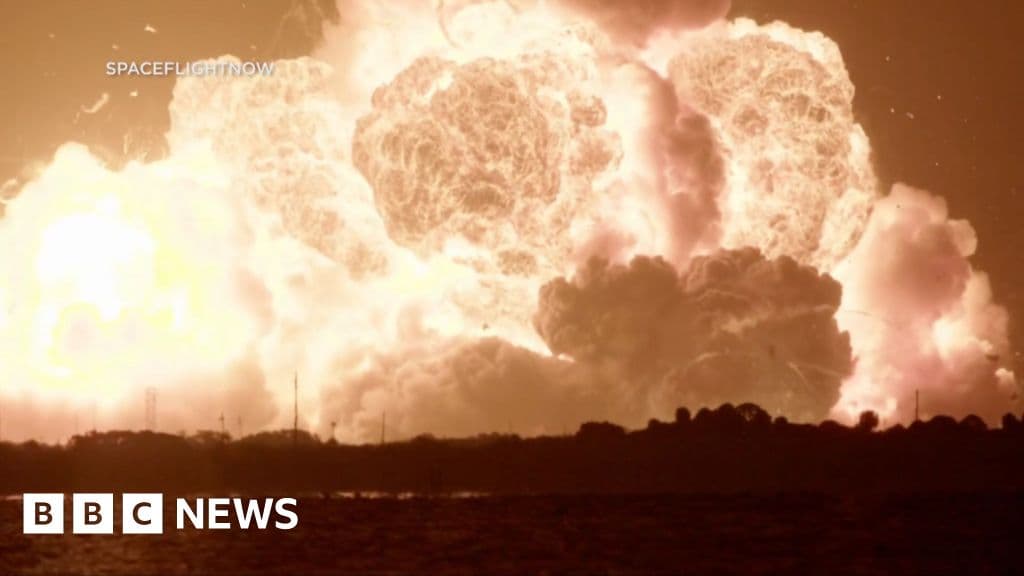
A Blue Origin rocket exploded during a test in Florida, prompting investigations. All personnel are safe. What does this mean for the future of space travel?
BBC Business