
Image: Science Daily
Discover the secrets of asteroid 16 Psyche's formation and its significance for planetary evolution, as NASA's mission approaches in 2029.
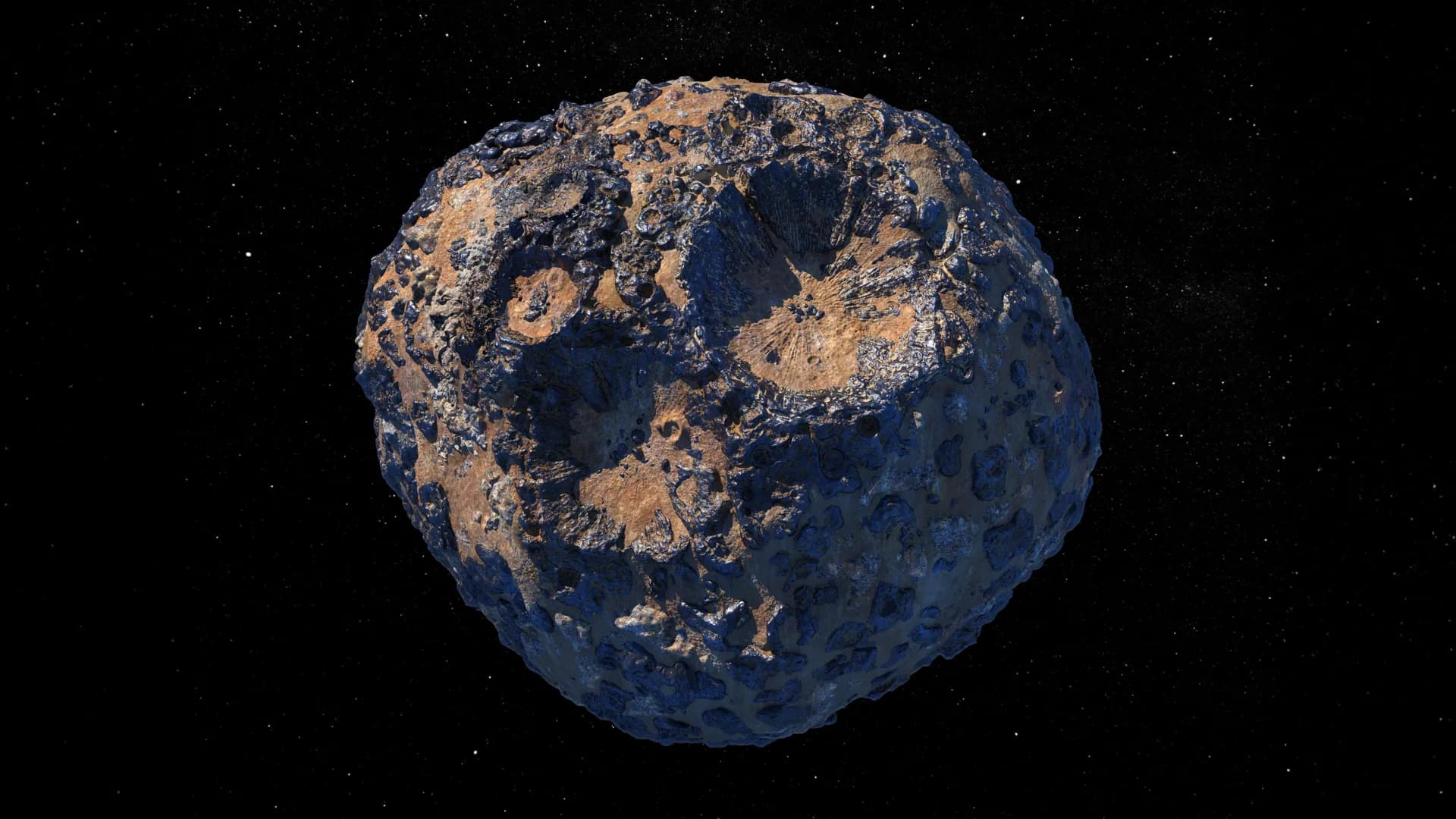
GlipzoMore than 200 years since the discovery of asteroid 16 Psyche, scientists are still piecing together the puzzle of its formation. This intriguing asteroid, located in the main asteroid belt between Mars and Jupiter, has captured the attention of researchers due to its unique characteristics. As the 10th-most massive asteroid, Psyche is primarily composed of metal and spans approximately 140 miles across. With NASA's Psyche spacecraft set to arrive at this celestial body in 2029, the anticipation builds as scientists aim to uncover its origins.
The current theories surrounding Psyche's formation are varied and complex. Researchers posit that it may represent a remnant of a nascent planet that was fragmented during violent collisions or may be a piece of a once-layered body that lost its outer rocky shell. Other hypotheses suggest that Psyche could have originally formed as a metal-rich object or evolved into its current form through a series of impacts with other asteroids. Each of these scenarios provides critical insights into the processes that shaped the early Solar System.
To delve deeper into these theories, scientists from the University of Arizona's Lunar and Planetary Laboratory have developed simulations aimed at understanding the formation of a large crater near Psyche's north pole. Their research, published in JGR Planets, offers predictive insights that will assist in interpreting the data collected by the forthcoming NASA mission. By merging these simulations with direct observations, the team hopes to achieve a clearer understanding of Psyche's makeup upon the spacecraft's arrival.
Namya Baijal, a doctoral candidate at the LPL and the lead author of the published study, emphasized the importance of crater analysis, stating, "Large impact basins or craters excavate deep into the asteroid, which gives clues about what its interior is made of." Through their simulations, researchers aim to create testable predictions regarding Psyche's overall composition.
One of the standout findings from the research is the influence of porosity—the amount of empty space within the asteroid—on crater formation. Baijal noted, "Porosity is often ignored because it's difficult to include in models, but our simulations show it can strongly affect the impact process and shape of craters left behind." Asteroids with higher porosity can absorb impact energy more efficiently, resulting in deeper craters and less surface debris.
By comparing their simulated crater features with those observed by the Psyche spacecraft, scientists can assess whether the asteroid's interior comprises distinct metal and rock regions or is a more chaotic amalgamation of materials.
The research team likens their investigative approach to exploring the remnants of an abandoned pizza shop. As Erik Asphaug, a professor at LPL and co-author of the study, noted, "The cooks have long left, but you can look at what's left behind—the ovens, scraps of dough, the toppings—and make inferences about how the pizzas were made." This analogy highlights how Psyche and other main belt asteroids serve as the leftover building blocks of planet formation.
If Psyche is confirmed to be the exposed core of a former planet, stripped of its outer layers, it could offer unprecedented insight into a tumultuous phase of planetary evolution that is otherwise unobservable. Baijal remarked, "We tested two main interior structures for Psyche. One is a layered structure with a metallic core and a thin, rocky mantle, likely formed if a violent collision stripped away the outer layers. The other is a uniform mixture of metal and silicate, created by a more catastrophic impact that mixed everything together."
As the NASA Psyche mission gears up for its launch, excitement is palpable within the scientific community. The spacecraft's anticipated data collection will provide invaluable insights into the composition of Psyche and, by extension, the history of our Solar System. With its unique metallic structure, Psyche stands as a potential window into the processes that led to the formation of terrestrial planets.
In conclusion, the mysteries surrounding asteroid 16 Psyche are set to unfold as NASA prepares for its mission. The findings from the University of Arizona's research and the subsequent data from the Psyche spacecraft will play a crucial role in revealing the story of this enigmatic asteroid and its connection to the broader narrative of planetary formation. Stay tuned as this exciting journey into the heart of an ancient celestial body promises to reshape our understanding of the cosmos.

Discover how the brain protein Menin could be the key to halting cognitive decline with new research that uncovers its vital role in aging.
Indian Express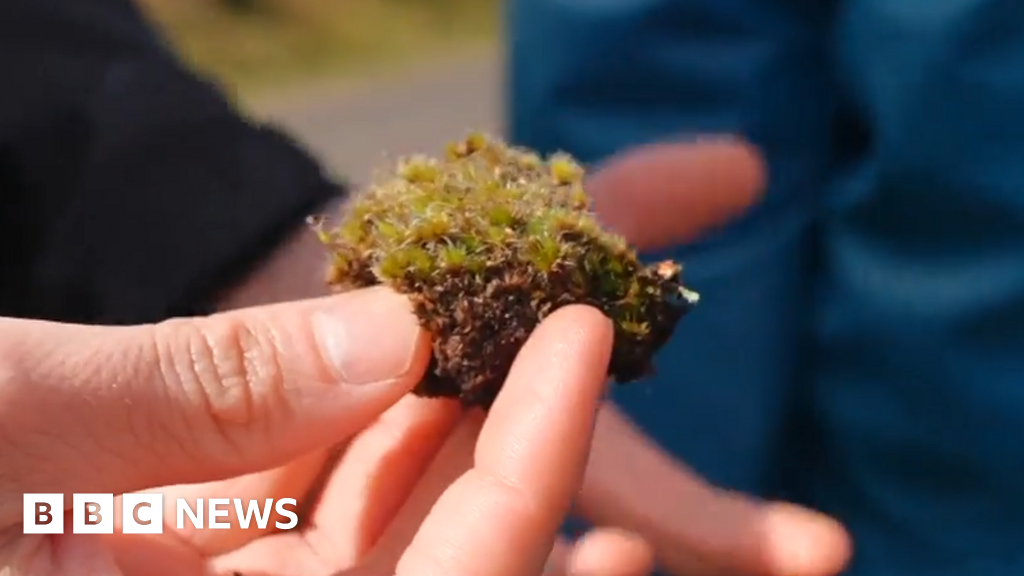
A new 'killer fungus' discovered in the UK targets invasive heath-star moss, offering hope for restoring native habitats. Will it turn the tide against invasives?
BBC Science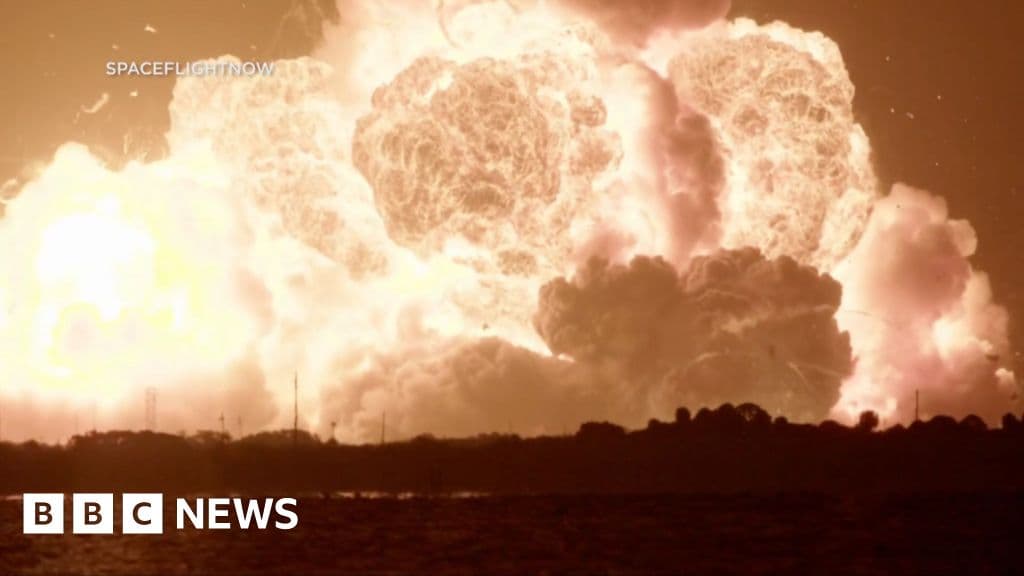
A Blue Origin rocket exploded during a test in Florida, prompting investigations. All personnel are safe. What does this mean for the future of space travel?
BBC Business