Glipzo
WorldTechnologyBusinessSportsEntertainmentScienceHealthPolitics
Glipzo
WorldTechnologyBusinessSportsEntertainmentScienceHealthPolitics
  1. Home
  2. /
  3. Science
  4. /
  5. Revealed: How Fireflies Synchronize Their Flashing Displays
Revealed: How Fireflies Synchronize Their Flashing Displays

Image: Ars Technica

Science
Monday, March 16, 20265 min read

Revealed: How Fireflies Synchronize Their Flashing Displays

Discover how South Carolina fireflies synchronize their flashing signals and what this means for science and technology. Dive into the fascinating research here!

Glipzo News Desk|Source: Ars Technica
Share
Glipzo

Key Highlights

  • Fireflies in South Carolina synchronize their mating flashes.
  • Research could revolutionize our understanding of cell and neuron synchronization.
  • Craig Reynolds' 'boids' program transformed collective behavior studies.
  • Findings may influence drone swarm technology design.
  • Orit Peleg's research reveals secrets of firefly lighting patterns.

In this article

  • The Enigmatic World of Firefly Synchronization In a remarkable exploration of nature's wonders, scientists have uncovered how **male fireflies** in a swamp in **South Carolina** synchronize their flashing patterns during mating displays. This groundbreaking research is set to be presented at the **American Physical Society** meeting in **Denver** and is already available for preview in a preprint on **biorxiv**. The findings not only shed light on the intriguing behaviors of fireflies but may also inspire advancements in understanding cellular synchronization in our bodies, neural firing patterns in the brain, and the design of **drone swarms** that communicate using synchronized signals.
  • The Legacy of Swarming Behavior Research For decades, the study of swarming and flocking behaviors was primarily within the realm of observational biology. However, the game changed in the 1980s thanks to **Craig Reynolds**, a computer graphics expert who introduced the **“boids” program**. This agent-based computational model transformed our understanding of collective behavior. In this model, individual units are represented as dots moving in a straight path at a constant speed. By applying simple interaction rules, researchers can observe the emergence of flocking patterns as the density of dots increases.
  • Diverse Mechanisms of Collective Behavior While flocking and swarming are widespread in nature, each species exhibits unique mechanisms. For example, **wild jackdaws** were observed changing their flight patterns based on their intentions—whether returning to roost or defending against predators. **Bacteria**, particularly **E. coli**, also demonstrate collective behavior. The **Hawaiian bobtail squid** utilizes a built-in flashlight for navigation, hunting, and evasion, relying on a colony of **Vibrio fischeri** bacteria. When the bacterial population reaches a critical level, they emit light—a process known as **quorum sensing**.
  • The Science Behind Firefly Luminescence Fireflies are well-known for their enchanting glow, but much remains to be understood about how they control their light emissions. We have identified the enzyme responsible for their luminescence—**luciferase**—along with the chemical reactions that produce the light. However, the precise mechanisms behind their synchronized flashing remain a mystery that researchers are eager to explore.
  • Exploring Firefly Flash Synchronization **Orit Peleg**, a researcher at the **University of Colorado at Boulder**, has been captivated by the synchronization of firefly flashes for several years. Her prior investigations took her to the **Great Smoky Mountains National Park**, where she studied thousands of **Photinus carolinus** fireflies, known for their distinctive mating displays. These fireflies exhibit a rhythmic pattern of flashing: a series of quick flashes followed by a pause of several seconds, before repeating the cycle.
  • Findings from the Research Team The research team discovered that even a small number of interacting male fireflies could significantly influence the overall synchronization of the group. They observed that the fireflies adjusted their flashing in response to their neighbors, creating a mesmerizing display of coordinated light. This local interaction model provides insight into how individual behaviors contribute to the larger phenomenon of synchronized flashing.
  • Implications Beyond Fireflies The implications of this research extend well beyond the realm of fireflies. Understanding the principles of synchronization in nature can lead to advancements in various fields. For instance, insights gained from studying firefly synchronization may inform our understanding of how human cells sync with internal **circadian rhythms** or how groups of neurons communicate in the brain.
  • A Bright Future for Synchronization Research As scientists continue to unravel the complexities of firefly synchronization, we can anticipate further revelations about the intricate patterns of behavior in the natural world. The ongoing research will likely lead to a deeper understanding of collective behaviors across species, opening the door for innovative applications in technology and biology.
  • Why It Matters The study of synchronization in fireflies not only enhances our appreciation of these creatures but also showcases the profound connections between biological systems and technological advancements. Understanding these interactions could pave the way for future innovations in various fields, from biology to robotics.
  • What to Watch For As the research progresses, keep an eye on developments from Peleg’s team and others studying synchronization in nature. Future findings may lead to groundbreaking applications in medicine, technology, and artificial intelligence, making this an exciting area of study to follow.

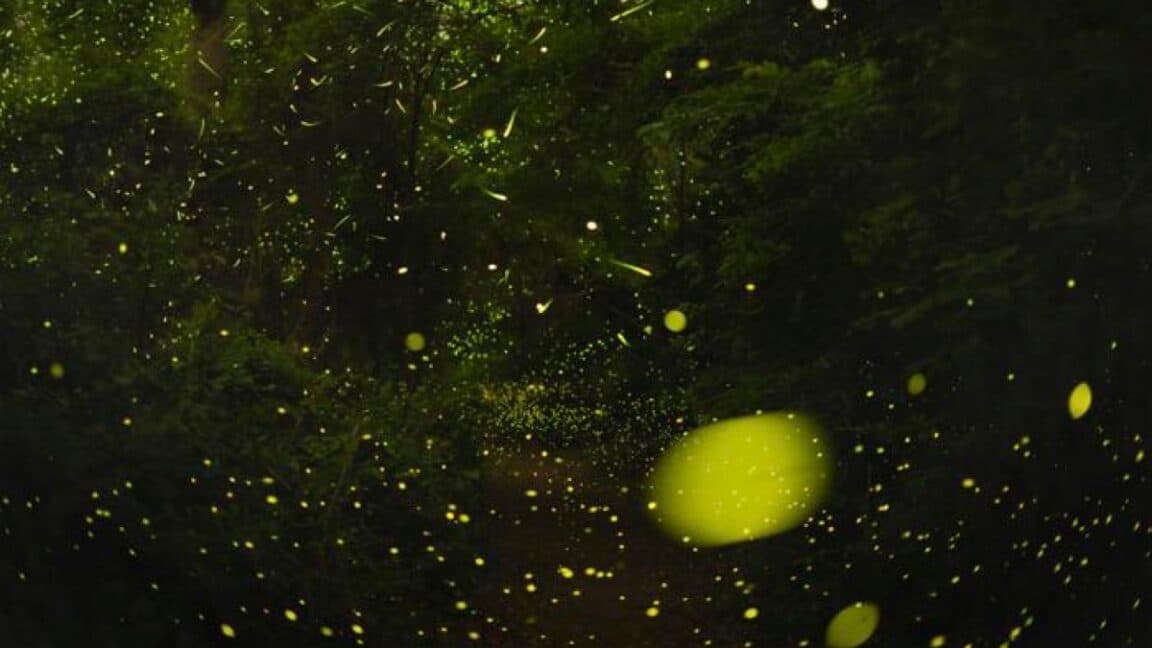
The Enigmatic World of Firefly Synchronization In a remarkable exploration of nature's wonders, scientists have uncovered how **male fireflies** in a swamp in **South Carolina** synchronize their flashing patterns during mating displays. This groundbreaking research is set to be presented at the **American Physical Society** meeting in **Denver** and is already available for preview in a preprint on **biorxiv**. The findings not only shed light on the intriguing behaviors of fireflies but may also inspire advancements in understanding cellular synchronization in our bodies, neural firing patterns in the brain, and the design of **drone swarms** that communicate using synchronized signals.

The Legacy of Swarming Behavior Research For decades, the study of swarming and flocking behaviors was primarily within the realm of observational biology. However, the game changed in the 1980s thanks to **Craig Reynolds**, a computer graphics expert who introduced the **“boids” program**. This agent-based computational model transformed our understanding of collective behavior. In this model, individual units are represented as dots moving in a straight path at a constant speed. By applying simple interaction rules, researchers can observe the emergence of flocking patterns as the density of dots increases.

Fire ants serve as a prime example of this phenomenon. When spaced apart, they act like individuals. However, when grouped closely, they display behaviors akin to a single entity, showcasing both solid and liquid-like properties. They can flow seamlessly from one location to another, linking together to form structures that assist in survival during events like floods or hurricanes. Their ability to manage traffic flow is equally impressive, as ant traffic jams are a rare sight.

Diverse Mechanisms of Collective Behavior While flocking and swarming are widespread in nature, each species exhibits unique mechanisms. For example, **wild jackdaws** were observed changing their flight patterns based on their intentions—whether returning to roost or defending against predators. **Bacteria**, particularly **E. coli**, also demonstrate collective behavior. The **Hawaiian bobtail squid** utilizes a built-in flashlight for navigation, hunting, and evasion, relying on a colony of **Vibrio fischeri** bacteria. When the bacterial population reaches a critical level, they emit light—a process known as **quorum sensing**.

The Science Behind Firefly Luminescence Fireflies are well-known for their enchanting glow, but much remains to be understood about how they control their light emissions. We have identified the enzyme responsible for their luminescence—**luciferase**—along with the chemical reactions that produce the light. However, the precise mechanisms behind their synchronized flashing remain a mystery that researchers are eager to explore.

Exploring Firefly Flash Synchronization **Orit Peleg**, a researcher at the **University of Colorado at Boulder**, has been captivated by the synchronization of firefly flashes for several years. Her prior investigations took her to the **Great Smoky Mountains National Park**, where she studied thousands of **Photinus carolinus** fireflies, known for their distinctive mating displays. These fireflies exhibit a rhythmic pattern of flashing: a series of quick flashes followed by a pause of several seconds, before repeating the cycle.

Peleg aimed to delve deeper into the synchronization process. While theoretical models have been developed to explain how such patterns arise from local interactions, empirical data has been scarce. To address this gap, her lab devised a stereoscopic method for 3D tracking of firefly flashes, allowing them to reconstruct the swarms and their flashing behaviors. Additionally, they set up a tent at the site to capture some fireflies and observe them in a controlled, dark environment.

Findings from the Research Team The research team discovered that even a small number of interacting male fireflies could significantly influence the overall synchronization of the group. They observed that the fireflies adjusted their flashing in response to their neighbors, creating a mesmerizing display of coordinated light. This local interaction model provides insight into how individual behaviors contribute to the larger phenomenon of synchronized flashing.

Implications Beyond Fireflies The implications of this research extend well beyond the realm of fireflies. Understanding the principles of synchronization in nature can lead to advancements in various fields. For instance, insights gained from studying firefly synchronization may inform our understanding of how human cells sync with internal **circadian rhythms** or how groups of neurons communicate in the brain.

Moreover, the concepts derived from this research could influence the design of drone swarms that utilize synchronized flashing for communication, enhancing the efficiency and effectiveness of these technologies in various applications.

A Bright Future for Synchronization Research As scientists continue to unravel the complexities of firefly synchronization, we can anticipate further revelations about the intricate patterns of behavior in the natural world. The ongoing research will likely lead to a deeper understanding of collective behaviors across species, opening the door for innovative applications in technology and biology.

Why It Matters The study of synchronization in fireflies not only enhances our appreciation of these creatures but also showcases the profound connections between biological systems and technological advancements. Understanding these interactions could pave the way for future innovations in various fields, from biology to robotics.

What to Watch For As the research progresses, keep an eye on developments from Peleg’s team and others studying synchronization in nature. Future findings may lead to groundbreaking applications in medicine, technology, and artificial intelligence, making this an exciting area of study to follow.

Did you find this article useful? Share it!

Share

Related Articles

Artemis II Crew Shares Transformative Journey of Unity
Science
Apr 18, 2026

Artemis II Crew Shares Transformative Journey of Unity

The Artemis II crew returns with a powerful message of unity and hope after their groundbreaking mission. Discover their inspiring journey and what lies ahead.

BBC Science
Critical Efforts Underway to Save Stranded Whale Timmy
Science
Apr 17, 2026

Critical Efforts Underway to Save Stranded Whale Timmy

A new rescue effort for stranded whale Timmy includes using air cushions. Can this innovative method save him? Learn more about his situation.

BBC World
Shocking Butterfly Comeback After 430 Trees Planted
Science
Apr 17, 2026

Shocking Butterfly Comeback After 430 Trees Planted

Rare white-letter hairstreak butterflies return to Quantock Hills after volunteers plant 430 elm trees, marking a significant conservation success. Find out more!

BBC Science

Categories

  • World
  • Technology
  • Business
  • Sports

More

  • Entertainment
  • Science
  • Health
  • Politics

Explore

  • Web Stories
  • About Us
  • Contact

Legal

  • Privacy Policy
  • Terms of Service

© 2026 Glipzo. All rights reserved.