

Image: Science Daily
Discover how a new study reveals that Earth's tectonic plates began moving 3.5 billion years ago, reshaping our understanding of geological history.
GlipzoEarth's geological narrative is intricately woven through the movements of its tectonic plates, which have continuously reshaped continents, established oceans, and influenced the diverse climates that fostered life. Yet, a significant question has lingered: When did these tectonic plates first begin their journey? Did this phenomenon start shortly after the Earth's formation approximately 4.5 billion years ago, or was it a much later development?
A groundbreaking study from Harvard University geoscientists sheds light on this mystery. Published on March 19 in the journal Science, this research provides the earliest direct evidence of tectonic plate movement, tracing back 3.5 billion years. The findings indicate that even in its nascent stages, the motion of tectonic plates—albeit different from contemporary patterns—played a crucial role in shaping the primitive Earth.
Lead author Alec Brenner, a PhD candidate in the Department of Earth and Planetary Sciences, emphasized the significance of their findings: "There has been a huge range of ages suggested for timing. With this study, we're able to say that three and a half billion years ago, we can see plates moving around on the Earth's surface."
The pivotal evidence for this study emerged from the Pilbara Craton in Western Australia, home to some of the oldest well-preserved rock formations on Earth. These rocks originate from the Archean Eon, a period when early microbial life was developing, and the planet was frequently bombarded by celestial objects.
The Pilbara region is not only geologically significant but also rich in evidence of ancient life, featuring stromatolites and microbialite formations created by cyanobacteria, single-celled organisms that played a vital role in Earth's early biosphere.
Under the leadership of Roger Fu, a Professor of Earth and Planetary Sciences at Harvard, the research team has been investigating the East Pilbara region since 2017. Fu's expertise in paleomagnetism—the study of Earth's historical magnetic field—has been crucial in reconstructing the planet's past geological activity. Earlier studies by the team also identified signs of an ancient meteor impact in the same geological area.
Paleomagnetism serves as a powerful tool for geoscientists, allowing them to analyze the magnetic signals preserved in rocks to uncover historical movements of the Earth's crust. The magnetic signals locked within mineral grains provide a unique record of where these rocks originally formed on Earth.
By examining these ancient magnetic signals, researchers can determine both the orientation and latitude of the rocks at the time of their formation, effectively acting as a geological GPS. Fu noted, "Almost everything unique about the Earth has something to do with plate tectonics at some level. At some point, the Earth transitioned from being just another planet with similar materials to something truly unique. A very strong suspicion is that plate tectonics started Earth down this divergent track."
In their quest to uncover the history of Earth's tectonic movements, the research team meticulously examined over 900 rock samples from more than 100 locations within the North Pole Dome area. They utilized specialized equipment to drill cylindrical cores from the rocks, ensuring accurate recording of each sample's position with tools like compasses and goniometers.
Back in the laboratory, the cores were sliced into thin sections for detailed analysis using a highly sensitive magnetometer capable of detecting minuscule magnetic signals. The samples underwent gradual heating up to 590 degrees Celsius to isolate the magnetic signals from various periods in their history, a process that spanned approximately two years.
Brenner reflected on the challenges faced during this extensive research: "We took a really big gamble. Demagnetizing thousands of cores takes years. And boy, did it pay off! These results were beyond our wildest dreams."
The alignment of electrons within magnetic minerals acts like a tiny compass, pointing toward Earth's magnetic pole and revealing the original location of the rock when it formed. This study not only provides the earliest evidence of tectonic plate movement but also emphasizes the transformative role of plate tectonics in shaping the Earth as we know it today.
The findings have profound implications for understanding the evolution of our planet. They suggest that tectonic activity began much earlier than previously thought, which may have influenced the development of the Earth's atmosphere and biosphere.
Understanding the timeline of tectonic movements is crucial for several reasons: - Geological Insights: It enhances our comprehension of Earth's geological history and the processes that led to the formation of its landscape. - Evolution of Life: It sheds light on how early plate movements may have influenced the development of life on Earth. - Climate Patterns: It offers insights into how plate tectonics has historically impacted climate and environmental changes.
As scientists continue to explore the implications of early tectonic activity, future research will likely delve deeper into the relationship between plate movements and other geological phenomena, including volcanic activity and continental drift. The understanding of how tectonic plates began their journey will not only reshape our knowledge of Earth's history but may also inform predictions about its future movements.
In conclusion, this groundbreaking research marks a significant milestone in geological science, inviting both curiosity and further investigation into the complex history of our planet. What other secrets does the Earth hold, waiting to be uncovered?

Discover how the brain protein Menin could be the key to halting cognitive decline with new research that uncovers its vital role in aging.
Indian Express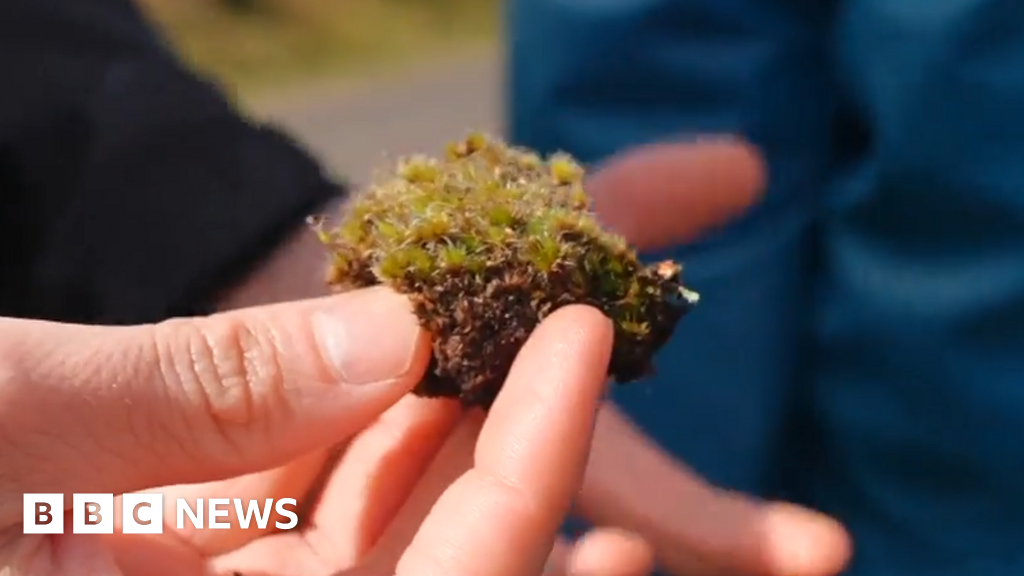
A new 'killer fungus' discovered in the UK targets invasive heath-star moss, offering hope for restoring native habitats. Will it turn the tide against invasives?
BBC Science
A Blue Origin rocket exploded during a test in Florida, prompting investigations. All personnel are safe. What does this mean for the future of space travel?
BBC Business