

Image: BBC World
El Niño's intensification could lead to record global temperatures and severe humanitarian impacts. Experts warn about significant climate changes ahead.
GlipzoRecent forecasts have ignited concerns about the developing El Niño phenomenon in the tropical Pacific Ocean, which may become one of the most intense on record. Experts warn that this climatic event could lead to unprecedented global temperatures and significant humanitarian challenges. The latest data indicates that sea surface temperatures in certain areas of the Pacific are currently about 0.5°C above normal, a crucial marker signaling the onset of El Niño.
As scientists monitor the situation closely, expectations are growing that this El Niño will intensify in the coming months, potentially reaching its peak as a super El Niño by autumn. The implications of such a strong event could be far-reaching, with predictions suggesting that 2027 could become the warmest year recorded.
In its latest report, the National Oceanic and Atmospheric Administration (NOAA) has raised its confidence levels to two-in-three odds that this developing El Niño will be classified as strong or even very strong by this winter. The swift increase in sea surface temperatures observed in the tropical Pacific over the past weeks has been particularly striking.
Meteorologist Nathanial Johnson from NOAA remarked on the unusual circumstances, stating that transitioning from a La Niña phase (characterized by cooler ocean temperatures) to a potentially powerful El Niño in just one year is a rare phenomenon. The Bureau of Meteorology (BoM) in Australia is also monitoring these developments with a more stringent criterion, requiring sea surface temperatures to surpass 0.8°C above average to confirm El Niño's presence.
Historically, spring forecasts for El Niño have not been very reliable, yet forecasters this year exhibit an unusual degree of confidence in their predictions. The El Niño phenomenon is particularly monitored in a specific region known as Niño3.4, where a three-month average of sea surface temperature is compared against long-term data. A strong or super El Niño is defined by temperatures exceeding 1.5°C above average.
Forecast models from ECMWF (European Centre for Medium-Range Weather Forecasts), NOAA, and BoM are largely aligned, indicating a significant temperature increase. Alarmingly, the latest models from ECMWF suggest that over half of their forecasts indicate a rise of more than 2.5°C by autumn. Such a temperature spike would classify this El Niño as a historically strong event, according to Johnson. In fact, some models predict temperature increases could even exceed 3°C, surpassing the previous record of 2.7°C, which was documented in 1877.
It's important to contextualize these predictions with historical data. The 1877 El Niño lasted approximately 18 months and triggered severe global climate disruptions, leading to catastrophic droughts and widespread famine across parts of Asia, Brazil, and Africa, resulting in millions of fatalities. Conversely, regions such as Peru experienced devastating flooding.
The last significant El Niño event, occurring between 2015 and 2016, resulted in a three-month average Niño3.4 temperature rise of 2.4°C. Typically, the additional heat generated during these events raises global average temperatures by about 0.2°C.
Liz Stephens, a professor of climate risk and resilience at the University of Reading, stated that we are likely on track for record global temperatures next year, particularly if the current El Niño evolves into a very strong event. If projections hold true, the world could face the hottest year on record following the 2023/24 El Niño.
While the most direct weather impacts may be felt around the Pacific, the influence of this El Niño will be global, affecting weather patterns, agriculture, and economies far beyond the ocean.
As we move toward the autumn months, all eyes will be on the development of El Niño and its potential implications for global climate patterns. Here are key factors to monitor: - Temperature Trends: Continued observation of sea surface temperatures, particularly in the Niño3.4 region, will be crucial in assessing the strength of the developing El Niño. - Global Weather Patterns: The effect of a strong El Niño on global weather, including droughts, floods, and temperature anomalies, will need close tracking as we approach the winter months. - Humanitarian Preparedness: Governments and organizations must prepare for potential humanitarian crises stemming from extreme weather events linked to El Niño.
In conclusion, as the El Niño phenomenon unfolds, the climate community will be on high alert, striving to mitigate its impacts and adapt to the changing global climate landscape. The next few months are critical, and the world must brace for the possibility of record temperatures and their associated consequences.

Discover how the brain protein Menin could be the key to halting cognitive decline with new research that uncovers its vital role in aging.
Indian Express
A new 'killer fungus' discovered in the UK targets invasive heath-star moss, offering hope for restoring native habitats. Will it turn the tide against invasives?
BBC Science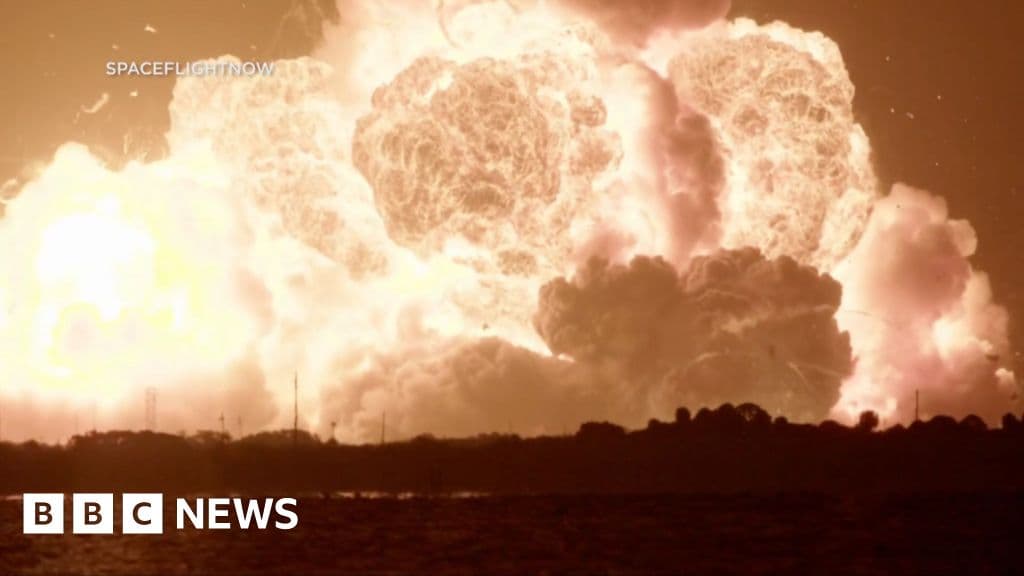
A Blue Origin rocket exploded during a test in Florida, prompting investigations. All personnel are safe. What does this mean for the future of space travel?
BBC Business