
Image: BBC Science
What comes next for the Artemis II astronauts after their historic mission? Discover their journey back to Earth and the implications for future space exploration.
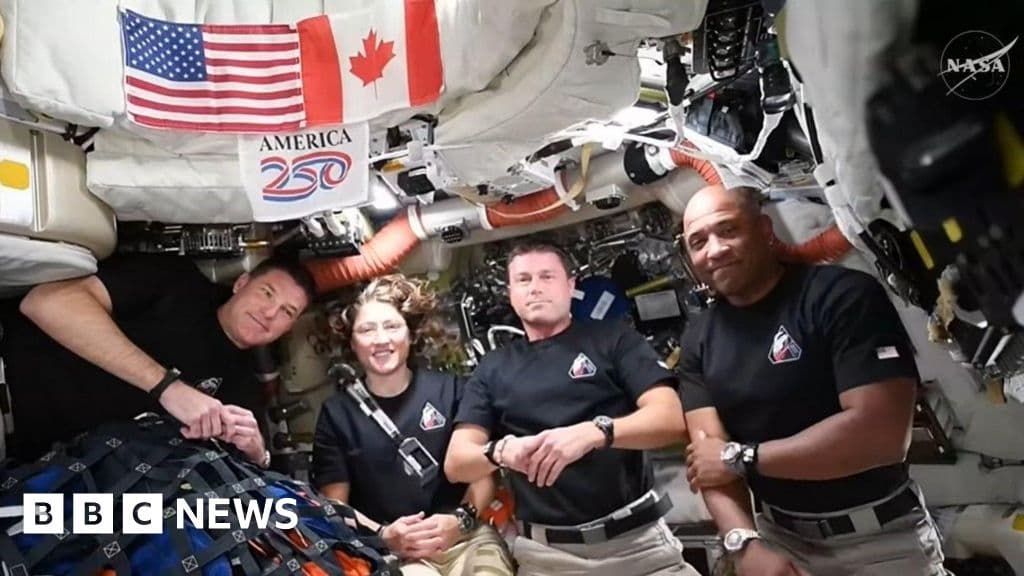
GlipzoThe Artemis II crew has triumphantly returned to Earth after an extraordinary voyage that took them deeper into space than any humans before them. After re-entering the Earth’s atmosphere at a blistering speed of 25,000 mph (40,000 km/h), they splashed down off the coast of California, marking a significant milestone in space exploration. This mission surpassed the previous record of 248,655 miles, set by Apollo 13 in 1970, by over 4,000 miles.
Astronauts undergo rigorous training to prepare for the intense physical and psychological demands of space travel. Contrary to what one might expect, many astronauts describe their time in space as a highlight of their lives, expressing a willingness to embark on such journeys again without hesitation. In a pre-landing press conference, Christina Koch remarked that despite some inconveniences, like freeze-dried meals and limited privacy in the restroom, the experience was absolutely worth it.
Upon their return, the astronauts will immediately undergo a thorough medical examination aboard the US warship assigned for their recovery. Following this, they will be transported by helicopter to the shore and then flown to NASA's Johnson Space Center in Houston. This swift return is designed to ensure their health and well-being after their time in space.
The physical toll of space travel is significant. In microgravity, both muscle and bone mass can deteriorate due to the lack of gravitational pull. The muscles most affected are those that maintain posture, particularly in the back, neck, and calves. Although astronauts adhere to strict exercise regimens while in space, they can still experience considerable muscle loss. Studies show that even after just two weeks in space, muscle mass can decrease by up to 20%. However, the time spent by the Artemis II crew in space is relatively short compared to many past missions.
During the Space Shuttle era (1981-2011), astronauts typically spent two to three weeks in space, while missions to the International Space Station (ISS) often last five to six months. This shorter duration may mean that the health impacts on the Artemis crew will be less severe than those faced by their predecessors.
Returning to Earth after an extended period in space can be a unique experience. Astronauts are trained to manage the transition effectively, so don't anticipate dramatic accounts of 'space shock' from them. Koch has already noted how much she will miss the camaraderie and the sense of purpose shared among the team during the mission. Many astronauts report gaining a deeper appreciation for Earth’s beauty and the interconnectedness of humanity while viewing our planet from the cosmic perspective. Koch eloquently shared, "Seeing our planet surrounded by the blackness of space truly emphasized how alike we are; we all share this world together."
Many astronauts, including the first British astronaut Helen Sharman, have expressed a reluctance to leave the exhilarating environment of space, as the work conducted there is incredibly fulfilling. Nevertheless, the Artemis crew is undoubtedly eager to reunite with their families.
Commander Reid Wiseman, who faced personal tragedy with the loss of his wife in 2020, has been candid about preparing his teenage daughters for the potential risks of his mission. He discussed what they would do if he did not return, even showing them where his will was kept. The moment of splashdown was fraught with danger, and his family is sure to feel immense relief and joy at his safe return.
Dr. Catherine Hansen, married to astronaut Jeremy Hansen, shared the excitement of their children, stating that they are “so, so excited to see their dad living his dream.” She further mentioned plans for a family celebration, starting with a private gathering to share stories before joining larger celebrations with the community.
NASA has not disclosed specific details about the immediate activities of the returning astronauts. The three NASA astronauts—Koch, Wiseman, and Glover—remain integral to the agency’s future missions. With more Artemis flights in the pipeline, including Artemis III planned for 2027 and Artemis IV in 2028, the agency is set to continue its ambitious endeavors in space exploration, including a return to the Moon.
As we look to the future, the Artemis program represents a crucial step in humanity's quest to explore deeper into our solar system. The outcomes and experiences of the Artemis II crew will likely inform the planning of upcoming missions and help NASA refine its strategies for long-term space travel. Stay tuned for updates on who will be selected for the next missions and how they will continue to push the boundaries of human exploration in the cosmos.
The successful return of the Artemis II crew is not just a personal victory for the astronauts; it marks a pivotal moment in space exploration history. Their mission paves the way for future lunar landings and the eventual goal of Mars exploration. Each step taken by these astronauts contributes to our understanding of the universe and our place within it, making their journey vital for future generations of explorers.

Discover how the brain protein Menin could be the key to halting cognitive decline with new research that uncovers its vital role in aging.
Indian Express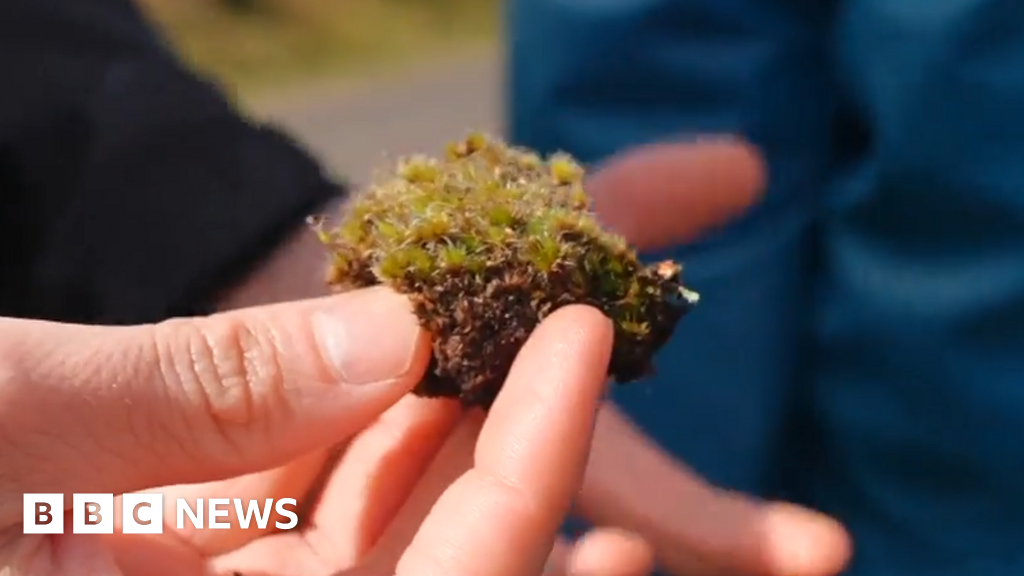
A new 'killer fungus' discovered in the UK targets invasive heath-star moss, offering hope for restoring native habitats. Will it turn the tide against invasives?
BBC Science
A Blue Origin rocket exploded during a test in Florida, prompting investigations. All personnel are safe. What does this mean for the future of space travel?
BBC Business