

Image: The Guardian World
New findings at Monte Verde challenge previous theories on human migration to the Americas, suggesting a younger age for the site and prompting re-evaluation of pre-Clovis evidence.
GlipzoA recent study has sparked renewed debate over how humans populated the Americas, particularly focusing on the Monte Verde archaeological site in southern Chile. For decades, the prevailing notion was that the Clovis culture represented the first inhabitants of the Americas, migrating southward after crossing the Beringia land bridge from Asia approximately 13,400 to 12,800 years ago. However, the exploration of Monte Verde, which was first excavated in 1977, suggested that humans may have occupied the southern part of the continent much earlier, around 14,500 years ago.
Yet, a fresh analysis has indicated that the initial estimates of Monte Verde's age could be significantly inflated. Researchers now propose that the site may actually be only 6,000 to 8,000 years old, challenging the long-held belief that it served as a critical piece of evidence for early human presence in South America. This revelation places the north-to-south migration theory back at the forefront of discussions about how and when humans first arrived in the Americas.
Dr. Todd Surovell, a prominent anthropologist from the University of Wyoming, led the recent study published in Science. Reflecting on the significance of Monte Verde, he stated, "Monte Verde was the anchor for the idea that people were in South America before we see the appearance of the Clovis complex in North America..." This assertion has shaped Surovell's career and the broader understanding of human migration in the Americas.
The initial excavations at Monte Verde, conducted by Tom Dillehay and his team, revealed artifacts and evidence of human life that appeared to predate Clovis culture, thus revolutionizing the narrative of human settlement in the region. However, as Surovell's research progressed, he began to question the site's chronology, leading to the new findings that suggest a vastly different timeline for human habitation.
The crux of the debate lies in the methodology used to date Monte Verde. The current research indicates that soil erosion has caused more recent artifacts to be misallocated in older geological layers, leading to the erroneous conclusion about the site's age. This significant misdating means that Monte Verde is likely not as ancient as previously thought, thus reshaping the timeline of human migration.
Dr. Claudio Latorre, a paleoecologist with the Universidad Católica in Santiago, emphasizes the impact of Monte Verde's original discovery. He noted, "When it was discovered, Monte Verde turned the entire story of the population of the Americas on its head...the understanding that the population of the Americas would have come from north to south was basically chucked out of the window."
The new findings at Monte Verde come after the first independent survey of the location since its initial digs. Surovell and his team received permission to conduct their research during a narrow window when Dillehay's original excavation permits had expired. This timely access allowed them to reassess the site and bring to light what they believe quashes the Monte Verde anomaly.
As archaeology continues to evolve, there have been numerous discoveries of potential pre-Clovis sites across the Americas, stretching from Mexico to northwest Argentina and Uruguay. However, none have yet been thoroughly verified as older than Clovis culture. Surovell advocates for rigorous examination of these sites to further refine our understanding of early human presence in the Americas.
The implications of this research extend beyond academic circles. Understanding the timeline of human migration is crucial for various fields, including genetics, anthropology, and even climate science. The re-evaluation of Monte Verde's age challenges long-standing theories and prompts a reconsideration of how humans adapted to diverse environments across the Americas.
Key Takeaways: - The recent study suggests Monte Verde may be only 6,000 to 8,000 years old, not 14,500 years as previously believed. - The findings challenge the existing narrative that humans migrated from north to south in the Americas. - This research calls for a reevaluation of other pre-Clovis sites across the continent. - The study underscores the importance of rigorous archaeological methods in understanding human history.
As researchers continue to investigate human migration patterns, the focus will likely shift toward verifying other potential pre-Clovis sites. Enhanced technologies and methodologies in archaeology may lead to new insights into the peopling of the Americas, fundamentally altering our understanding of how ancient populations interacted with their environments. The ongoing examination of Monte Verde and similar sites will be paramount in piecing together the complex puzzle of human history in the Americas, ensuring that each step forward is grounded in accurate data and thorough analysis. The future of archaeological discovery is bright, and the journey to unravel the past is more exciting than ever.

Discover how the brain protein Menin could be the key to halting cognitive decline with new research that uncovers its vital role in aging.
Indian Express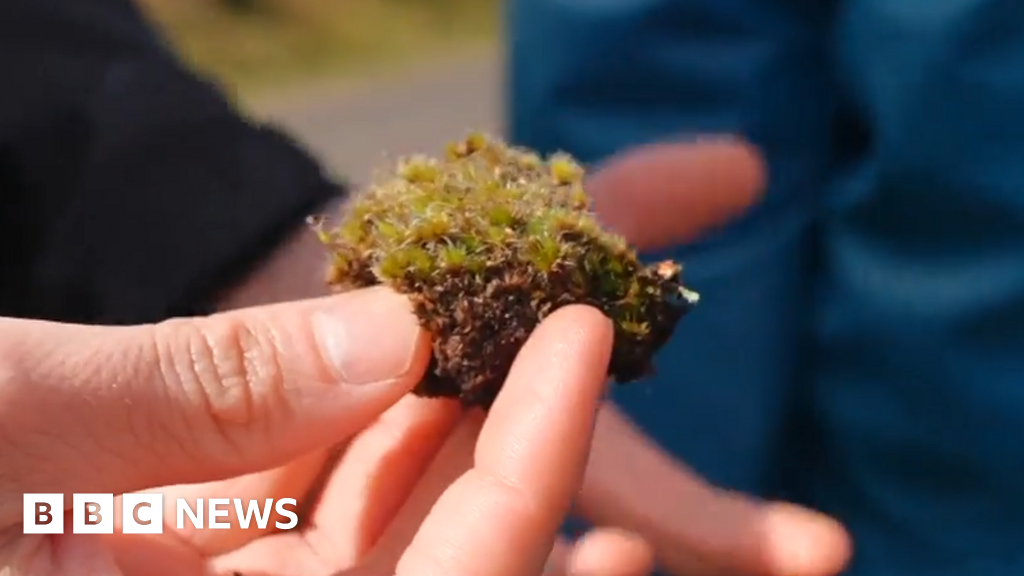
A new 'killer fungus' discovered in the UK targets invasive heath-star moss, offering hope for restoring native habitats. Will it turn the tide against invasives?
BBC Science
A Blue Origin rocket exploded during a test in Florida, prompting investigations. All personnel are safe. What does this mean for the future of space travel?
BBC Business