Glipzo
WorldTechnologyBusinessSportsEntertainmentScienceHealthPolitics
Glipzo
WorldTechnologyBusinessSportsEntertainmentScienceHealthPolitics
  1. Home
  2. /
  3. Science
  4. /
  5. NASA's Curiosity Rover Uncovers Spiderweb-Like Ridges on Mars
NASA's Curiosity Rover Uncovers Spiderweb-Like Ridges on Mars

Image: Science Daily

Science
Sunday, March 15, 20265 min read

NASA's Curiosity Rover Uncovers Spiderweb-Like Ridges on Mars

NASA's Curiosity rover unveils mysterious spiderweb-like ridges on Mars, providing new insights into the planet's ancient water history. Discover more!

Glipzo News Desk|Source: Science Daily
Share
Glipzo

Key Highlights

  • Curiosity rover reveals massive spiderweb-like formations on Mars.
  • Boxwork ridges suggest groundwater flowed longer than anticipated.
  • Findings raise new questions about ancient Martian life.
  • Curiosity navigates challenging terrain to gather critical data.

In this article

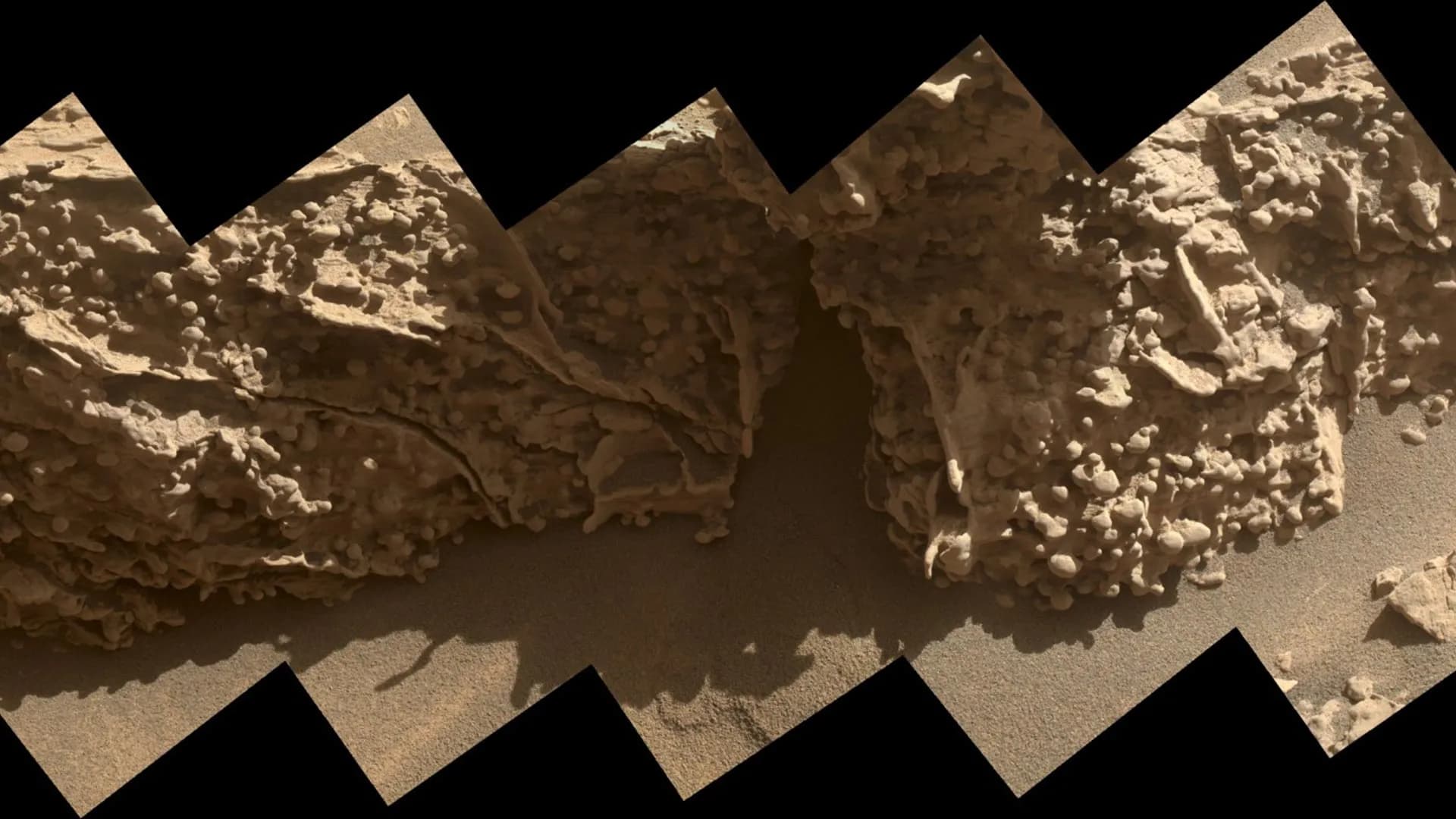
  • A New Discovery on the Martian Surface NASA's Curiosity rover has made a significant discovery on Mars, revealing a rugged landscape that resembles a colossal spiderweb when viewed from above. This intriguing formation has drawn the attention of scientists, as it may provide critical insights into the history of water on ancient Mars. For approximately **six months**, the rover has been investigating geological features known as **boxwork**, which are characterized by narrow ridges that rise **3 to 6 feet** (1 to 2 meters) above sandy depressions. These interconnected ridges stretch across the terrain for miles, suggesting that groundwater may have flowed through this area more recently than previously thought.
  • The Intriguing Patterns of Boxwork Ridges From an orbital perspective, the boxwork formations appear as massive spiderwebs sprawling across the Martian landscape. Scientists hypothesize that these formations came into existence when groundwater seeped through cracks in the bedrock, depositing minerals along these fissures. Over time, the mineral deposits solidified, creating ridges while the surrounding rock eroded away, resulting in the web-like structures now observed.
  • Curiosity's Challenging Terrain Navigation While exploring these Martian boxwork formations, Curiosity has faced several challenges. The rover, which weighs nearly **1 ton** (899 kilograms), must navigate along ridge tops that are often only slightly wider than its chassis. The engineering team at NASA's Jet Propulsion Laboratory (JPL) in Southern California has been meticulously guiding Curiosity through this rugged terrain.
  • Climbing Mount Sharp: A Journey Through Mars' Climate History The boxwork formations are located on **Mount Sharp**, a colossal mountain that rises **3 miles** (5 kilometers) high. Each layer of this mountain represents a distinct chapter in Mars' climatic history. As Curiosity ascends, the landscape increasingly reflects the gradual disappearance of water, interspersed with periods of wetter conditions that allowed rivers and lakes to flourish.
  • Groundwater Insights from Curiosity’s Close Observations Additional findings from Curiosity's close investigation revealed another fascinating aspect of the terrain: dark lines running through the spiderweb-like ridges. In **2014**, researchers proposed that these streaks might indicate central fractures where groundwater once seeped through cracks in the rock, concentrating minerals. Curiosity's observations have confirmed these dark lines to be fractures, reinforcing the notion that groundwater played a crucial role in shaping the ridges.
  • Why This Discovery Matters The findings from Curiosity's exploration of the boxwork formations have profound implications for our understanding of water on ancient Mars. If groundwater persisted in this region longer than previously believed, it opens up new possibilities regarding the planet's habitability and the potential for life. This research is critical not only for understanding Mars' past but also for guiding future missions aimed at searching for signs of life.
  • Looking Ahead: Future Missions and Discoveries The ongoing investigation of the boxwork formations and other geological features on Mars will be crucial for future missions aimed at uncovering the planet's secrets. As technology advances and new missions are planned, the data gathered from Curiosity will serve as a cornerstone for understanding the history of water on Mars and its implications for life beyond Earth. Scientists remain optimistic that continued exploration will yield further insights that could reshape our understanding of our neighboring planet.

A New Discovery on the Martian Surface NASA's Curiosity rover has made a significant discovery on Mars, revealing a rugged landscape that resembles a colossal spiderweb when viewed from above. This intriguing formation has drawn the attention of scientists, as it may provide critical insights into the history of water on ancient Mars. For approximately **six months**, the rover has been investigating geological features known as **boxwork**, which are characterized by narrow ridges that rise **3 to 6 feet** (1 to 2 meters) above sandy depressions. These interconnected ridges stretch across the terrain for miles, suggesting that groundwater may have flowed through this area more recently than previously thought.

This revelation prompts essential questions about the longevity of microscopic life on Mars before the planet transformed into the cold desert we know today. If water persisted in this region longer than expected, it could indicate a more hospitable environment for life than scientists initially assumed.

The Intriguing Patterns of Boxwork Ridges From an orbital perspective, the boxwork formations appear as massive spiderwebs sprawling across the Martian landscape. Scientists hypothesize that these formations came into existence when groundwater seeped through cracks in the bedrock, depositing minerals along these fissures. Over time, the mineral deposits solidified, creating ridges while the surrounding rock eroded away, resulting in the web-like structures now observed.

Before Curiosity's arrival, researchers relied solely on orbital imagery to study these formations, leaving many unanswered questions regarding their actual structure and origin. The rover's direct exploration offers an unprecedented opportunity to investigate these geological marvels up close.

Curiosity's Challenging Terrain Navigation While exploring these Martian boxwork formations, Curiosity has faced several challenges. The rover, which weighs nearly **1 ton** (899 kilograms), must navigate along ridge tops that are often only slightly wider than its chassis. The engineering team at NASA's Jet Propulsion Laboratory (JPL) in Southern California has been meticulously guiding Curiosity through this rugged terrain.

Operations systems engineer Ashley Stroupe described the experience, saying, "It almost feels like a highway we can drive on. But then we have to go down into the hollows, where you need to be mindful of Curiosity's wheels slipping or having trouble turning in the sand. There's always a solution. It just takes trying different paths."

Climbing Mount Sharp: A Journey Through Mars' Climate History The boxwork formations are located on **Mount Sharp**, a colossal mountain that rises **3 miles** (5 kilometers) high. Each layer of this mountain represents a distinct chapter in Mars' climatic history. As Curiosity ascends, the landscape increasingly reflects the gradual disappearance of water, interspersed with periods of wetter conditions that allowed rivers and lakes to flourish.

Tina Seeger, a mission scientist from Rice University in Houston, highlighted the significance of the boxwork’s elevation, stating, "Seeing boxwork this far up the mountain suggests the groundwater table had to be pretty high. And that means the water needed for sustaining life could have lasted much longer than we thought looking from orbit."

Groundwater Insights from Curiosity’s Close Observations Additional findings from Curiosity's close investigation revealed another fascinating aspect of the terrain: dark lines running through the spiderweb-like ridges. In **2014**, researchers proposed that these streaks might indicate central fractures where groundwater once seeped through cracks in the rock, concentrating minerals. Curiosity's observations have confirmed these dark lines to be fractures, reinforcing the notion that groundwater played a crucial role in shaping the ridges.

Moreover, the rover discovered small, bumpy structures known as nodules, which are often linked to ancient groundwater activity. Interestingly, these nodules were found not near the central fractures but along the sides of the ridges and within the sandy depressions between them, suggesting a complex history of water movement in this region.

Why This Discovery Matters The findings from Curiosity's exploration of the boxwork formations have profound implications for our understanding of water on ancient Mars. If groundwater persisted in this region longer than previously believed, it opens up new possibilities regarding the planet's habitability and the potential for life. This research is critical not only for understanding Mars' past but also for guiding future missions aimed at searching for signs of life.

As Curiosity continues its mission, scientists will closely monitor its findings to piece together a more comprehensive picture of Mars’ climatic history and the role of water in shaping its surface. Future explorations could reveal even more about the conditions that existed on Mars billions of years ago and how they may have supported life.

Looking Ahead: Future Missions and Discoveries The ongoing investigation of the boxwork formations and other geological features on Mars will be crucial for future missions aimed at uncovering the planet's secrets. As technology advances and new missions are planned, the data gathered from Curiosity will serve as a cornerstone for understanding the history of water on Mars and its implications for life beyond Earth. Scientists remain optimistic that continued exploration will yield further insights that could reshape our understanding of our neighboring planet.

In summary, as we await the next set of discoveries from Curiosity, the exploration of Martian boxwork formations promises to deepen our knowledge of the Red Planet's ancient environments and their potential to foster life.

Did you find this article useful? Share it!

Share

Related Articles

Critical Efforts Underway to Save Stranded Whale Timmy
Science
Apr 17, 2026

Critical Efforts Underway to Save Stranded Whale Timmy

A new rescue effort for stranded whale Timmy includes using air cushions. Can this innovative method save him? Learn more about his situation.

BBC World
Shocking Butterfly Comeback After 430 Trees Planted
Science
Apr 17, 2026

Shocking Butterfly Comeback After 430 Trees Planted

Rare white-letter hairstreak butterflies return to Quantock Hills after volunteers plant 430 elm trees, marking a significant conservation success. Find out more!

BBC Science
Major Fundraising Drive to Revive Surrey's Wildlife
Science
Apr 16, 2026

Major Fundraising Drive to Revive Surrey's Wildlife

Surrey Wildlife Trust launches a £40K campaign to revive local wildlife, reconnecting communities with nature. Discover how you can help!

BBC Science

Categories

  • World
  • Technology
  • Business
  • Sports

More

  • Entertainment
  • Science
  • Health
  • Politics

Explore

  • Web Stories
  • About Us
  • Contact

Legal

  • Privacy Policy
  • Terms of Service

© 2026 Glipzo. All rights reserved.