
Image: Ars Technica
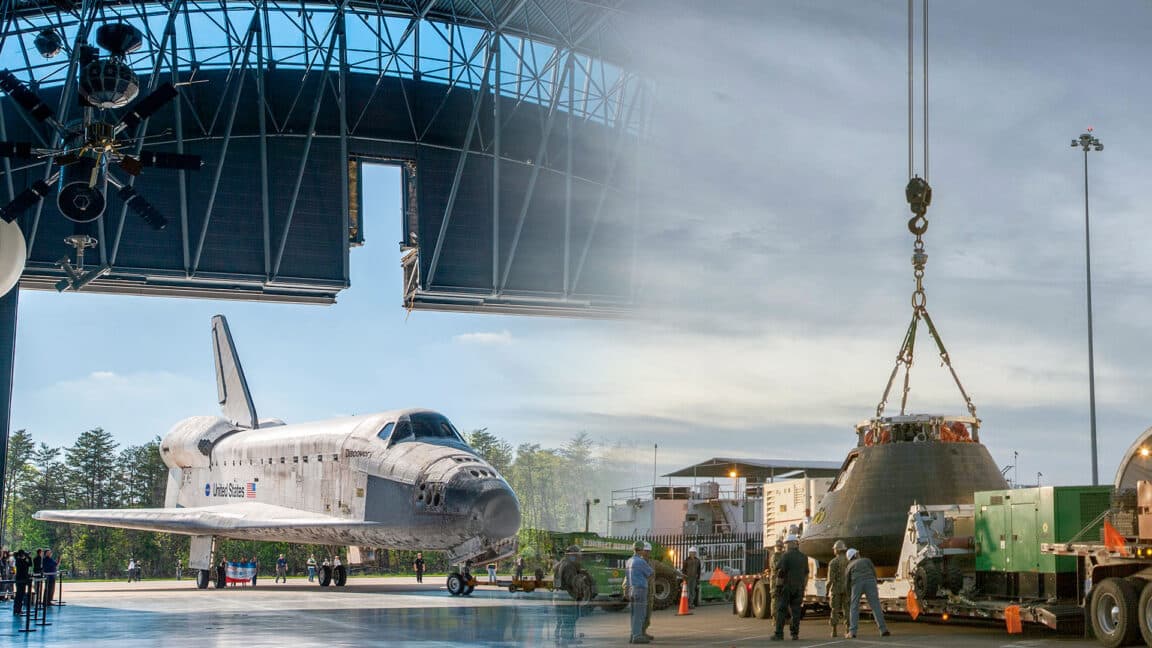
NASA is initiating the relocation of the Space Shuttle Discovery, exploring options for transport to Houston, under new legal mandates. What’s next?
GlipzoIn a significant development for space enthusiasts and history buffs alike, NASA has recently issued a draft request for proposals (DRFP) aimed at the potential relocation of the Space Shuttle Discovery. This undertaking may also encompass the transport of other spacecraft, such as the Orion capsule. Released on March 19, this request marks a crucial step in the agency's efforts to comply with legal mandates while preserving iconic aerospace artifacts.
The primary focus of this initiative is to explore logistics for moving Discovery from its current home at the Smithsonian National Air and Space Museum in Virginia to Space Center Houston. However, NASA is also considering the transportation of smaller spacecraft from various locations across the United States. The draft proposal outlines the need for extensive contractor input to understand the complexities involved in such a move.
The push for relocating Discovery stems from the One Big Beautiful Bill Act, a piece of legislation championed by Texas Senators John Cornyn and Ted Cruz. The law mandates that NASA must transfer a human-flown vehicle to a non-profit facility associated with the agency's commercial crew program. While the legislation intended for Discovery to be the artifact displayed at Space Center Houston, the language required to remain somewhat vague, opening the door for alternative options.
Senator Cornyn expressed his satisfaction with NASA’s progress, stating, “My law authorizing and funding the space shuttle Discovery’s movement to Houston is being set into motion thanks to NASA’s announcement, and I applaud Administrator Isaacman for keeping this process moving.” This sentiment underscores the importance of Discovery as a historical artifact and its intended role in educational outreach.
The draft RFP outlines specific requirements that contractors must address, focusing on the logistics of moving either a large aerospace vehicle like Discovery or a smaller craft akin to the Orion crew module. NASA is explicitly seeking detailed responses that cover various aspects of the transportation process, including:
These guidelines provide a framework for contractors to demonstrate their capabilities and ensure that the relocation adheres to safety and preservation standards. The emphasis on multimodal transport indicates that NASA anticipates using a combination of air, sea, rail, and road transport to facilitate the move.
One of the challenges for contractors will be the provision of necessary rigging and handling equipment for the spacecraft. NASA, having disposed of its specialized lifting equipment after the Space Shuttle Endeavour was displayed in 2024, will not be providing any infrastructure for the relocation. This means that contractors must be prepared to supply their own solutions to safely transport these delicate artifacts.
Additionally, contractors will need to ensure the artifact's preservation during the move. This includes maintaining the spacecraft's physical condition and structural integrity, which is crucial for historical artifacts like Discovery, known for its pioneering flights and contributions to space exploration.
As NASA embarks on this initiative, the agency has set a five-year timeline for the potential relocation of Discovery or other space vehicles. The draft RFP does not specify a preferred outcome between relocating Discovery or a smaller spacecraft, but it lays out a clear path for contractors to provide estimates and plans for both scenarios. This openness allows for flexibility and innovation in how these historic vehicles can be moved.
The relocation of the Space Shuttle Discovery is more than a logistical challenge; it symbolizes NASA's ongoing commitment to honoring its historical legacy while fostering public engagement with space exploration. By moving Discovery to Houston, the agency aims to enhance educational opportunities and inspire future generations of space enthusiasts.
In summary, NASA’s draft RFP is an important move towards ensuring that the legacy of human spaceflight is preserved and shared with the public. As contractors prepare their proposals, the agency will be closely monitoring developments, ensuring that any relocation aligns with both budgetary constraints and safety protocols.
As this process unfolds, observers will be keenly watching how NASA navigates the complexities of relocating such a significant part of its history. The outcome could set a precedent for how other historical space vehicles are managed and displayed in the future. Will Discovery find a new home in Houston, or will another spacecraft take its place? The answers may shape the narrative of space exploration for years to come, emphasizing NASA's role not only as a leader in innovation but also as a steward of its rich heritage.
Stay tuned as this story develops, and consider how the transportation of these iconic artifacts might influence public perception and interest in space exploration in the coming years.

Discover how the brain protein Menin could be the key to halting cognitive decline with new research that uncovers its vital role in aging.
Indian Express
A new 'killer fungus' discovered in the UK targets invasive heath-star moss, offering hope for restoring native habitats. Will it turn the tide against invasives?
BBC Science
A Blue Origin rocket exploded during a test in Florida, prompting investigations. All personnel are safe. What does this mean for the future of space travel?
BBC Business