
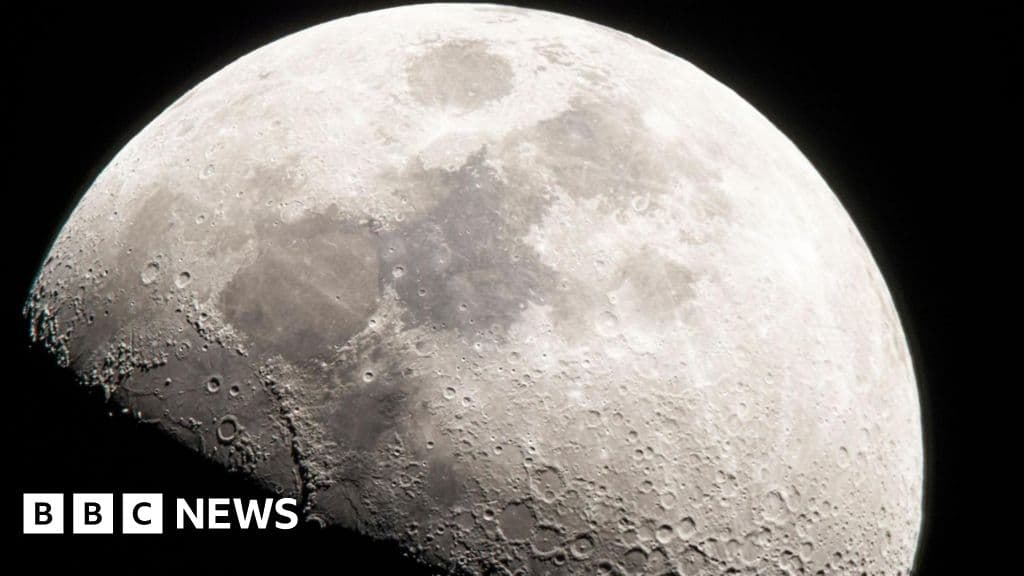
Image: BBC Science
NASA unveils its ambitious roadmap for a permanent Moon base by 2032 amid fierce competition from China. What does this mean for space exploration?
GlipzoNASA has officially unveiled its ambitious roadmap to establish a permanent lunar base, outlining a series of innovative robotic landers, autonomous drones, and specialized vehicles aimed at facilitating human habitation on the Moon. This initiative comes as part of a broader strategy to reclaim a leading role in space exploration amidst growing competition from China, which is also racing to return humans to the lunar surface by 2030.
In a significant development for space exploration, NASA is determined to land American astronauts on the Moon before 2028, coinciding with the end of President Donald Trump's term. The space agency’s plans have picked up momentum, especially after the successful Artemis II mission in April, which saw four astronauts orbit the Moon. The goal is not just to visit but to establish a lunar base powered by nuclear and solar energy at the Moon's South Pole by 2032.
NASA Administrator Jared Isaacman emphasized the importance of this venture, stating that the United States will “never give up the Moon again.” This ambitious project promises to pave the way for scientific research, resource mining, and easier travel to Mars. However, experts caution that the timeline set by NASA may be overly optimistic, considering the challenges ahead.
The urgency behind NASA's plans is heightened by China’s rapid advancements in space exploration. Recently, China launched its Shenzhou-23 spacecraft, transporting astronauts to the Tiangong space station. With ambitions of landing humans on the Moon by 2030, China’s progress presents a formidable challenge to U.S. aspirations in the new space race. Dr. Simeon Barber, a lunar scientist at the Open University, commented on the competition, saying, “It would not surprise me at all if China gets there first,” highlighting concerns over NASA’s delays in developing a human landing system.
To secure its position, NASA has introduced the Ignition Moon Base programme, which consists of three key phases to prepare for human exploration. Initially, the agency plans to send robotic landers and hopping drones to thoroughly explore and map the Moon's complex terrain. Following this, delivery vehicles will be deployed to transport astronauts and scientific equipment across the lunar landscape.
To bring this vision to life, NASA has forged partnerships with several private companies, including Blue Origin, Intuitive Machines, and Astrobotic. These firms have been awarded contracts to create the necessary technologies for the lunar base. Specifically, NASA is looking to Blue Origin’s lunar lander, named Endurance, which is designed for precise landings and autonomous navigation.
Astrobotic's Griffin-1 lander is also set to play a crucial role, targeting a landing in Nobile Crater near the Moon's South Pole. These robotic missions are projected to last until 2029, with plans for 25 launches and a delivery of 4 metric tonnes of equipment and supplies to the Moon.
Once the initial robotic exploration phase is complete, NASA aims to establish nuclear and solar power facilities on the Moon, including fission reactors. By 2032, the vision extends to humans living in semi-permanent habitats on the Moon. The South Pole is particularly attractive for this endeavor due to the presence of frozen water, which can be utilized for drinking and producing oxygen.
In addition to habitats, NASA plans to deploy rovers that will allow astronauts to traverse the rugged lunar surface, facilitating research and exploration activities over greater distances.
Despite these ambitious plans, NASA's success hinges on developing a reliable spacecraft capable of safely transporting astronauts to the Moon. Elon Musk's SpaceX is tasked with building the Starship Human Landing System, but the project has encountered numerous delays, raising concerns about meeting the ambitious deadlines.
Dr. Barber reflects on the challenges, stating, “The limiting step is getting the astronauts down onto the surface.” He suggests that NASA's public announcements may be influenced by political pressures, as there is a growing need to assert leadership in space exploration.
As NASA moves forward with its plans for a permanent Moon base, the coming years will be critical in determining the feasibility of these ambitious goals. With increasing competition from global players like China, the U.S. must not only focus on technological advancements but also on overcoming logistical challenges.
Looking ahead, the next milestones include the successful deployment of robotic landers and the establishment of power systems on the lunar surface. As these developments unfold, the world will be watching closely to see whether NASA can reclaim its position as a leader in space exploration and fulfill its vision of a sustainable human presence on the Moon.

Discover how the brain protein Menin could be the key to halting cognitive decline with new research that uncovers its vital role in aging.
Indian Express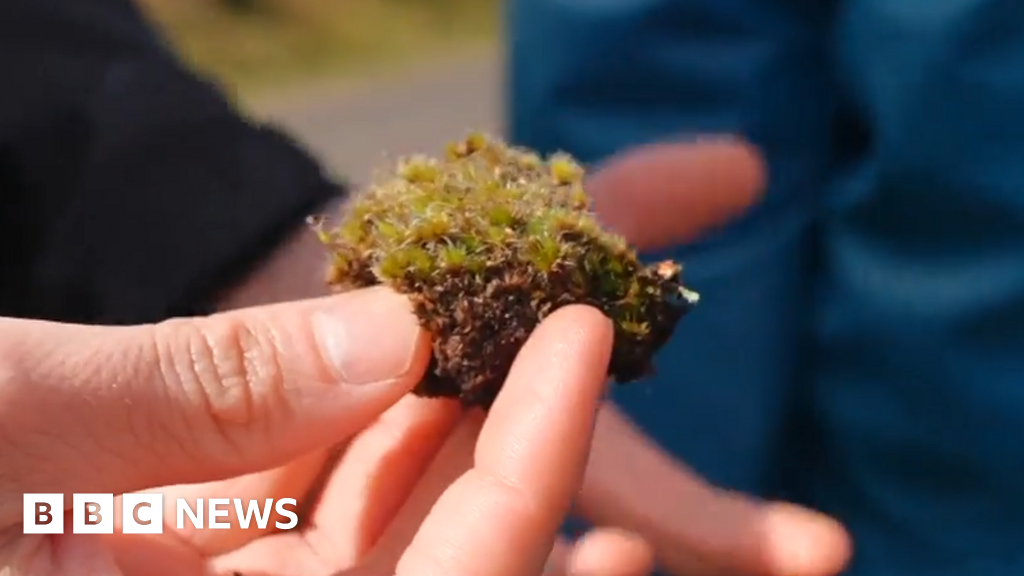
A new 'killer fungus' discovered in the UK targets invasive heath-star moss, offering hope for restoring native habitats. Will it turn the tide against invasives?
BBC Science
A Blue Origin rocket exploded during a test in Florida, prompting investigations. All personnel are safe. What does this mean for the future of space travel?
BBC Business