

Image: The Hindu
CERN's Large Hadron Collider reveals the Xi-cc-plus particle, an exciting discovery with implications for quantum mechanics and the future of physics.
GlipzoOn March 17, 2026, scientists at CERN announced a significant breakthrough in particle physics: the discovery of a new particle named Xi-cc-plus. This marks the 80th particle identified by the Large Hadron Collider (LHC), the world's most powerful particle accelerator located near Geneva, Switzerland. The Xi-cc-plus is noteworthy because it is similar to a proton but boasts a mass that is four times heavier. Researchers are optimistic that this discovery will enhance our understanding of the unusual behaviors that govern quantum mechanics.
The LHC operates by accelerating protons to nearly the speed of light within a 27-kilometer underground ring before colliding them to study the resultant particles. This technique allows scientists to glimpse the fleeting nature of particles and deduce the properties of their origins, making it a critical facility for modern physics research.
At the heart of this discovery lies the concept of baryons, the particles that make up atomic nuclei along with protons and neutrons. Baryons are composed of three quarks, which are the fundamental components of matter. There are six different types of quarks, referred to as flavors: up, down, charm, strange, top, and bottom. Each flavor has distinct mass, electric charge, and properties.
While the theoretical framework suggests numerous baryon combinations, many are incredibly challenging to detect. The newly identified Xi-cc-plus consists of two charm quarks and one down quark. This composition is what makes it heavier than a standard proton, which contains two up quarks and one down quark.
Vincenzo Vagnoni, the spokesperson for the Large Hadron Collider beauty (LHCb) experiment, emphasized the significance of this discovery, noting that it is only the second time a baryon with two heavy quarks has been documented. Furthermore, the Xi-cc-plus is the first new particle recognized following the 2023 upgrades to the LHCb detector.
Vagnoni stated, “The result will help theorists test models of quantum chromodynamics,” which is the theory that explains how quarks are bound into baryons and mesons. This is crucial for understanding not only conventional particles but also more exotic forms such as tetraquarks and pentaquarks.
In a related discovery in 2017, the LHCb experiment identified a particle made of two charm quarks and one up quark. The Xi-cc-plus only differs by having a down quark instead of an up quark, a seemingly minor change that has significant implications. Due to the properties of quantum mechanics, the Xi-cc-plus has a predicted lifetime that is up to six times shorter than its counterpart, which makes it much more elusive and challenging to observe.
The collaboration achieved a statistical significance of 7 sigma in observing this new baryon, far exceeding the 5 sigma threshold typically required to validate a discovery, underscoring the robustness of the findings.
CERN Director-General Mark Thomson hailed this discovery as “a fantastic example of how LHCb’s unique capabilities play a vital role in the success of the LHC.” The LHC has previously made headlines for its role in confirming the existence of the Higgs boson, often dubbed the “God particle,” in 2012.
As CERN looks ahead, plans are already underway for the construction of an even larger particle collider, the Future Circular Collider. This ambitious project aims to further unravel the fundamental mysteries of the universe, building on the groundwork laid by the discoveries at the LHC.
The implications of the Xi-cc-plus discovery extend beyond just particle physics; they represent a step forward in our understanding of the universe's fundamental building blocks. As physicists continue to explore the depths of quantum mechanics, each new particle discovered provides valuable insights that could reshape our knowledge of matter and energy.
With the continued advancements at CERN and the future collider projects, the scientific community is poised for a new era of exploration and understanding. Observations from the Xi-cc-plus will likely influence theoretical models and could lead to breakthroughs in our understanding of the forces and particles that govern the cosmos.
As researchers delve deeper into the properties of the Xi-cc-plus and other exotic baryons, the coming years promise exciting developments in the field of particle physics. Watch for updates from CERN as they continue to analyze data and explore the implications of this latest discovery. The quest for knowledge about the universe's fundamental structure is far from over, and each discovery adds a new thread to the intricate tapestry of our understanding of reality.
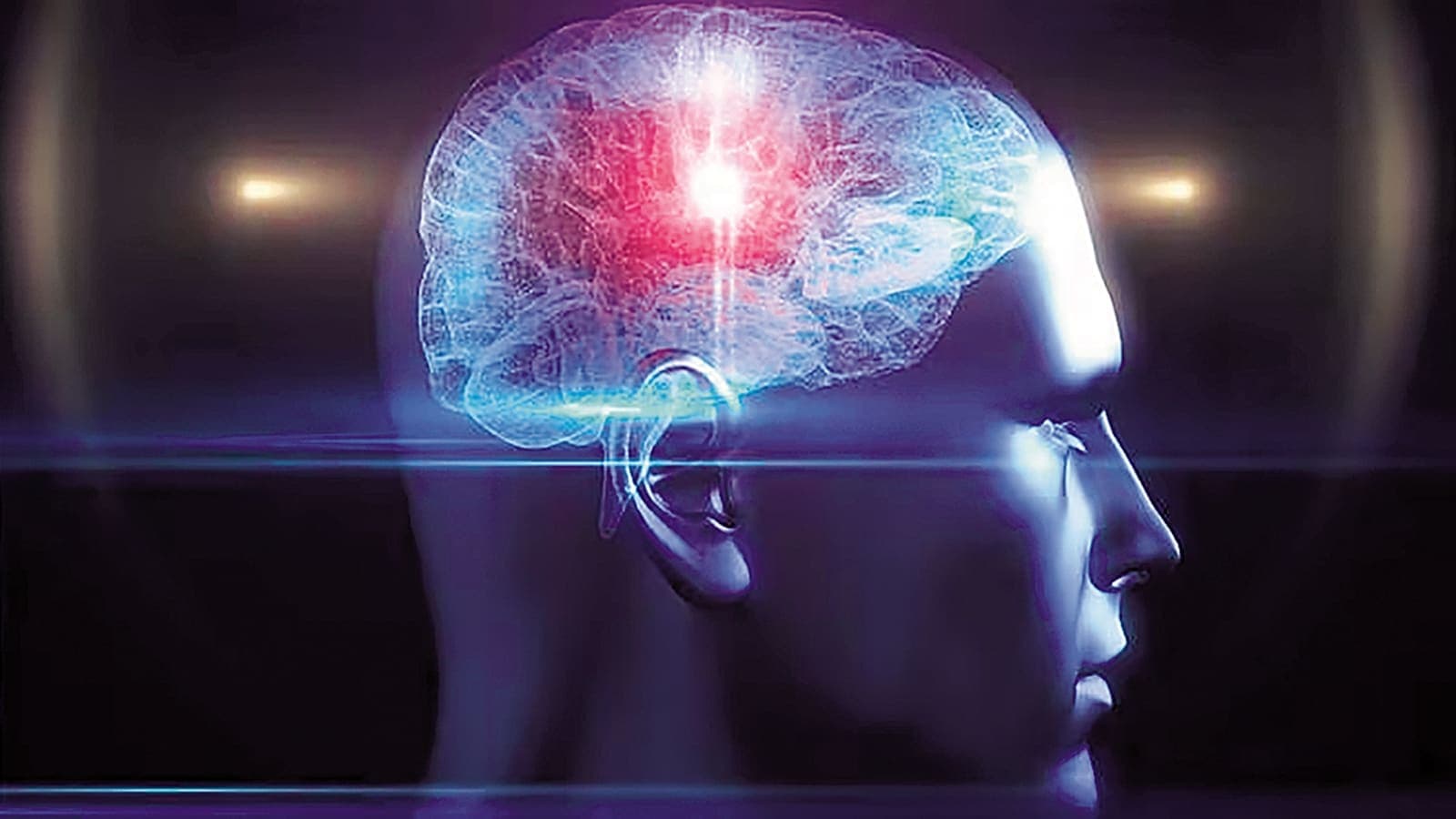
Discover how the brain protein Menin could be the key to halting cognitive decline with new research that uncovers its vital role in aging.
Indian Express
A new 'killer fungus' discovered in the UK targets invasive heath-star moss, offering hope for restoring native habitats. Will it turn the tide against invasives?
BBC Science
A Blue Origin rocket exploded during a test in Florida, prompting investigations. All personnel are safe. What does this mean for the future of space travel?
BBC Business