Glipzo
WorldTechnologyBusinessSportsEntertainmentScienceHealthPolitics
Glipzo
WorldTechnologyBusinessSportsEntertainmentScienceHealthPolitics
  1. Home
  2. /
  3. Science
  4. /
  5. Major Breakthrough: Robot Learns to Harvest Tomatoes Efficiently
Major Breakthrough: Robot Learns to Harvest Tomatoes Efficiently

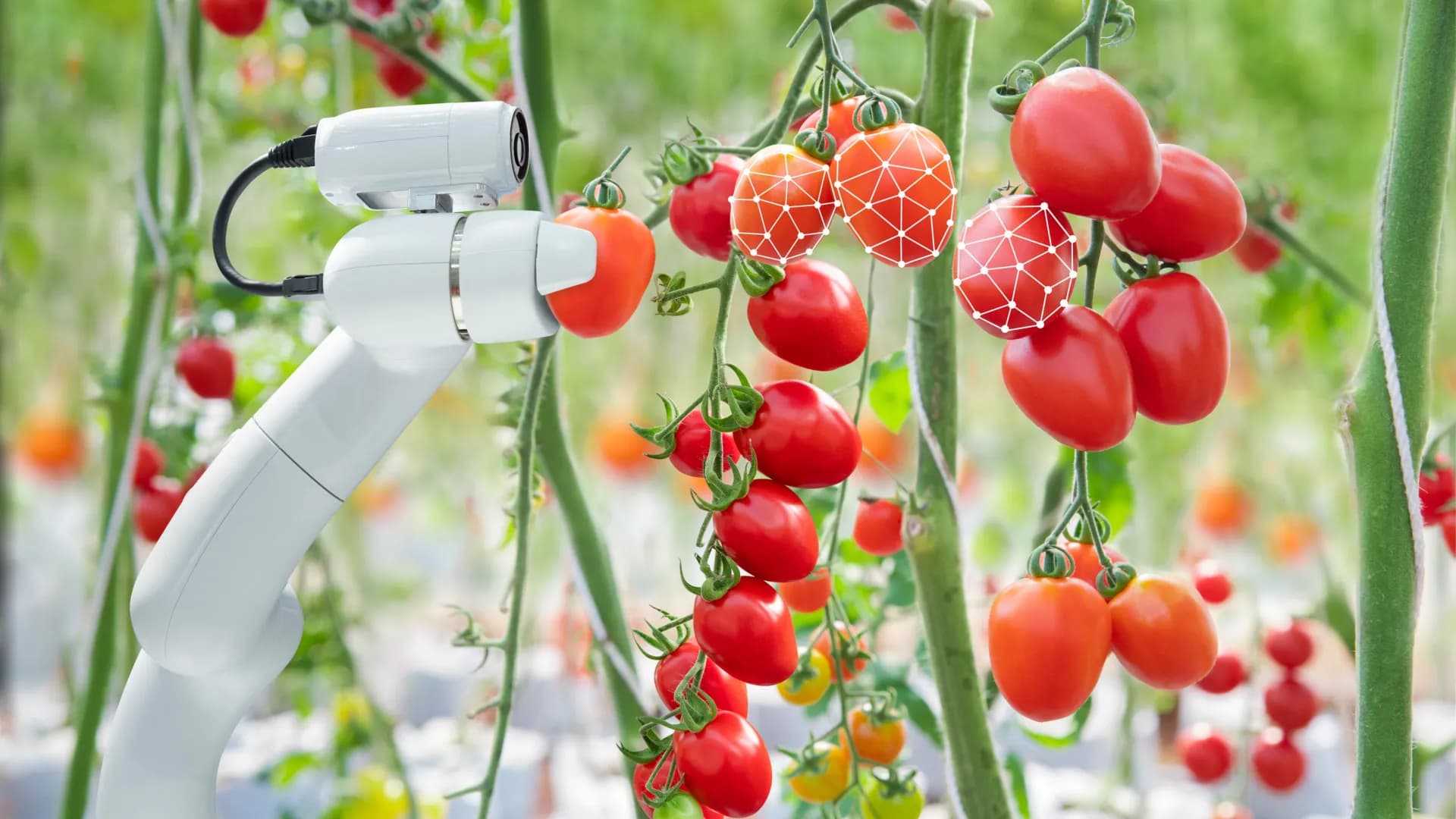
Image: Science Daily

Science
Wednesday, March 18, 20264 min read

Major Breakthrough: Robot Learns to Harvest Tomatoes Efficiently

Discover how a groundbreaking robot developed by Osaka University is transforming tomato harvesting with AI, promising a new era of agricultural efficiency.

Glipzo News Desk|Source: Science Daily
Share
Glipzo

Key Highlights

  • Robots are now learning to harvest tomatoes more effectively.
  • This AI system boasts an impressive 81% success rate.
  • Fujinaga's research introduces 'harvest-ease estimation' for improved efficiency.
  • Future farming will see humans and robots working together seamlessly.
  • This technology could revolutionize sustainable food production.

In this article

  • A New Era in Agricultural Automation The agricultural sector is facing a pressing challenge with **labor shortages**, compelling farmers to turn increasingly towards automation. One of the crops that has proven particularly difficult for machines to harvest is the humble **tomato**. Tomatoes grow in clusters, demanding precision from any harvesting robot to ensure that only ripe fruits are picked while leaving unripe ones untouched. This complex process requires not just strength but also advanced decision-making capabilities.
  • The Science Behind Harvesting Ease Fujinaga's method goes beyond traditional detection systems that merely identify ripe fruit. He introduces the concept of **"harvest-ease estimation,"** fundamentally altering how robotic systems approach the task of harvesting. As he explains, "This moves beyond simply asking, 'can a robot pick a tomato?' to thinking about 'how likely is a successful pick?' which is more meaningful for real-world farming."
  • Key Factors in Robotic Tomato Harvesting The research highlights several variables that influence robotic harvesting efficiency, including: - The way tomatoes cluster together - The shape and position of stems - Surrounding leaves that may obstruct view - Visual recognition capabilities of the robot
  • The Future of Farming: Collaboration with Robots Looking ahead, the vision for the future of agriculture includes a harmonious collaboration between humans and robots. Fujinaga anticipates a time when robots will be able to autonomously judge the ripeness of crops and harvest those that are easy to pick. He states, "This is expected to usher in a new form of agriculture where robots and humans collaborate. Robots will automatically harvest tomatoes that are easy to pick, while humans will handle the more challenging fruits."
  • Importance of Research in Agricultural Technology The findings of Fujinaga's research were recently published in the journal **Smart Agricultural Technology**, emphasizing the significance of technological advancements in achieving sustainable farming practices. As the agricultural landscape continues to evolve, the integration of robotics and AI could play a pivotal role in meeting the challenges posed by a growing global population and diminishing labor forces.
  • Why It Matters This development matters because it represents a crucial step toward solving longstanding challenges in agriculture. By enabling robots to make intelligent decisions about harvesting, we could see a future where food production becomes more efficient, sustainable, and less reliant on human labor. The implications for food security and economic stability could be profound, particularly in regions facing labor shortages.
  • What’s Next for Agricultural Robotics? As we look to the future, the agricultural sector must consider the role that robotics will play in food production. Key areas to watch include: - Further developments in AI and machine learning for agricultural applications - Enhanced collaboration strategies between human workers and robotic systems - Ongoing research exploring the capabilities of robots in other areas of crop management - The potential for scaling these technologies to other crops beyond tomatoes

A New Era in Agricultural Automation The agricultural sector is facing a pressing challenge with **labor shortages**, compelling farmers to turn increasingly towards automation. One of the crops that has proven particularly difficult for machines to harvest is the humble **tomato**. Tomatoes grow in clusters, demanding precision from any harvesting robot to ensure that only ripe fruits are picked while leaving unripe ones untouched. This complex process requires not just strength but also advanced decision-making capabilities.

To address this challenge, Assistant Professor Takuya Fujinaga from Osaka Metropolitan University's Graduate School of Engineering has developed an innovative system that empowers robots to assess the ease of harvesting each tomato before attempting to pick it. This groundbreaking approach integrates image recognition with statistical analysis, allowing the robot to evaluate various factors influencing harvesting success.

The Science Behind Harvesting Ease Fujinaga's method goes beyond traditional detection systems that merely identify ripe fruit. He introduces the concept of **"harvest-ease estimation,"** fundamentally altering how robotic systems approach the task of harvesting. As he explains, "This moves beyond simply asking, 'can a robot pick a tomato?' to thinking about 'how likely is a successful pick?' which is more meaningful for real-world farming."

The system has demonstrated significant effectiveness, achieving an 81% success rate during testing, which surpassed initial expectations. Notably, about 25% of successful picks were made from tomatoes that had been initially missed; the robot was able to adjust its approach and successfully harvest the fruit from a different angle. This adaptability underscores the potential for robots to handle the complexities of real-world farming scenarios.

Key Factors in Robotic Tomato Harvesting The research highlights several variables that influence robotic harvesting efficiency, including: - The way tomatoes cluster together - The shape and position of stems - Surrounding leaves that may obstruct view - Visual recognition capabilities of the robot

Fujinaga elaborates, saying, "This research establishes 'ease of harvesting' as a quantitatively evaluable metric, bringing us one step closer to the realization of agricultural robots that can make informed decisions and act intelligently." This marks a significant advancement in the pursuit of automation in agriculture.

The Future of Farming: Collaboration with Robots Looking ahead, the vision for the future of agriculture includes a harmonious collaboration between humans and robots. Fujinaga anticipates a time when robots will be able to autonomously judge the ripeness of crops and harvest those that are easy to pick. He states, "This is expected to usher in a new form of agriculture where robots and humans collaborate. Robots will automatically harvest tomatoes that are easy to pick, while humans will handle the more challenging fruits."

This innovative approach not only aims to alleviate labor shortages but also enhances efficiency in farming practices. With the ability to adapt their strategies based on environmental conditions and the state of the crops, these robots could revolutionize how we approach food production.

Importance of Research in Agricultural Technology The findings of Fujinaga's research were recently published in the journal **Smart Agricultural Technology**, emphasizing the significance of technological advancements in achieving sustainable farming practices. As the agricultural landscape continues to evolve, the integration of robotics and AI could play a pivotal role in meeting the challenges posed by a growing global population and diminishing labor forces.

Why It Matters This development matters because it represents a crucial step toward solving longstanding challenges in agriculture. By enabling robots to make intelligent decisions about harvesting, we could see a future where food production becomes more efficient, sustainable, and less reliant on human labor. The implications for food security and economic stability could be profound, particularly in regions facing labor shortages.

What’s Next for Agricultural Robotics? As we look to the future, the agricultural sector must consider the role that robotics will play in food production. Key areas to watch include: - Further developments in AI and machine learning for agricultural applications - Enhanced collaboration strategies between human workers and robotic systems - Ongoing research exploring the capabilities of robots in other areas of crop management - The potential for scaling these technologies to other crops beyond tomatoes

In conclusion, the advancements made by Fujinaga and his team at Osaka Metropolitan University herald a new chapter in agricultural technology, promising to reshape how we grow, harvest, and ultimately consume food. The integration of intelligent robotics into farming not only addresses immediate labor shortages but also paves the way for a more sustainable and efficient agricultural future.

Did you find this article useful? Share it!

Share

Related Articles

Shocking Decline: UK Butterflies Face Major Threats
Science
Apr 15, 2026

Shocking Decline: UK Butterflies Face Major Threats

A 50-year survey reveals over half of the UK's butterfly species are declining, highlighting urgent conservation needs amid habitat loss and climate change.

BBC Science
Exclusive Footage: Historic Hatch Opening of Artemis II Orion
Science
Apr 15, 2026

Exclusive Footage: Historic Hatch Opening of Artemis II Orion

Catch the historic moment as the hatch of Artemis II's Orion capsule opens, reuniting astronauts with a cheering recovery crew after their groundbreaking mission.

BBC Science
Critical Consultation for Golden Eagle Reintroduction in England
Science
Apr 14, 2026

Critical Consultation for Golden Eagle Reintroduction in England

Discover the critical consultation for the golden eagle reintroduction in northern England, aiming to restore this majestic species by 2027.

BBC Science

Categories

  • World
  • Technology
  • Business
  • Sports

More

  • Entertainment
  • Science
  • Health
  • Politics

Explore

  • Web Stories
  • About Us
  • Contact

Legal

  • Privacy Policy
  • Terms of Service

© 2026 Glipzo. All rights reserved.