
Image: The Hindu
Macron emphasizes France's willingness to secure the Strait of Hormuz, contingent on de-escalation with Iran, amidst rising West Asia tensions.
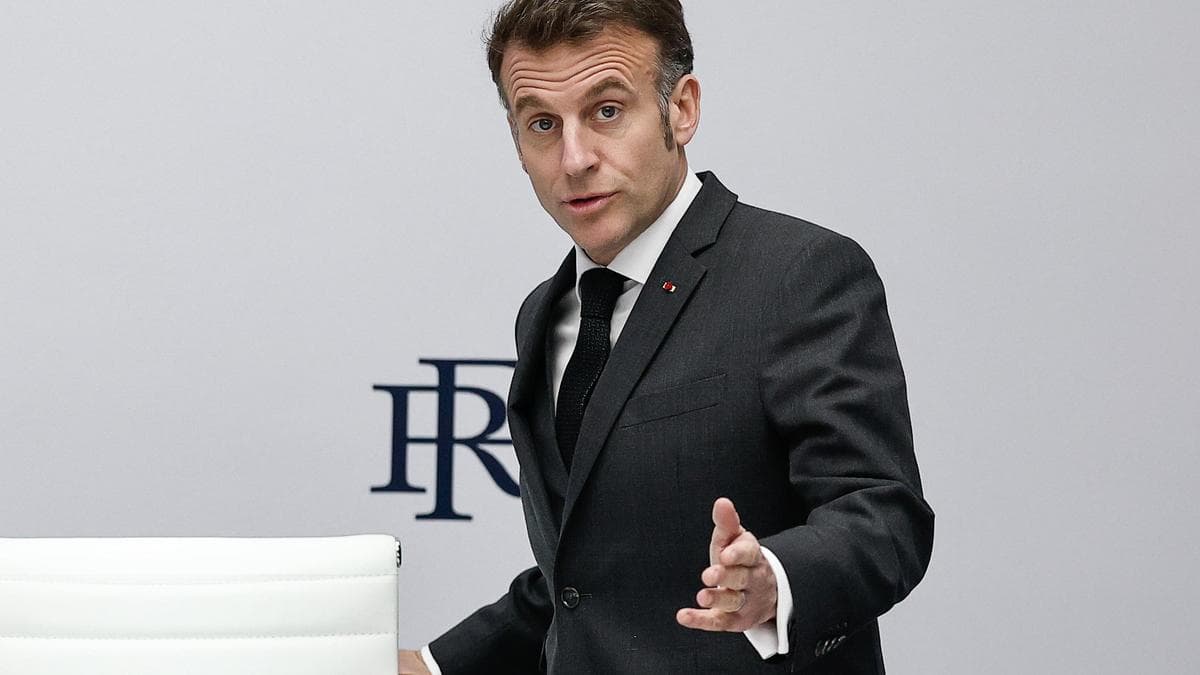
GlipzoIn a significant declaration made on March 17, 2026, French President Emmanuel Macron has outlined France's position regarding the security of the Strait of Hormuz. This critical maritime passage is essential for global oil transportation, and tensions surrounding it have escalated due to the ongoing conflict in West Asia. Macron's statement comes in response to a call from U.S. President Donald Trump for European nations to bolster naval presence in the region.
During a meeting of France's defense and security council at the Elysee Palace in Paris, Macron emphasized that while France is prepared to assist in securing the Strait of Hormuz, such efforts must be distinct from the current military operations underway in the area. He pointed out, "We are not a party to the conflict, and therefore France will never take part in operations to reopen or liberate the Strait of Hormuz."
Macron's remarks highlight a crucial condition: any French military involvement would necessitate a de-escalation of tensions with Iran. The French president made it clear that discussions must take place to ensure that any future mission aimed at securing the Strait is not intertwined with the ongoing bombings or military engagements occurring in the region. This approach signifies France's commitment to a diplomatic resolution rather than an escalation of military actions.
The Strait of Hormuz is often described as the "oil highway" of the world, with approximately 20% of global oil passing through this narrow waterway. The geopolitical stakes are incredibly high, making Macron's cautious approach particularly important. By advocating for separate discussions with Iran, France is positioning itself as a mediator rather than an aggressor in this volatile situation.
The backdrop of Macron's announcement is a complex web of conflicts and international relations in the region. The ongoing military actions involving Israel and the U.S. against Iranian targets have intensified the urgency for a diplomatic solution. Macron's assertions reflect a growing sentiment among European nations to avoid direct involvement in what could escalate into a larger military confrontation.
Macron's stance is significant for several reasons:
As Macron's administration navigates these complex geopolitical waters, several key developments will be critical to watch:
1. Diplomatic Engagements: The forthcoming discussions between France and Iran will be pivotal. If successful, they could lead to a broader coalition aiming to stabilize the Strait of Hormuz. 2. International Reactions: The response from the United States and its allies to Macron's statements will be crucial in determining the next steps in the region. 3. Military Movements: Any shifts in military deployments by European nations in response to U.S. requests could alter the dynamics of the ongoing conflict. 4. Economic Impact: Watch for fluctuations in oil prices as tensions rise or fall in the Strait of Hormuz, which could have ripple effects across global markets.
In conclusion, Macron's cautious yet firm position on France's involvement in securing the Strait of Hormuz reflects a broader strategy to prioritize diplomacy in a time of escalating tensions. The willingness to engage in discussions with Iran signals a potential path towards stabilization, but the road ahead remains fraught with challenges. As the situation evolves, all eyes will be on the Elysee Palace and the outcomes of France's diplomatic efforts.

Tensions soar as the US and Iran engage in air strikes near the Strait of Hormuz, raising concerns over global oil supply and regional stability.
BBC World
Trump's international interventions face serious stalemates. What will this mean for U.S. foreign policy? Explore the critical challenges ahead.
Indian Express
Tehran denies resignation of President Masoud Pezeshkian amid claims of IRGC influence. What does this mean for Iran's political stability? Click to learn more!
Indian Express