
Image: BBC Business
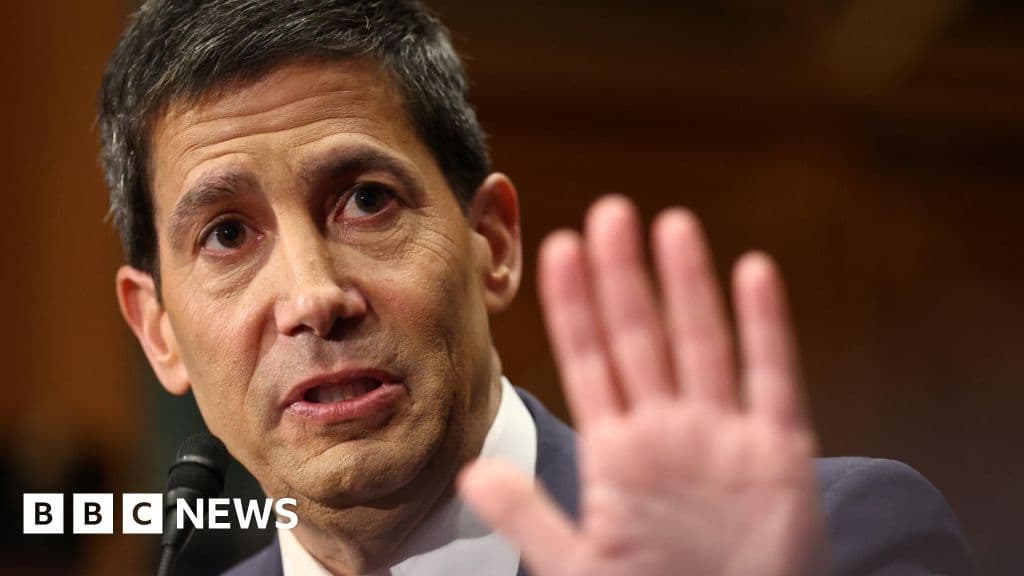
Kevin Warsh's Senate confirmation hearing was marked by fiery exchanges and serious allegations, raising questions about his ties to Trump and Epstein.
GlipzoIn a dramatic Senate confirmation hearing on Tuesday, Kevin Warsh faced intense scrutiny as he sought to secure his position as the next chair of the Federal Reserve. The event was marked by fierce exchanges, particularly with Democratic senators, who raised serious concerns about his alignment with President Donald Trump and potential conflicts of interest.
The stakes are high not only for Warsh but also for the future of U.S. monetary policy. Warsh’s nomination comes at a time when interest rates and economic stability are pivotal issues in the American economy. As the President looks to stimulate growth, the role of the Fed becomes increasingly crucial, making this hearing particularly important for both the Senate and the country at large.
Senator Elizabeth Warren, the leading Democrat on the Senate Banking Committee, did not hold back in her criticisms, labeling Warsh as Trump's potential "sock puppet." This phrase encapsulates the fear that if confirmed, Warsh might prioritize the President's agenda over the Fed's independence. Warren argued that this could allow Trump to leverage the Fed's authority for personal gain, stating, "Having a sock puppet in charge of the Fed would give the president access to the Fed's powerful authorities to enrich himself, his family, and his Wall Street buddies."
In response, Warsh firmly rejected the characterization, asserting, "Absolutely not. The independence of America’s central bank is essential." He emphasized his commitment to maintaining the Fed's autonomy and the integrity of its decision-making processes.
Another significant point of contention during the hearing was Warsh's financial connections, particularly his links to the notorious financier Jeffrey Epstein. During questioning, Warren probed Warsh about his substantial investments, including a fund valued at over $100 million. She raised concerns about whether this fund had ties to Trump-affiliated companies or entities associated with Epstein.
Warsh, while not directly addressing the specifics of his investments, indicated that he would divest his holdings should he be confirmed as chair. He stated, "I plan to divest my holdings if and when I am confirmed, as it is the right thing to do." However, his name does appear in multiple Department of Justice files regarding Epstein, raising eyebrows about potential implications.
As the hearing progressed, the discussion inevitably turned toward interest rates. Warsh distanced himself from allegations that he had agreed with Trump to lower rates in exchange for his nomination. He firmly stated, "The president never once asked me to commit to any particular interest rate decision, period, and nor would I ever agree to do so if he had."
However, this assertion was met with skepticism by some senators, particularly Ruben Gallego, who recalled reports that Trump had indeed pressured Warsh to consider reducing borrowing costs.
The dynamics of support for Warsh's nomination largely reflected party lines, with most Democrats expressing opposition. However, Senator Thom Tillis, the only Republican to withhold his endorsement, indicated that while he supports Warsh’s credentials, he wants an inquiry into outgoing Fed chair Jerome Powell dropped before he votes in favor of Warsh.
Tillis's concerns revolve around alleged overspending on renovations to the Federal Reserve building, a contentious issue that has fueled friction between Trump and Powell. With Powell indicating he plans to remain in office past his term end date of May 15, if Warsh's confirmation is delayed, this could lead to further instability within the Fed.
Should he be confirmed, Warsh has promised to initiate significant changes at the Federal Reserve. He expressed intentions to overhaul the way the Fed measures inflation and communicates its policies. Warsh criticized the current practice of "forward guidance" as unhelpful and indicated a preference for more spontaneous, less scripted discussions during monetary policy meetings.
In his opening remarks, he suggested a "new inflation framework" that would deviate from the traditional metrics currently in use. This approach reflects his broader vision for the Fed, emphasizing adaptability and responsiveness to changing economic conditions.
As the Senate Banking Committee deliberates Warsh's nomination, the implications of this hearing extend far beyond the immediate political landscape. The future of U.S. monetary policy hinges on the outcomes of these discussions, particularly in light of the ongoing economic challenges facing the nation.
Warsh's commitment to reform and the Fed's independence will be critical as the country navigates a post-pandemic economic recovery. As we await the Senate’s decision, all eyes will be on whether Warsh can effectively balance the pressures from the White House with the imperative to maintain the integrity of the Federal Reserve.
What to Watch For: - The Senate Banking Committee’s vote on Warsh’s nomination. - Developments in the inquiry into Jerome Powell’s management of the Fed. - Any statements from President Trump regarding the Fed's interest rate policy following the hearing. - Reactions from financial markets to potential changes in Fed leadership and policy.
In the coming weeks, as the confirmation process unfolds, the implications for economic policy and the independence of the Federal Reserve will be critical to monitor.

Tensions soar as the US and Iran engage in air strikes near the Strait of Hormuz, raising concerns over global oil supply and regional stability.
BBC World
Trump's international interventions face serious stalemates. What will this mean for U.S. foreign policy? Explore the critical challenges ahead.
Indian Express
Tehran denies resignation of President Masoud Pezeshkian amid claims of IRGC influence. What does this mean for Iran's political stability? Click to learn more!
Indian Express