

Image: TechCrunch
K2 is set to launch its groundbreaking high-powered satellite, Gravitas, aiming to revolutionize space computing and data centers in orbit. Discover what this means for the future of satellite technology.
GlipzoIn an exciting development for the aerospace industry, K2 is poised to launch its high-powered satellite, Gravitas, within weeks. Founded in 2022 by brothers Karan and Neel Kunjur, both former SpaceX engineers, K2 aims to revolutionize space computing. The satellite is currently secured in a SpaceX Falcon 9 rocket, with a launch date anticipated as early as the end of this month. This pioneering mission represents a significant milestone in the quest for advanced space technology, particularly in the realm of data centers located in orbit.
Gravitas stands out due to its impressive capabilities, boasting a mass of two metric tons and a 40-meter wingspan when its solar panels are deployed. The satellite is designed to produce an astounding 20 kW of electricity, powering an array of high-performance sensors, transceivers, and computers. To put this into perspective, the larger ViaSat-3 can yield over 25 kW, while the Starlink V2 satellites are estimated to generate 28 kW. In comparison, most conventional spacecraft only manage to generate a few kilowatts.
Karan Kunjur, the CEO of K2, emphasizes that “the future is higher power.” The company has successfully raised $425 million in funding, achieving a valuation of $3 billion as of December 2025. Launching Gravitas marks K2’s initial foray into real space operations, which Kunjur refers to as “the start of our iterative journey.” This mission will carry 12 undisclosed payload modules from various clients, including the Department of Defense, and will incorporate a 20 kW electric thruster, anticipated to be the most potent thruster ever deployed in space.
Kunjur has laid out a rigorous success metric for this launch, evaluating it on multiple levels. The first hurdle is to successfully deploy the satellite and initiate power generation. Next, K2 aims to operate its payloads and test the performance of its advanced thruster. If these initial phases prove successful, the final goal is to utilize the thruster to elevate the spacecraft into a higher orbit, thousands of kilometers above Earth.
Launching a new spacecraft is fraught with challenges. Kunjur acknowledges that 85% of Gravitas’s components have been meticulously designed and built in-house. In the fast-paced aerospace market, anomalies can lead to rapid evaluations from stakeholders. Kunjur emphasizes the importance of data collection during this mission, as it will inform future designs. K2 plans to roll out eleven satellites over the next two years, combining demonstration and commercial missions. By 2028, Kunjur envisions K2 producing satellites for customers to establish commercial networks of high-powered space vehicles.
As the demand for satellites continues to surge, the role of power becomes crucial in unlocking new business opportunities. Kunjur anticipates that the most immediate impact will be on communications networks. Increased power translates to enhanced throughput and signals that are less vulnerable to jamming. Furthermore, as on-orbit data processing gains traction, the necessity for high-powered satellites will only intensify.
Despite the advantages of high-powered satellites, the financial burden of launching these massive spacecraft cannot be overlooked. K2’s foundational proposition centers on harnessing the capabilities of Starship, SpaceX’s colossal rocket, which could significantly lower costs associated with reaching orbit. However, the timeline for Starship's operational readiness remains uncertain.
The growing appetite for increased power in space provides a unique opportunity for K2 and its innovative spacecraft. Major communications networks like Starlink and Amazon LEO, along with the Pentagon's ambitious plans for a $185 billion missile defense system, which envisions thousands of new satellites, underscore the need for satellites with enhanced electrical capabilities.
K2 argues that its spacecraft are economically viable, with launch costs potentially around $7.2 million on a Falcon 9 rocket, as opposed to the $600,000 estimated for a future where Starship enables dramatically reduced launch expenses. Kunjur insists that Gravitas, priced at $15 million, remains more cost-effective than high-powered satellites developed by traditional contractors while delivering superior performance compared to smaller, similarly priced alternatives.
As K2 prepares for the launch of Gravitas, the implications of this mission extend far beyond just one satellite. The aerospace industry is on the brink of a transformation that could redefine how we utilize space for data processing and communication. The next few years will be critical as K2 pushes forward with its ambitious plans to deploy numerous satellites and establish a foothold in the competitive market for high-powered space vehicles.
The successful launch and operation of Gravitas will not only validate K2's innovative approach but may also set a precedent for future satellite technologies. As companies and governments increasingly rely on satellite systems for everything from communications to defense, the importance of power generation in space will likely become a focal point for ongoing research and development.
As K2 navigates its path forward, the industry will be closely watching to see how this ambitious company shapes the future of satellite technology and orbital data centers. With the potential for widespread applications and advancements in space computing, K2's journey is just beginning, and the possibilities are limitless.

Discover how the brain protein Menin could be the key to halting cognitive decline with new research that uncovers its vital role in aging.
Indian Express
A new 'killer fungus' discovered in the UK targets invasive heath-star moss, offering hope for restoring native habitats. Will it turn the tide against invasives?
BBC Science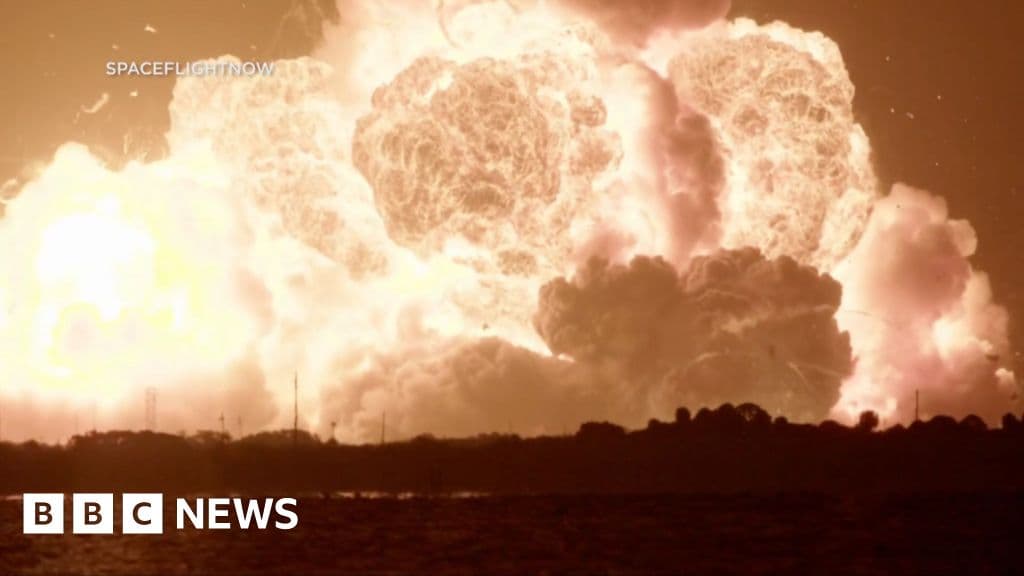
A Blue Origin rocket exploded during a test in Florida, prompting investigations. All personnel are safe. What does this mean for the future of space travel?
BBC Business