
Image: The Hindu
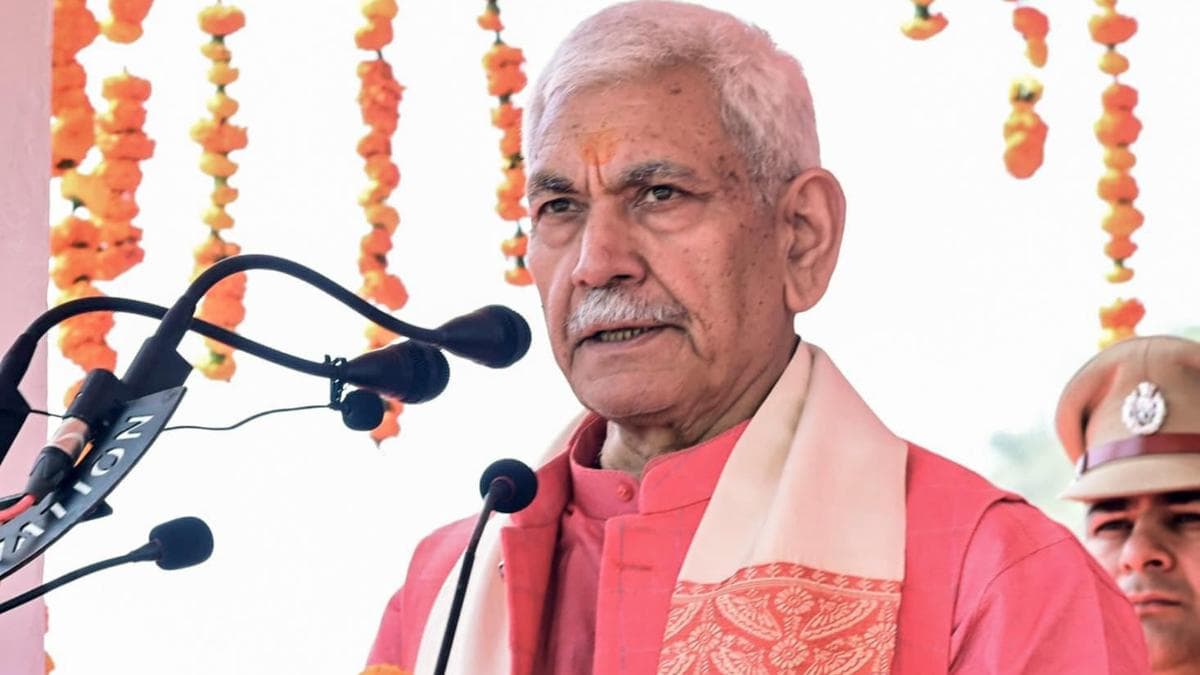
Lieutenant Governor Manoj Sinha warns that those threatening peace in J&K will face severe consequences, amidst rising tensions after recent protests.
GlipzoIn a powerful address during the passing out parade of newly trained police constables in Reasi, Jammu, on March 17, 2026, Lieutenant Governor Manoj Sinha made a bold statement regarding the ongoing peace and stability in Jammu and Kashmir. He asserted that anyone attempting to disrupt the peace will face severe repercussions under the law. This declaration comes amid rising tensions following protests related to the death of Iran's Supreme Leader Ali Khamenei, which have sparked unrest in the region.
During his speech, Sinha emphasized the unwavering commitment of the J&K Police to maintain law and order. He stated, “Any individual or group that seeks to threaten the peace, law and order, or the safety of innocent civilians in J&K will have to pay a very heavy price.” This strong warning signals the administration's readiness to act decisively against any threats to public safety.
The Lieutenant Governor's remarks come at a crucial time when the National Conference (NC) has been vocal about the detention of numerous protesters, many of whom have been charged under the Unlawful Activities Prevention Act (UAPA). The NC has appealed for the release of these individuals, highlighting the tensions between the government and civil rights groups.
Sinha took the opportunity to commend the J&K Police for their significant contributions to creating a terror-free and crime-free environment. He noted that the police force has been instrumental in achieving key milestones in various domains, including good governance, innovation, and social unity. Addressing the fresh graduates of the police force, he encouraged them to focus on protecting the achievements of the last five to six years.
In his speech, Sinha stated, “The force has played a pivotal role in building a just society.” He called on the new constables to take an active stance against separatist elements that threaten to divide communities and undermine developmental progress.
Looking ahead, the Lieutenant Governor outlined a clear vision for the future of Jammu and Kashmir. He reiterated the importance of a zero-tolerance policy towards terrorism, emphasizing that with the support of various stakeholders, a comprehensive strategy is being developed to eradicate terror from the region.
He added, “With stakeholder support, a comprehensive strategy will soon liberate J&K from terror.” This statement reflects the administration's ongoing efforts to enhance security and promote peace in a region historically marked by conflict.
The context of Sinha's remarks is critical, as Jammu and Kashmir has seen a resurgence of tensions following the protests related to Khamenei's death. The region has a complicated history of unrest and separatist movements, making the administration’s stance on law enforcement especially pivotal. By taking a hard line against any threats to peace, the government aims to reassure citizens and restore stability.
The potential for escalating violence or further protests remains a concern, and the government’s approach to dealing with dissent will likely be scrutinized closely by both national and international observers.
As Jammu and Kashmir navigates through these turbulent times, all eyes will be on how the administration balances security measures with civil liberties. The Lieutenant Governor’s declarations serve as a reminder of the administration's determination to clamp down on violence while promoting development.
Looking ahead, key areas to monitor include: - Government policies on handling protests and dissent. - The effectiveness of the J&K Police in maintaining peace and order. - Responses from civil rights organizations regarding detentions under UAPA.
The ongoing developments in Jammu and Kashmir will be critical not only for the region but also for the broader stability of India. The commitment to uphold peace while addressing dissent will be a delicate balance for the authorities in the coming months.

Tensions soar as the US and Iran engage in air strikes near the Strait of Hormuz, raising concerns over global oil supply and regional stability.
BBC World
Trump's international interventions face serious stalemates. What will this mean for U.S. foreign policy? Explore the critical challenges ahead.
Indian Express
Tehran denies resignation of President Masoud Pezeshkian amid claims of IRGC influence. What does this mean for Iran's political stability? Click to learn more!
Indian Express