
Image: BBC World
Breaking: Israeli air strikes destroy bridges in Lebanon as conflict escalates, leading to a humanitarian crisis with over 968 lives lost since March 2.
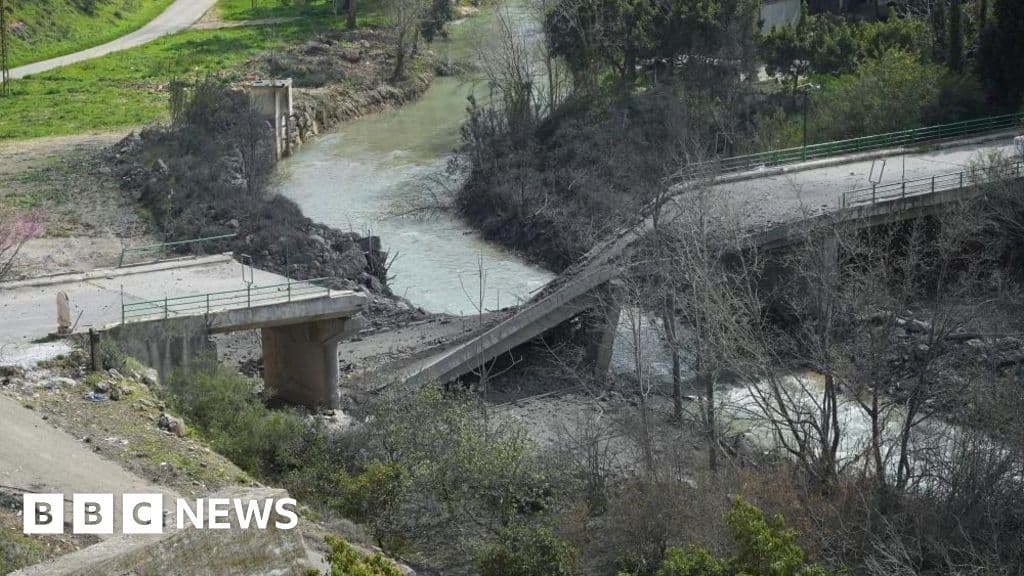
GlipzoIn a significant escalation of the ongoing conflict, Israeli air strikes have destroyed two crucial bridges over the Litani River, which connect southern Lebanon to the rest of the nation. The Israeli military's actions come after they accused the Hezbollah armed group of using these crossings to transport fighters and military supplies. This latest move underscores the rising tensions in the region, as the conflict between Israel and Hezbollah intensifies.
The air strikes occurred just hours after the Israeli military announced its intention to target infrastructure allegedly linked to Hezbollah's operations. According to reports from Lebanese authorities, the strikes have resulted in at least 12 fatalities and left 27 others injured in various locations across Beirut. This marks a troubling expansion of the conflict, with Israeli strikes now reaching beyond the southern suburbs into central Beirut, raising alarms about the increasing civilian casualties.
Since the onset of this violence on March 2, the Lebanese health ministry has reported a staggering 968 deaths, including 111 children, due to the conflict. The situation is dire, as Lebanon finds itself embroiled in a broader regional dispute involving the U.S., Israel, and Iran. The conflict ignited when Hezbollah launched missiles into Israel, prompting a fierce response from the Israeli military, including air strikes and ground troop deployments in southern Lebanon.
Israeli Defense Minister Israel Katz emphasized that the destruction of the bridges was a tactical move against Hezbollah's dependence on Lebanon's infrastructure for what he termed “terrorist activities.” In light of the escalating violence, the Israeli military has urged civilians living near the Litani crossings to evacuate the area, further exacerbating the ongoing humanitarian crisis, with over one million people displaced across Lebanon.
The Litani River has long been a pivotal element in Lebanon's security dynamics. Under UN Security Council Resolution 1701, which concluded the 2006 war between Israel and Hezbollah, armed groups are prohibited from operating south of the river. Israel contends that Hezbollah retains a significant presence in this region, directly challenging the resolution.
Following the strikes, residents have expressed their anguish. In one incident in Zefta, a local man recounted the chaos that ensued after an airstrike shook his home without warning. He stated, “There’s no one here related to a political party. We are all civilians, not affiliated with anyone.” The emotional toll on the populace is visible, as families are forced to flee their homes, seeking safety amid the relentless bombardment.
The devastation in Beirut is palpable. A recent air strike destroyed a building in the city center, which had been previously targeted. Fortunately, there were no reported casualties from this strike, but the area was left in ruins, with debris littering the streets and smoke hanging over the skyline. Witnesses described the scene, with some shouting in anger at Israeli forces while others mourned the destruction of their homes and livelihoods.
The Israeli military claims its strikes are aimed not only at Hezbollah fighters but also at businesses believed to finance the group’s military endeavors, including the Al Qard Al Hassan organization. This relentless assault on Hezbollah strongholds, particularly in the Dahieh region of southern Beirut, has forced thousands to evacuate, with some locals comparing the scene to that of Gaza.
As the conflict continues to escalate, the international community watches closely. The ongoing bombardment of Beirut and southern Lebanon raises critical questions about the future of civilian safety and stability in the region. With tensions mounting, it is essential to consider the humanitarian implications of the conflict, as civilian lives hang in the balance amid military strategies and geopolitical maneuvers.
Looking ahead, key developments to monitor include: - Potential ceasefire negotiations: Will there be any diplomatic efforts to halt the violence? - Humanitarian aid efforts: How will international organizations respond to the growing displacement crisis? - Regional reactions: How will neighboring countries react to the ongoing situation, and what role will they play in potential resolutions? - Hezbollah's military response: How will Hezbollah react to the destruction of their infrastructure and civilian casualties?
The situation in Lebanon remains precarious, with civilians caught in the crossfire of escalating military actions. As the conflict unfolds, global attention will be focused on the potential for peace and the urgent need for humanitarian support.
The destruction of infrastructure and the ongoing military operations highlight the fragility of security in Lebanon and the broader Middle East. The humanitarian crisis is deepening, and the international community must engage to prevent further loss of life and promote stability in the region.

Tensions soar as the US and Iran engage in air strikes near the Strait of Hormuz, raising concerns over global oil supply and regional stability.
BBC World
Trump's international interventions face serious stalemates. What will this mean for U.S. foreign policy? Explore the critical challenges ahead.
Indian Express
Tehran denies resignation of President Masoud Pezeshkian amid claims of IRGC influence. What does this mean for Iran's political stability? Click to learn more!
Indian Express