
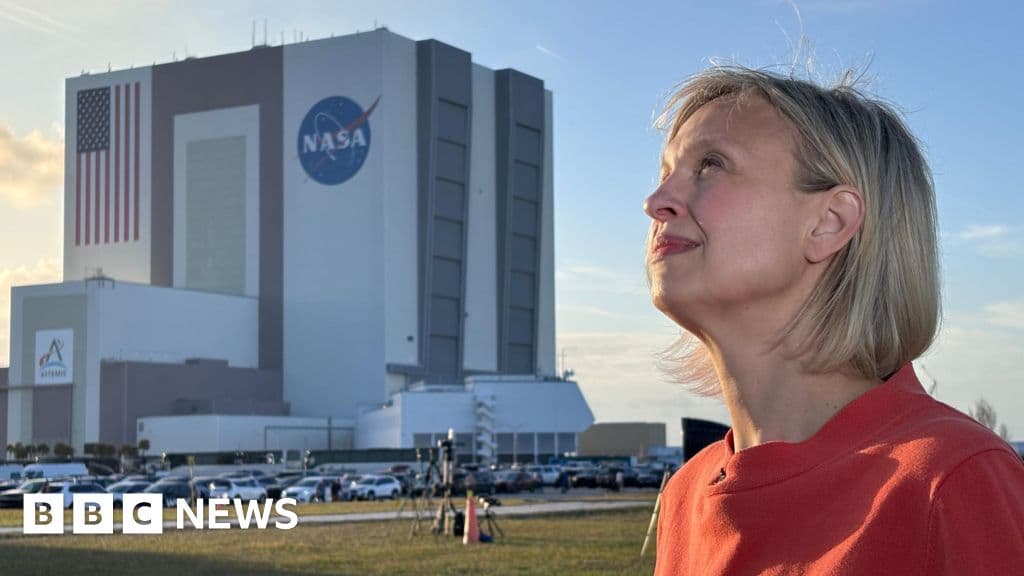
Image: BBC Science
Witness the groundbreaking Artemis II mission as astronauts embark on a historic journey to the Moon, pushing the boundaries of exploration and human spirit.
GlipzoIn a remarkable display of human ingenuity and courage, NASA's Artemis II mission has captured global attention as four astronauts embarked on an unprecedented journey to the Moon. Over the past ten days, these brave individuals traveled further into space than any humans have before, marking a significant milestone in space exploration. From their thrilling launch at the Kennedy Space Center in Florida to their breathtaking lunar approach, this mission has been an emotional rollercoaster for both the crew and those following their journey.
As the crew prepared for liftoff, they spoke about how astronauts often experience a calm demeanor on launch day. However, for many watching from the ground, excitement was palpable. The moment the SLS rocket ignited its massive engines, I felt an overwhelming rush of adrenaline. Standing beside my colleagues, Alison Francis and Kevin Church from the BBC News science team, the experience was electrifying. The blinding light of the rocket's boosters, the thunderous roar that resonated in the air, and the sheer power of the launch were unforgettable. It was hard to believe that four individuals were strapped into a 98-meter tall rocket, embarking on a journey to the Moon.
As the crew—Reid Wiseman, Victor Glover, Christina Koch, and Jeremy Hansen—gazed down at Earth from space, Glover's voice echoed across the globe: "Planet Earth, you look beautiful." This moment of wonder marked the beginning of their journey, as they switched on their spacecraft's main engine and commenced their quarter-million-mile trek toward the Moon. The crew quickly acclimated to microgravity, and live video feeds from their capsule provided an intimate look at their experiences.
Inside the spacecraft, space was limited, resembling the interior of a minibus. The astronauts were closely packed together, sharing every moment of their lives with each other—and with millions of viewers worldwide. A particularly amusing topic of conversation emerged around their Universal Waste Management System, commonly referred to as the toilet. Designed at a staggering cost of $23 million, this critical piece of technology encountered plumbing issues, prompting questions during media briefings about their bathroom experiences. The outcome? While they were cleared for “number twos,” they had to resort to using collapsible urine devices for “number ones.”
At the Johnson Space Center in Houston, I had the opportunity to witness mission control in action—the heartbeat of the entire operation. The team there was intently focused on their screens, monitoring every aspect of the spacecraft's systems, from navigation to life support. This was not just another mission; it was a test flight, marking the first time humans have flown on both the Space Launch System and the Orion spacecraft. With such groundbreaking endeavors come significant risks, and the crew's safety was of utmost importance.
In a poignant moment, Jeremy Hansen, a Canadian astronaut, shared on the podcast Artemis II Presents how he had candid conversations with his wife and three children about the potential dangers of his journey. Similarly, Reid Wiseman opened up about the honest discussions he had with his two daughters, who he raised after losing his wife six years ago. These conversations highlighted the profound emotional stakes of the mission, underscoring the personal sacrifices made by those who venture into space.
As the crew approached the Moon, a breathtaking view of the lunar surface unfolded before them. It was during this moment of awe that they decided to honor Wiseman's late wife Carroll by naming a crater—a bright spot visible from Earth—after her. This heartfelt gesture led to an emotional scene inside the spacecraft, with the crew members embracing one another in tears. Their bond was palpable, and back in mission control, the tears flowed freely, including those of our BBC team.
Every individual at NASA, from Administrator Jared Isaacman to fellow astronauts and dedicated engineers, has invested their hearts into supporting this crew. The mission embodies the spirit of exploration and unity, showcasing how human connections can transcend the vastness of space.
As the Artemis II mission continues, the implications of this journey extend far beyond the Moon. It represents a significant step towards returning humans to the lunar surface and preparing for future missions to Mars. The advancements in technology and human resilience demonstrated during this mission will pave the way for a new era of space exploration. NASA aims to establish a sustainable presence on the Moon, which is crucial for long-term human habitation on other celestial bodies.
As we look to the future, the success of Artemis II will influence subsequent missions and deepen our understanding of space. What lies ahead for these astronauts and the broader goals of NASA? Keep an eye on the mission updates as the crew continues to push the boundaries of human exploration. With each milestone, we move closer to answering the age-old question: What is out there, and how do we get there?
The passion and dedication exhibited by the Artemis II crew serve as a powerful reminder of what humanity can achieve when we dare to dream big and work together towards a common goal. As we await their safe return, the world watches with bated breath, eager to witness the next chapter in this incredible journey.

Discover how the brain protein Menin could be the key to halting cognitive decline with new research that uncovers its vital role in aging.
Indian Express
A new 'killer fungus' discovered in the UK targets invasive heath-star moss, offering hope for restoring native habitats. Will it turn the tide against invasives?
BBC Science
A Blue Origin rocket exploded during a test in Florida, prompting investigations. All personnel are safe. What does this mean for the future of space travel?
BBC Business