
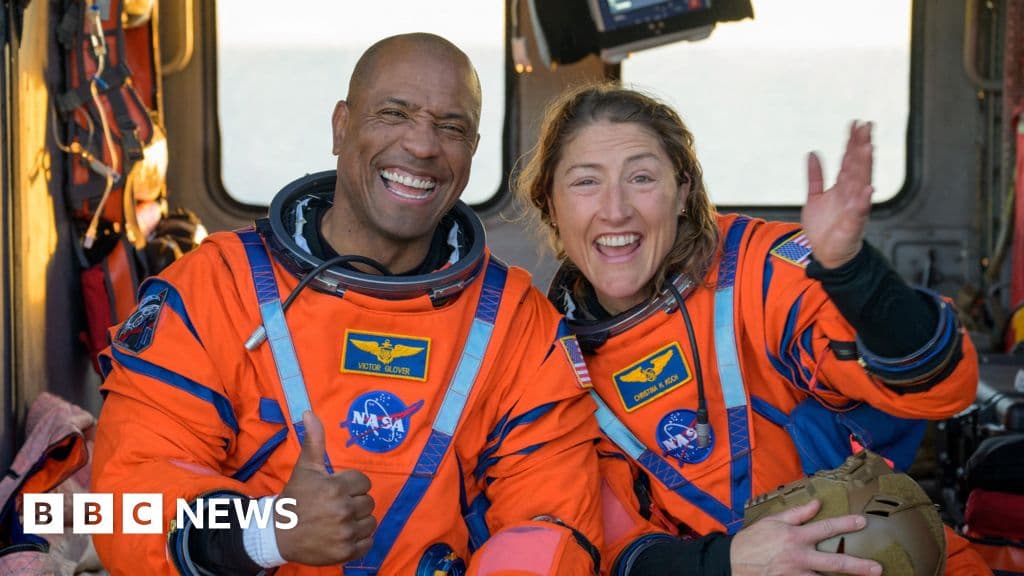
Image: BBC World
The Artemis II crew has returned safely after a historic lunar mission. Discover the highlights of their journey and what's next for NASA's space exploration plans.
GlipzoThe Artemis II mission, a significant milestone for NASA, culminated in a successful splashdown in the Pacific Ocean on November 12, 2023. The four astronauts aboard the Orion spacecraft have returned to Earth after an extraordinary nine-day journey that marked the farthest any humans have traveled from our planet.
The crew members, consisting of Commander Reid Wiseman, Pilot Victor Glover, Mission Specialist Christina Koch, and Canadian astronaut Jeremy Hansen, achieved an impressive feat as they navigated through the challenges of space travel. Their spacecraft reached speeds exceeding 24,000 mph (38,600 km/h) during its descent, encountering temperatures reaching half of that found on the surface of the Sun.
As the capsule, aptly named Integrity, entered the Earth's atmosphere, it experienced a critical moment of communications loss with Mission Control in Houston—lasting six tense minutes—while enduring extreme heat conditions.
Despite the anxiety surrounding the descent, Commander Wiseman's reassuring voice was heard once contact was reestablished, stating, "Houston, Integrity here. We hear you loud and clear." This announcement marked the transition from uncertainty to relief for the mission team and the world.
Once the capsule descended through the atmosphere, the moment of maximum jeopardy passed swiftly. The red-and-white parachutes deployed successfully, guiding the spacecraft to a perfect splashdown. NASA's commentary echoed excitement as they confirmed, “Good main chutes!” before announcing the successful landing.
Rob Navias, a NASA commentator, celebrated the moment, stating, “A perfect bull's eye splashdown for Integrity and its four astronauts.” The crew was then safely extracted from the capsule and transported by helicopter to the USS John P. Murtha, where medical evaluations awaited them.
The astronauts’ return was met with enthusiasm, including a warm welcome from President Joe Biden, who described the trip as a spectacular achievement and extended an invitation for the crew to visit the White House. The astronauts, spotted smiling and enjoying moments together on the ship's deck, are set to reunite with their families in Houston soon.
At a press briefing, Flight Director Rick Henfling shared his sentiments regarding the mission, acknowledging the mix of anxiety and confidence throughout the return journey. “We all breathed a sigh of relief once the (capsule's) side hatch opened up,” he noted, highlighting the team’s dedication to the mission.
Meanwhile, Lori Glaze, NASA's acting associate administrator, praised the astronauts not just for their individual skills but for their teamwork and camaraderie. She emphasized that the mission was a significant step for humanity, stating, “It was a mission for all of humanity.”
The Artemis II mission's return began at 19:33 EDT (23:33 GMT) when the service module, built by the European Space Agency, detached from the Orion spacecraft. Live footage captured the capsule gracefully separating and heading home.
The descent involved the most perilous segment of the mission, requiring a precise angle of approach. A shallow trajectory could cause the Orion to bounce off the atmosphere, while a steep angle could result in catastrophic heating. Fortunately, NASA reported that the angle was flawless, allowing the capsule to target a narrow area of sky southeast of Hawaii as it made its way toward the California coast.
Concerns about the spacecraft's heat shield, which protects the capsule during re-entry, were prevalent given the previous uncrewed mission's experience. During the Artemis I test flight in 2022, unexpected damage to the heat shield raised alarms about the conditions the astronauts might face. Engineers responded by modifying the re-entry strategy, ensuring safety for this crewed mission.
The successful return of the Artemis II crew paves the way for the next phases of the Artemis program, which aims to not only land humans on the lunar surface but also establish a permanent base on the Moon. This ambitious program is seen as a stepping stone for future manned missions to Mars.
As the world watches, NASA is expected to outline the next steps in the Artemis program, including plans for further lunar exploration and potential Mars missions. The achievements of the Artemis II crew will undoubtedly inspire future generations of astronauts and scientists, igniting a renewed passion for exploration and discovery.
In conclusion, the Artemis II mission serves as a beacon of human ingenuity and collaboration, reminding us of what can be accomplished when we dare to reach for the stars. As the excitement builds for the next phase, all eyes will be on NASA as they continue to push the boundaries of space exploration.

Discover how the brain protein Menin could be the key to halting cognitive decline with new research that uncovers its vital role in aging.
Indian Express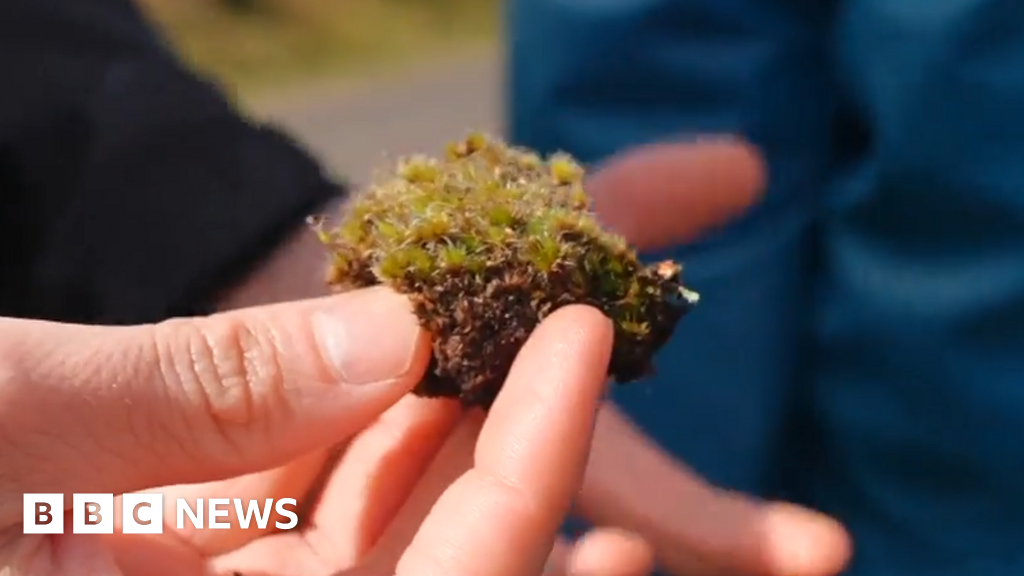
A new 'killer fungus' discovered in the UK targets invasive heath-star moss, offering hope for restoring native habitats. Will it turn the tide against invasives?
BBC Science
A Blue Origin rocket exploded during a test in Florida, prompting investigations. All personnel are safe. What does this mean for the future of space travel?
BBC Business