Glipzo
WorldTechnologyBusinessSportsEntertainmentScienceHealthPolitics
Glipzo
WorldTechnologyBusinessSportsEntertainmentScienceHealthPolitics
  1. Home
  2. /
  3. Science
  4. /
  5. Groundbreaking Cambridge Method Revolutionizes Drug Molecule Design
Groundbreaking Cambridge Method Revolutionizes Drug Molecule Design

Image: Science Daily

Science
Saturday, March 14, 20265 min read

Groundbreaking Cambridge Method Revolutionizes Drug Molecule Design

Cambridge researchers unveil a light-based method to modify drug molecules, promising faster, safer, and more sustainable drug development.

Glipzo News Desk|Source: Science Daily
Share
Glipzo

Key Highlights

  • Cambridge's new method uses light to modify drug molecules.
  • This technique reduces toxic chemical use in drug development.
  • Precision modifications can now occur late in drug development.
  • The method lowers energy consumption and environmental impact.
  • Researchers can explore new drug versions more efficiently.

In this article

  • Groundbreaking Discovery at Cambridge University Researchers at the **University of Cambridge** have unveiled a revolutionary technique that harnesses light to modify complex drug molecules, marking a significant advancement in drug development. This innovative approach could drastically enhance the efficiency of designing new medicines, thereby accelerating the process of bringing effective treatments to market.
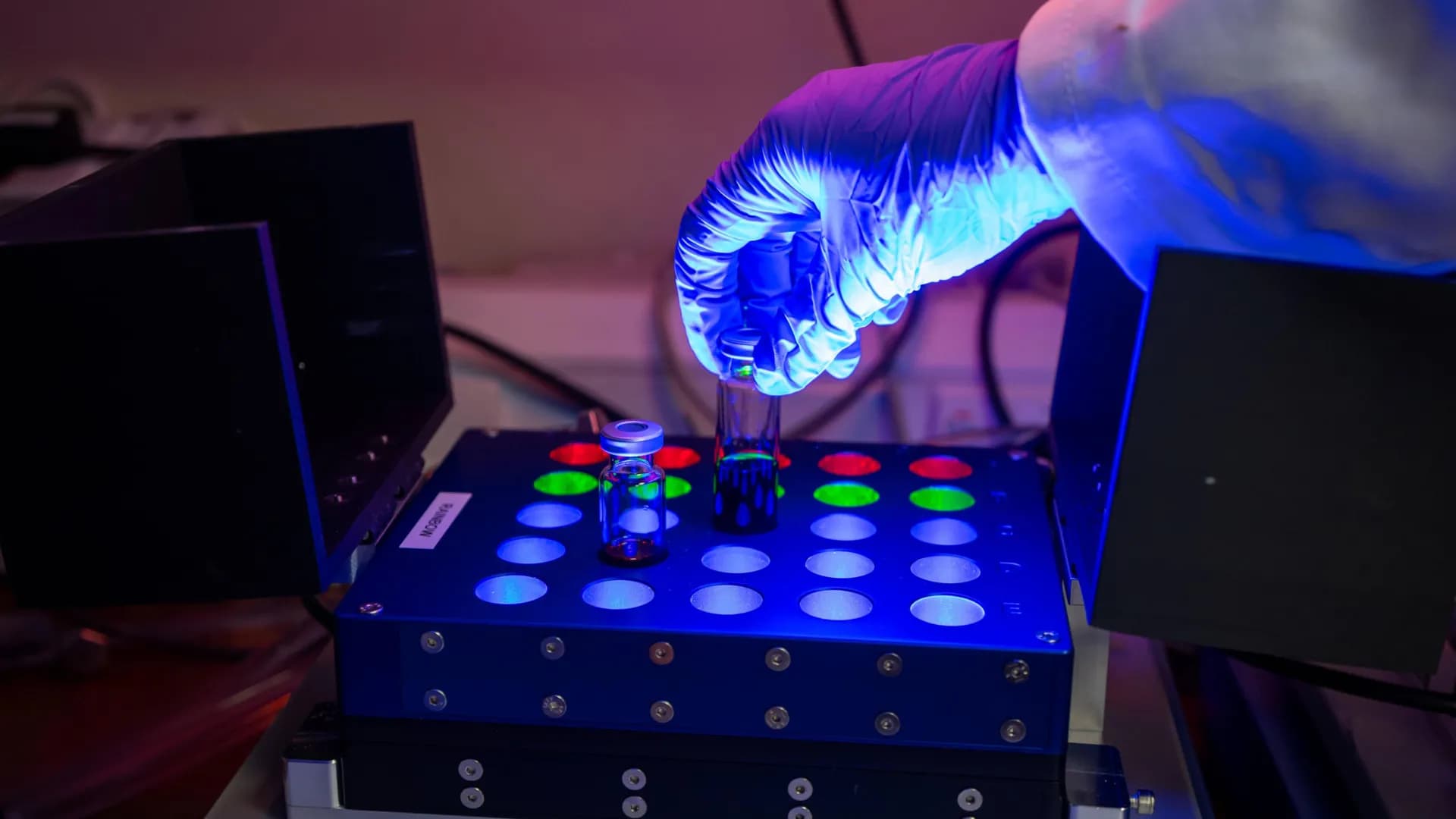
  • A New Light on Drug Development The Cambridge technique utilizes an **LED lamp** to activate the reaction at room temperature, a striking contrast to the high-energy, toxic conditions typically required. The light initiates a self-sustaining chain reaction that forms **carbon-carbon bonds** efficiently and safely, without the need for costly or hazardous reagents.
  • Efficiency and Precision: The Future of Medicinal Chemistry With the ability to modify molecules without dismantling and reassembling them, researchers can now test small changes more efficiently. Vahey emphasized that instead of engaging in **multistep processes** for hundreds of molecules, scientists can begin with their initial compounds and make targeted modifications later on. This capability is particularly crucial in medicinal chemistry, where even minor structural alterations can significantly impact a drug's efficacy and safety.
  • Environmental Benefits and Sustainable Practices This groundbreaking method does not only promise efficiency but also emphasizes environmental sustainability. By reducing the number of synthesis steps required, the new approach minimizes chemical usage, lowers energy consumption, and lessens the overall environmental footprint of drug development.
  • Addressing Fundamental Challenges in Chemistry The breakthrough addresses a fundamental challenge in chemistry—forming **carbon-carbon bonds**—which are essential for a variety of substances, including fuels, plastics, and biological molecules. The technique's ability to maintain **high functional-group tolerance** while modifying specific regions of a molecule offers a fresh perspective on late-stage optimization in drug discovery.
  • A Team Inspired by Sustainable Innovation David Vahey is part of a research team led by **Professor Erwin Reisner**, who is recognized for his work on chemical systems inspired by **photosynthesis**. The group explores innovative ways to utilize sunlight for converting waste materials and carbon dioxide into useful chemicals and fuels, reflecting a broader commitment to sustainability in scientific research.
  • What’s Next? The Future of Drug Development As the pharmaceutical landscape evolves, the implications of this new technique are profound. The ability to modify drug molecules efficiently and sustainably opens up new avenues for research and development.
  • Why It Matters This groundbreaking discovery at Cambridge represents a critical leap forward in the field of medicinal chemistry. By making drug development more efficient and environmentally friendly, it not only paves the way for faster and safer medicines but also addresses the industry's pressing need for sustainable practices. As we look to the future, the integration of such innovative techniques will be essential in meeting global healthcare challenges and promoting a healthier planet.

Groundbreaking Discovery at Cambridge University Researchers at the **University of Cambridge** have unveiled a revolutionary technique that harnesses light to modify complex drug molecules, marking a significant advancement in drug development. This innovative approach could drastically enhance the efficiency of designing new medicines, thereby accelerating the process of bringing effective treatments to market.

Published on March 12 in Nature Synthesis, the study introduces what the researchers term an "anti-Friedel-Crafts" reaction. Unlike traditional Friedel-Crafts chemistry, which relies on harsh chemicals and metal catalysts, this new method allows modifications to be made during the later stages of drug development. This shift not only streamlines the manufacturing process but also significantly reduces the need for extensive chemical alterations.

A New Light on Drug Development The Cambridge technique utilizes an **LED lamp** to activate the reaction at room temperature, a striking contrast to the high-energy, toxic conditions typically required. The light initiates a self-sustaining chain reaction that forms **carbon-carbon bonds** efficiently and safely, without the need for costly or hazardous reagents.

This innovative method enables chemists to make adjustments to drug molecules at a much later stage in their development. David Vahey, the first author of the study and a PhD researcher at St John's College, Cambridge, explained the significance of this breakthrough. "We've found a new way to make precise changes to complex drug molecules, particularly ones that have been exceptionally difficult to modify in the past," he stated.

Efficiency and Precision: The Future of Medicinal Chemistry With the ability to modify molecules without dismantling and reassembling them, researchers can now test small changes more efficiently. Vahey emphasized that instead of engaging in **multistep processes** for hundreds of molecules, scientists can begin with their initial compounds and make targeted modifications later on. This capability is particularly crucial in medicinal chemistry, where even minor structural alterations can significantly impact a drug's efficacy and safety.

The precision of the new reaction is instrumental; it allows chemists to alter specific components of a molecule while leaving other sensitive areas intact. This means that the technique can be employed during the critical late-stage optimization phase of drug development, where fine-tuning is essential to improve the performance of medicines.

Environmental Benefits and Sustainable Practices This groundbreaking method does not only promise efficiency but also emphasizes environmental sustainability. By reducing the number of synthesis steps required, the new approach minimizes chemical usage, lowers energy consumption, and lessens the overall environmental footprint of drug development.

The reaction is highly selective, which means it can precisely modify one part of a drug molecule without disturbing other functional groups. This capability aligns with the growing demand for cleaner, more sustainable practices within the pharmaceutical industry, especially as concerns over ecological impact continue to rise.

Addressing Fundamental Challenges in Chemistry The breakthrough addresses a fundamental challenge in chemistry—forming **carbon-carbon bonds**—which are essential for a variety of substances, including fuels, plastics, and biological molecules. The technique's ability to maintain **high functional-group tolerance** while modifying specific regions of a molecule offers a fresh perspective on late-stage optimization in drug discovery.

By avoiding the use of heavy metals and harsh reaction conditions, the Cambridge method not only enhances the efficiency of drug development but also aligns with the principles of sustainable chemistry. The environmental implications of this discovery are significant, especially as the pharmaceutical industry faces increasing pressure to adopt greener manufacturing practices.

A Team Inspired by Sustainable Innovation David Vahey is part of a research team led by **Professor Erwin Reisner**, who is recognized for his work on chemical systems inspired by **photosynthesis**. The group explores innovative ways to utilize sunlight for converting waste materials and carbon dioxide into useful chemicals and fuels, reflecting a broader commitment to sustainability in scientific research.

Reisner’s team has consistently focused on sustainable methodologies, recognizing the need for processes that are not only effective but also environmentally responsible. The introduction of this new technique is a testament to their continued effort to innovate within the realm of chemistry.

What’s Next? The Future of Drug Development As the pharmaceutical landscape evolves, the implications of this new technique are profound. The ability to modify drug molecules efficiently and sustainably opens up new avenues for research and development.

In the coming years, we can expect to see significant advancements in drug discovery processes as this method gains traction within the scientific community. Researchers will likely explore its applications across various therapeutic areas, potentially leading to the discovery of new medicines that can be developed more quickly and with fewer environmental consequences.

Why It Matters This groundbreaking discovery at Cambridge represents a critical leap forward in the field of medicinal chemistry. By making drug development more efficient and environmentally friendly, it not only paves the way for faster and safer medicines but also addresses the industry's pressing need for sustainable practices. As we look to the future, the integration of such innovative techniques will be essential in meeting global healthcare challenges and promoting a healthier planet.

Did you find this article useful? Share it!

Share

Related Articles

Critical Efforts Underway to Save Stranded Whale Timmy
Science
Apr 17, 2026

Critical Efforts Underway to Save Stranded Whale Timmy

A new rescue effort for stranded whale Timmy includes using air cushions. Can this innovative method save him? Learn more about his situation.

BBC World
Shocking Butterfly Comeback After 430 Trees Planted
Science
Apr 17, 2026

Shocking Butterfly Comeback After 430 Trees Planted

Rare white-letter hairstreak butterflies return to Quantock Hills after volunteers plant 430 elm trees, marking a significant conservation success. Find out more!

BBC Science
Major Fundraising Drive to Revive Surrey's Wildlife
Science
Apr 16, 2026

Major Fundraising Drive to Revive Surrey's Wildlife

Surrey Wildlife Trust launches a £40K campaign to revive local wildlife, reconnecting communities with nature. Discover how you can help!

BBC Science

Categories

  • World
  • Technology
  • Business
  • Sports

More

  • Entertainment
  • Science
  • Health
  • Politics

Explore

  • Web Stories
  • About Us
  • Contact

Legal

  • Privacy Policy
  • Terms of Service

© 2026 Glipzo. All rights reserved.