
Image: BBC Science
Discover how the UK government is investing £1M to reintroduce Golden Eagles to England, aiming to restore biodiversity and engage local communities.
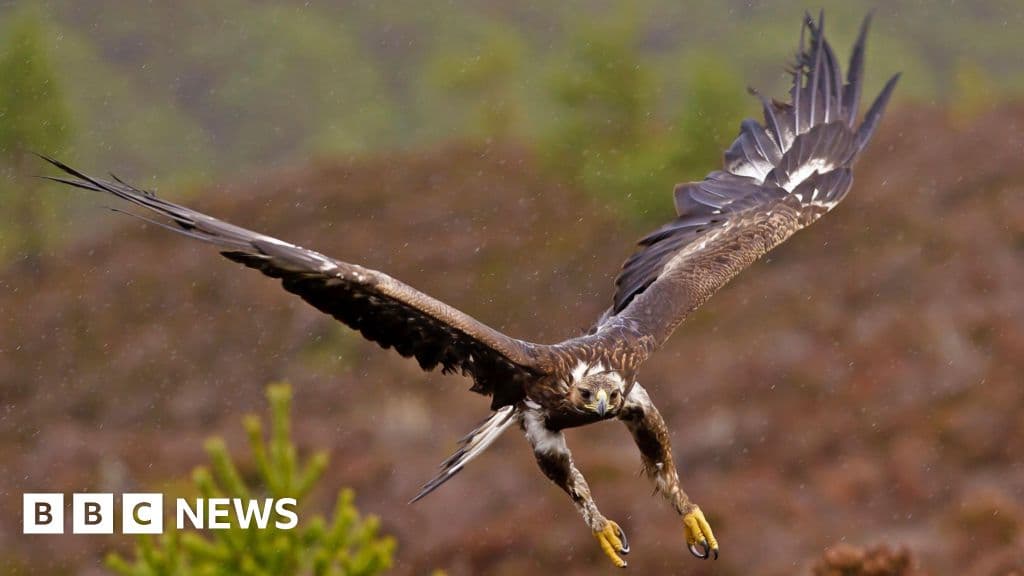
GlipzoIn an exciting move for wildlife enthusiasts and conservationists alike, Golden Eagles are set to reclaim their place in the skies of England, thanks to a £1 million government investment aimed at their reintroduction. The initiative, which could see these majestic birds return as early as next year, comes after a historic absence that dates back to the 19th century, when hunting drove them to extinction in England.
The Golden Eagle, known as Britain's second-largest bird of prey, has long been a symbol of both beauty and power. With the ability to reach speeds of up to 200 mph during dives and an extraordinary vision that allows them to spot prey from three miles away, these birds are truly remarkable. However, their legacy was tarnished by perceptions of them as threats to livestock, particularly lambs, leading to their eradication from the English countryside.
To ensure a successful reintroduction, Forestry England plans to conduct a public consultation alongside the charity Restoring Upland Nature (RUN), which has already spearheaded successful re-establishment efforts in Scotland. This initiative aims to gather insights and concerns from local communities, especially farming groups that worry about the potential impact of these predators on livestock.
Emma Reynolds, the Environment Secretary, emphasized the importance of the Golden Eagle in the ecosystem, stating, "Aside from being Britain's second largest bird of prey with an impressive two-metre wingspan, the golden eagle is a keystone species that can play a vital role in nature recovery more widely." The UK has been facing a significant decline in biodiversity, with research indicating that one in six species is now at risk of extinction, underscoring the urgency for conservation efforts.
The introduction of Golden Eagles into the ecosystem is expected to have profound implications. Ed Parr Ferris, the species recovery manager at Forestry England, highlighted their role in controlling populations of mesopredators—animals that sit in the middle of the food web, such as foxes and badgers. By reintroducing these apex predators, the balance of the ecosystem can be restored, allowing rarer species to thrive.
"Golden eagles are impressive and beautiful birds, and one of our only remaining apex predators in Britain. Any predator applies a pressure on a system to balance all the different other animals that are living in that place," Ferris explained, emphasizing the ecological benefits of their return.
After extensive research, Forestry England identified 28 potential sites for new Golden Eagle populations, narrowing it down to eight locations that offer the right climate and minimal disturbance. Northumberland emerged as the top contender for this ambitious project. Other possible sites include various upland areas that have the potential to support these raptors.
Over the past eight years, 28 Golden Eagle chicks have been successfully relocated from the Scottish Highlands and Orkney Isles to the Scottish border, with some birds briefly migrating into England. However, without additional support, it is estimated that it could take 20 years for the populations to naturally expand further south.
RUN, the charity leading the reintroduction program in England, plans to conduct a public consultation with local landowners and farmers, which will be crucial for the project's success. Dr. Cat Barlow, CEO of RUN, expressed optimism about the initiative, stating, "It is really difficult to get people excited about peat restoration. But something like a golden eagle can get new audiences excited and get them aware of how the whole ecosystem can work together."
This reintroduction not only aims to restore a lost species but also serves as a vehicle for broader discussions about nature recovery and conservation efforts in England. Engaging the public in this conversation is vital, as it fosters a sense of community and shared responsibility for the environment.
Despite the positive outlook, some experts express concerns about the consultation timeline. Professor Davy McCracken, an expert in agricultural ecology at Scotland's Rural College, noted that 18 months might not be sufficient for thorough discussions with land managers and farmers. Given their seasonal workloads, these stakeholders may find it challenging to participate fully in the consultation process.
As the initiative moves forward, it will be essential for the government and conservation organizations to address these concerns transparently and effectively. By doing so, they can foster community buy-in and ensure that the reintroduction of Golden Eagles serves not only ecological goals but also respects the livelihoods of those who live and work in these areas.
The return of Golden Eagles to England marks a significant step towards revitalizing the country’s natural heritage and addressing the pressing issue of biodiversity loss. As the project progresses, stakeholders will be closely monitoring public sentiment, ecological impact, and the overall success of the reintroduction.
In the coming years, the focus will be on maintaining communication with local communities and ensuring that the reintroduction benefits both wildlife and agricultural practices. The golden eagle's resurgence could not only symbolize hope for conservation in England but also inspire similar initiatives across the UK and beyond, paving the way for a more balanced coexistence between humans and wildlife.
This initiative holds great promise, and as the government pledges its support, the future of Golden Eagles in England looks brighter than ever.

Discover how the brain protein Menin could be the key to halting cognitive decline with new research that uncovers its vital role in aging.
Indian Express
A new 'killer fungus' discovered in the UK targets invasive heath-star moss, offering hope for restoring native habitats. Will it turn the tide against invasives?
BBC Science
A Blue Origin rocket exploded during a test in Florida, prompting investigations. All personnel are safe. What does this mean for the future of space travel?
BBC Business