
Glipzo
WorldTechnologyBusinessSportsEntertainmentScienceHealthPolitics
Glipzo
WorldTechnologyBusinessSportsEntertainmentScienceHealthPolitics
  1. Home
  2. /
  3. Science
  4. /
  5. Climate Change's Dire Impact on Kiribati's Tuna Economy
Climate Change's Dire Impact on Kiribati's Tuna Economy

Image: BBC Business

Science
Monday, April 27, 20264 min read

Climate Change's Dire Impact on Kiribati's Tuna Economy

Discover how climate change threatens Kiribati's economy, reliant on tuna fishing licenses. What does the future hold for this vulnerable nation?

Glipzo News Desk|Source: BBC Business

Share
Glipzo

Key Highlights

  • Kiribati relies on tuna fishing licenses for 70% of government revenue.
  • Climate change threatens tuna populations, risking Kiribati's economy.
  • In 2024, Kiribati generated $137 million from fishing licenses.
  • Rising ocean temperatures could lead to a $10 million annual loss by 2050.
  • The global tuna market is valued at $44 billion, highlighting Kiribati's stake.

In this article

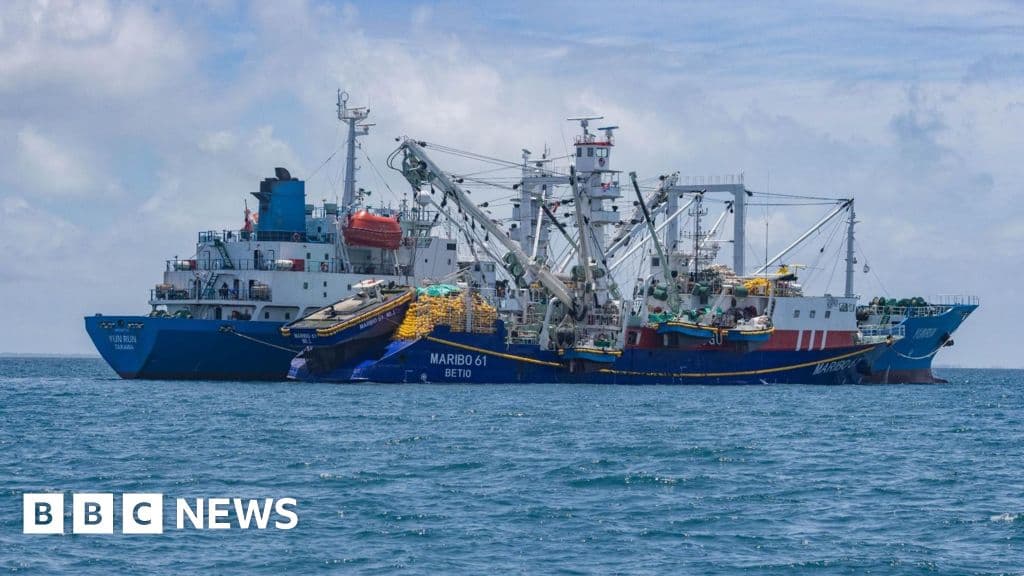
  • The Pacific's Tuna Treasure: Kiribati's Economic Lifeline The **Pacific Ocean** is a treasure trove of marine life, producing over half of the world's **tuna**. Among the numerous islands in this vast expanse lies Kiribati, a nation composed of **33 islands** that face significant challenges due to climate change. With a land mass comparable to **New York City**, Kiribati's economy is heavily dependent on its substantial **Exclusive Economic Zone (EEZ)**, which spans **3.4 million square kilometers** (1.3 million square miles) and is home to an abundance of marine species, including skipjack, yellowfin, and bigeye tuna. For Kiribati, fishing is not just a livelihood but the backbone of its economy. An astonishing **70%** of government revenue is derived from selling tuna fishing licenses to foreign fishing fleets, making it the highest percentage of any nation globally. This money is crucial for sustaining the country, which relies heavily on the ocean for its cultural and economic stability.
  • Climate Change: A Double-Edged Sword While Kiribati’s ocean resources are essential for its survival, they also pose a looming threat due to **climate change**. Rising water temperatures are causing tuna populations to migrate to cooler waters, which are often located outside of Kiribati's EEZ. This shift could lead to a dramatic decline in demand for fishing licenses, directly impacting the nation’s economy. According to studies, the global tuna market is valued at **$44 billion** annually, highlighting the significance of these fish in international trade. However, as tuna move away from Kiribati's waters, the nation risks losing its economic lifeline.
  • The Economic Stakes: License Fees and Revenue Loss In **2024**, Kiribati generated approximately **$137 million** (£102 million) from fishing licenses, a critical financial resource for the government. **Riibeta Abeta**, the permanent secretary for the Ministry of Fisheries, emphasizes that these licenses comprised nearly three-quarters of government income between **2018 and 2022**, equating to about **40%** of Kiribati's GDP, as reported by the **International Monetary Fund (IMF)**. The implications of losing this revenue are severe. **Simon Diffey**, a fisheries expert with decades of experience, explains that Kiribati stands alongside **Papua New Guinea** as the primary players in the regional tuna market. However, unlike Papua New Guinea, which has the resources to diversify its economy, Kiribati's options are limited.
  • Vulnerability Without Resources Kiribati’s highest elevation is merely **two meters** above sea level, making it one of the most vulnerable nations to climate change. Without the fishing industry, the country has little else to fall back on; as Diffey points out, “No water, no land, no resources other than fish.” The tuna species are sensitive to minute fluctuations in water temperature, reacting to changes as slight as **0.1 degrees Celsius**. As ocean temperatures continue to rise, the expected migration of tuna is projected to move eastward, away from many island nations, including Kiribati.
  • The Future: A Nation at a Crossroads Abeta warns that the reduction in demand for fishing licenses introduces significant volatility to Kiribati's revenue, a situation exacerbated by forecasts indicating that the nation could face up to a **$10 million** loss in fishing access fees annually by **2050** under high greenhouse gas emission scenarios. However, if emissions are curtailed significantly, the Ministry of Fisheries suggests that tuna stocks may remain stable within Kiribati's EEZ. Despite this optimistic outlook, local fishermen will still experience reduced catches under both high and low emission scenarios.
  • Why It Matters: A Global Perspective The plight of Kiribati is not just a local issue; it serves as a stark reminder of the broader implications of climate change on global fisheries and economies. The potential loss of income from tuna fishing licenses could lead to dire consequences for a nation that is already grappling with the effects of rising sea levels and environmental degradation. As we look to the future, monitoring the effects of climate change on marine life is crucial, not just for Kiribati but for many island nations dependent on similar resources. Understanding these dynamics will be essential for developing strategies to mitigate the economic impact of climate change on vulnerable communities. In the face of these challenges, what measures can be taken to protect both the tuna populations and the economies of nations like Kiribati? The answers may hold the key to preserving not only the livelihoods of millions but also the health of our oceans.
  • Conclusion: The Road Ahead As Kiribati navigates this precarious situation, the global community must take heed of the implications. With the threat of climate change looming ever larger, collaborative efforts in sustainable fishing practices and environmental protection will be critical. Kiribati's future may well depend on proactive measures taken today to secure its economic viability for generations to come.

The Pacific's Tuna Treasure: Kiribati's Economic Lifeline The **Pacific Ocean** is a treasure trove of marine life, producing over half of the world's **tuna**. Among the numerous islands in this vast expanse lies Kiribati, a nation composed of **33 islands** that face significant challenges due to climate change. With a land mass comparable to **New York City**, Kiribati's economy is heavily dependent on its substantial **Exclusive Economic Zone (EEZ)**, which spans **3.4 million square kilometers** (1.3 million square miles) and is home to an abundance of marine species, including skipjack, yellowfin, and bigeye tuna. For Kiribati, fishing is not just a livelihood but the backbone of its economy. An astonishing **70%** of government revenue is derived from selling tuna fishing licenses to foreign fishing fleets, making it the highest percentage of any nation globally. This money is crucial for sustaining the country, which relies heavily on the ocean for its cultural and economic stability.

Climate Change: A Double-Edged Sword While Kiribati’s ocean resources are essential for its survival, they also pose a looming threat due to **climate change**. Rising water temperatures are causing tuna populations to migrate to cooler waters, which are often located outside of Kiribati's EEZ. This shift could lead to a dramatic decline in demand for fishing licenses, directly impacting the nation’s economy. According to studies, the global tuna market is valued at **$44 billion** annually, highlighting the significance of these fish in international trade. However, as tuna move away from Kiribati's waters, the nation risks losing its economic lifeline.

The Economic Stakes: License Fees and Revenue Loss In **2024**, Kiribati generated approximately **$137 million** (£102 million) from fishing licenses, a critical financial resource for the government. **Riibeta Abeta**, the permanent secretary for the Ministry of Fisheries, emphasizes that these licenses comprised nearly three-quarters of government income between **2018 and 2022**, equating to about **40%** of Kiribati's GDP, as reported by the **International Monetary Fund (IMF)**. The implications of losing this revenue are severe. **Simon Diffey**, a fisheries expert with decades of experience, explains that Kiribati stands alongside **Papua New Guinea** as the primary players in the regional tuna market. However, unlike Papua New Guinea, which has the resources to diversify its economy, Kiribati's options are limited.

Vulnerability Without Resources Kiribati’s highest elevation is merely **two meters** above sea level, making it one of the most vulnerable nations to climate change. Without the fishing industry, the country has little else to fall back on; as Diffey points out, “No water, no land, no resources other than fish.” The tuna species are sensitive to minute fluctuations in water temperature, reacting to changes as slight as **0.1 degrees Celsius**. As ocean temperatures continue to rise, the expected migration of tuna is projected to move eastward, away from many island nations, including Kiribati.

The Future: A Nation at a Crossroads Abeta warns that the reduction in demand for fishing licenses introduces significant volatility to Kiribati's revenue, a situation exacerbated by forecasts indicating that the nation could face up to a **$10 million** loss in fishing access fees annually by **2050** under high greenhouse gas emission scenarios. However, if emissions are curtailed significantly, the Ministry of Fisheries suggests that tuna stocks may remain stable within Kiribati's EEZ. Despite this optimistic outlook, local fishermen will still experience reduced catches under both high and low emission scenarios.

Why It Matters: A Global Perspective The plight of Kiribati is not just a local issue; it serves as a stark reminder of the broader implications of climate change on global fisheries and economies. The potential loss of income from tuna fishing licenses could lead to dire consequences for a nation that is already grappling with the effects of rising sea levels and environmental degradation. As we look to the future, monitoring the effects of climate change on marine life is crucial, not just for Kiribati but for many island nations dependent on similar resources. Understanding these dynamics will be essential for developing strategies to mitigate the economic impact of climate change on vulnerable communities. In the face of these challenges, what measures can be taken to protect both the tuna populations and the economies of nations like Kiribati? The answers may hold the key to preserving not only the livelihoods of millions but also the health of our oceans.

Conclusion: The Road Ahead As Kiribati navigates this precarious situation, the global community must take heed of the implications. With the threat of climate change looming ever larger, collaborative efforts in sustainable fishing practices and environmental protection will be critical. Kiribati's future may well depend on proactive measures taken today to secure its economic viability for generations to come.

Did you find this article useful? Share it!

Share

Related Articles

Groundbreaking Discovery: Protein Menin Could Halt Brain Decline
Science
Jun 1, 2026

Groundbreaking Discovery: Protein Menin Could Halt Brain Decline

Discover how the brain protein Menin could be the key to halting cognitive decline with new research that uncovers its vital role in aging.

Indian Express
Breakthrough: New 'Killer Fungus' Could Restore UK Habitats
Science
May 31, 2026

Breakthrough: New 'Killer Fungus' Could Restore UK Habitats

A new 'killer fungus' discovered in the UK targets invasive heath-star moss, offering hope for restoring native habitats. Will it turn the tide against invasives?

BBC Science
Breaking: Blue Origin Rocket Explodes During Florida Test
Science
May 29, 2026

Breaking: Blue Origin Rocket Explodes During Florida Test

A Blue Origin rocket exploded during a test in Florida, prompting investigations. All personnel are safe. What does this mean for the future of space travel?

BBC Business

Categories

  • World
  • Technology
  • Business
  • Sports

More

  • Entertainment
  • Science
  • Health
  • Politics

Explore

  • Web Stories
  • About Us
  • Contact

Legal

  • Privacy Policy
  • Terms of Service
  • Disclaimer

© 2026 Glipzo. All rights reserved.