Breakthrough Catalyst Transforms CO2 into Fuel Efficiently
ETH Zurich's new single-atom catalyst efficiently converts CO2 into methanol, paving the way for sustainable fuel solutions. Discover its implications now!
Glipzo News Desk|Source: Science Daily
Share
Glipzo
Key Highlights
ETH Zurich unveils a groundbreaking catalyst turning CO2 into methanol.
The single-atom catalyst significantly lowers energy requirements.
Methanol is vital for sustainable chemistry and reducing fossil fuel dependence.
Indium atoms act as individual active sites for enhanced efficiency.
This breakthrough offers a promising solution for climate change.
Transforming CO2: A Major Scientific Breakthrough
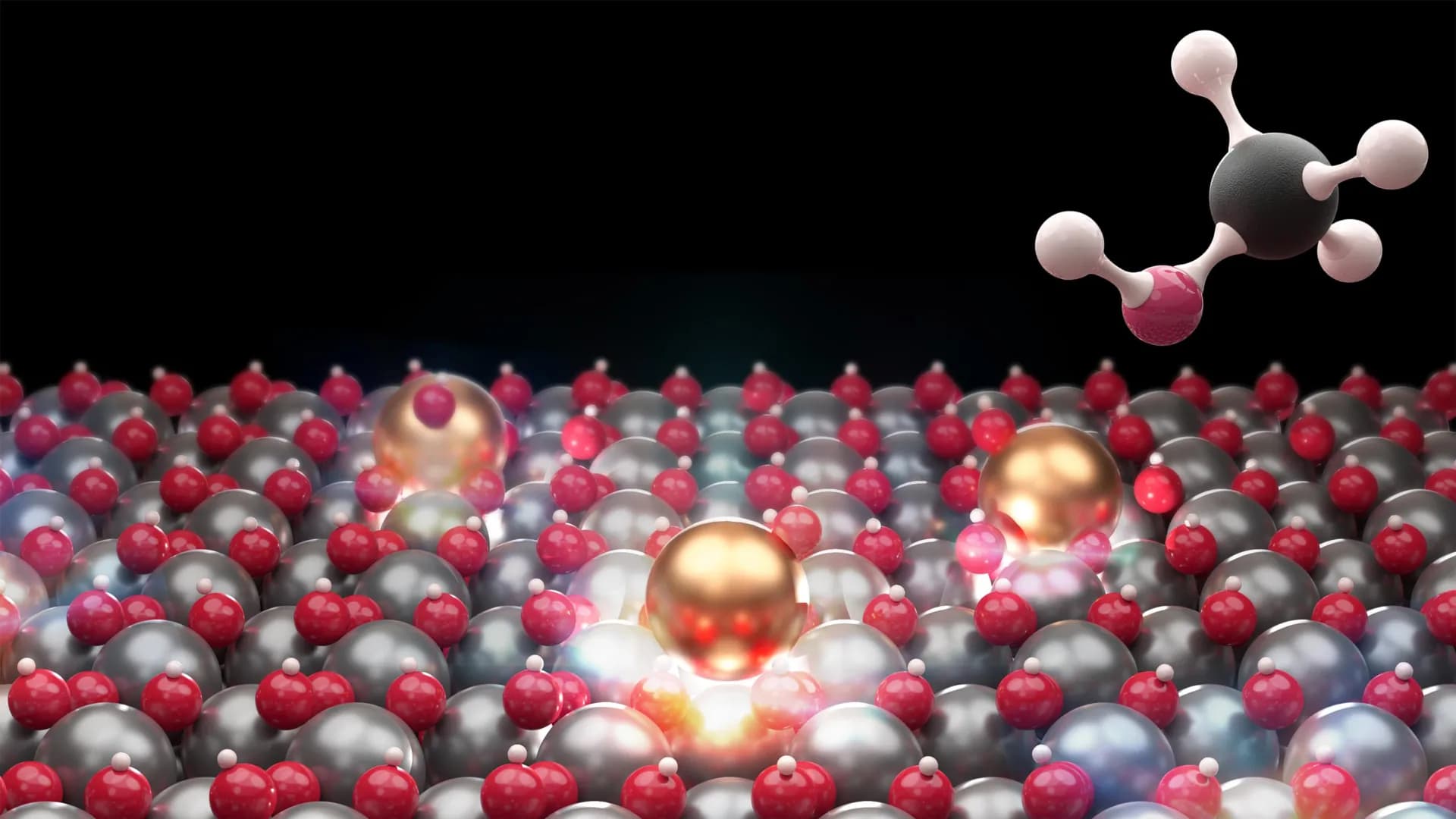
A groundbreaking advancement has emerged from ETH Zurich, where researchers have unveiled a **revolutionary catalyst** that converts **carbon dioxide (CO2)** into **methanol**, a vital alcohol used in various industrial applications. This **single-atom catalyst** significantly lowers the energy barrier traditionally required for this chemical reaction, making the process more efficient and sustainable.
This innovative development comes at a critical time as the world grapples with climate change and the need for renewable energy sources. By transforming CO2—often viewed as a harmful greenhouse gas—into a valuable fuel, this research holds promise for a cleaner, more sustainable future.
## How Catalysts Work and Their Importance
To understand the implications of this breakthrough, it’s essential to grasp the role of **catalysts** in chemical reactions. These substances facilitate chemical processes by lowering the energy required to initiate a reaction. In many industrial scenarios, the energy needed is prohibitively high, leading to increased costs and inefficiencies.
Historically, effective catalysts have relied on metals, which can be rare and expensive. The new catalyst developed by ETH Zurich leverages **indium** in a unique way. Each individual atom of indium operates as its own active site, marking a significant departure from traditional catalysts that group metals into larger particles. This architectural shift not only enhances efficiency but also paves the way for more precise and controlled catalyst development.
## The Significance of Methanol in Sustainable Chemistry
Javier Pérez-Ramírez, Professor of Catalysis Engineering at ETH Zurich, highlights the importance of methanol, stating, "**Methanol is a universal precursor for the production of a wide range of chemicals and materials, such as plastics—the Swiss army knife of chemistry, so to speak.**" This versatile alcohol is crucial for creating fuels and materials and is integral to the ongoing transition away from fossil fuels.
If the hydrogen and energy utilized in methanol production derive from **renewable sources**, this process could achieve climate neutrality. By capturing CO2 and converting it into a useful resource rather than releasing it into the atmosphere, this new approach represents a significant step forward in sustainable chemistry.
## Advantages of Single Atom Catalysts
The single-atom architecture of the new catalyst allows for unprecedented efficiency. Conventional catalysts typically contain clusters of metal particles, where many atoms remain inactive and do not contribute to the reaction. In contrast, single-atom catalysts maximize the use of scarce and costly metals by harnessing their full potential at the atomic level.
Pérez-Ramírez elaborates on the advantages, saying, "**Our new catalyst has a single atom architecture, in which isolated active metal atoms are anchored on the surface of a specially developed support material.**" This precision not only enhances efficiency but also expands the feasibility of using precious metals in industrial applications.
## Engineering Stability in Catalysts
To achieve this level of precision, the ETH Zurich team developed several innovative synthesis methods, collaborating with other research groups to create a stable support material that allows indium atoms to remain reactive. One method involves burning the starting materials in a flame at temperatures between **2,000°C and 3,000°C**, followed by rapid cooling. This process ensures that indium atoms remain on the surface of the support material and become firmly embedded.
The durability of this new catalyst is another key feature. The researchers demonstrated that their single-atom systems can endure demanding operational conditions, including high temperatures and pressures, which are typically required for the methanol synthesis process.
## Future Implications and What to Watch For
The introduction of this innovative catalyst not only signifies a technological leap in chemical engineering but also offers a glimpse into a more sustainable future. As the world continues to seek solutions to combat climate change and reduce reliance on fossil fuels, this breakthrough could play a pivotal role in reshaping the energy landscape.
In the coming years, we can expect to see further advancements in catalyst technology, potentially leading to the wider application of single-atom catalysts in various industrial processes. Additionally, monitoring the scalability of this methanol production method will be crucial, as researchers strive to integrate renewable resources into their systems.
As these developments unfold, the significance of transforming CO2 into usable fuel could become a cornerstone in our efforts to combat climate change and promote sustainable chemistry. This research not only highlights the ingenuity of modern science but also serves as a reminder of the critical steps needed to ensure a greener, more sustainable future for generations to come.