
Glipzo
WorldTechnologyBusinessSportsEntertainmentScienceHealthPolitics
Glipzo
WorldTechnologyBusinessSportsEntertainmentScienceHealthPolitics
  1. Home
  2. /
  3. Science
  4. /
  5. Breaking the Space Barrier: Innovative Gym Equipment for Astronauts
Breaking the Space Barrier: Innovative Gym Equipment for Astronauts

Image: BBC Science

Science
Saturday, May 23, 20265 min read

Breaking the Space Barrier: Innovative Gym Equipment for Astronauts

Discover how cutting-edge gym equipment is being developed for astronauts to stay fit during space missions, ensuring health in microgravity environments.

Glipzo News Desk|Source: BBC Science
Share
Glipzo

Key Highlights

  • Olympic medallist Matthew Wells tests innovative fitness equipment for astronauts.
  • The HIFIm device is designed to ensure astronaut health in space.
  • Collaboration among global agencies is key to developing advanced exercise solutions.
  • New fitness technology will be crucial for upcoming lunar missions.
  • Research continues to address the challenges of exercising in microgravity.

In this article

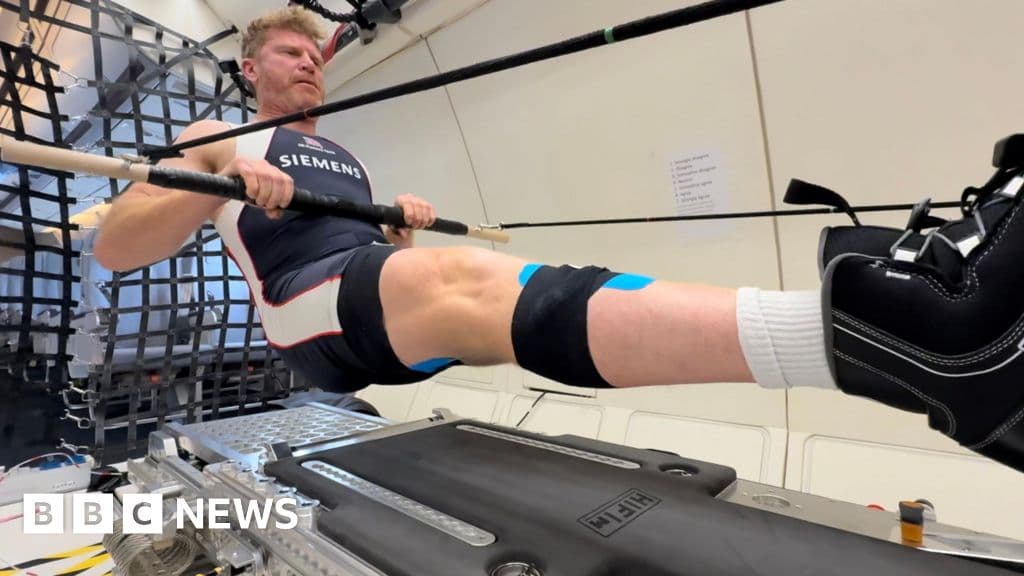
  • The Race for Astronaut Fitness Equipment In an unprecedented effort to ensure astronauts remain fit during their missions, **Olympic medallist Matthew Wells** recently participated in a unique experiment. Floating in a specialized plane **8,500 meters (28,000 feet)** above Earth, he experienced weightlessness for **22 seconds** while rowing as hard as he could. Unlike traditional training environments, this scenario mimicked the conditions astronauts face in space, highlighting a significant leap forward in exercise technology for future space missions.
  • Why Exercise is Essential in Space Astronauts must prioritize fitness to maintain muscle mass and bone density during prolonged missions in microgravity environments. Unfortunately, existing exercise machines require significant time commitments to ensure astronauts stay healthy. Wells, who earned a bronze medal at the **2008 Beijing Olympics**, expressed his enthusiasm for contributing to a project with the potential to reach beyond our planet: “Isn’t it every kid’s dream to be an astronaut? It’s an opportunity to do something really different.”
  • Innovative Testing Methods and Future Applications During these parabolic flights, a specially designed aircraft ascends and then nosedives, creating moments of weightlessness. This short window allows researchers to gather critical data on how well the exercise machines perform under conditions similar to those in space. The HIFIm device, which has already undergone testing with other exercises, is expected to play a pivotal role in future lunar missions and beyond.
  • Global Collaboration in Space Fitness Solutions The HIFIm device is just one of several innovative fitness solutions being explored worldwide. Another key project is the **European Enhanced Exploration Exercise Device (E4D)**, developed by the **Danish Aerospace Company (DAC)**. This advanced equipment is currently undergoing astronaut testing and features four different modes: resistive training, cycling, rowing, and rope pulling. Additionally, it incorporates motion capture technology, enabling astronauts to monitor their performance effectively.
  • The Science Behind Exercising in Microgravity In space, the absence of gravitational forces leads to rapid muscle and bone deterioration. Dr. **Dan Cleather**, a professor of strength and conditioning at **St Mary’s University**, who is part of the HIFIm development team, explained, “In space, we don’t experience any forces; our muscles and bones immediately start to diminish because we’re not being loaded by those forces.” This highlights the necessity for astronauts to engage in regular exercise to maintain their physical capabilities.
  • Future Outlook: What’s Next for Space Fitness Equipment? As the race to develop effective fitness equipment for astronauts continues, the collaborative efforts of international space agencies and research teams are paving the way for groundbreaking advancements in this field. With upcoming lunar missions on the horizon, maintaining astronaut health is paramount.
  • Why It Matters The development of exercise equipment for astronauts is not just about fitness; it’s about ensuring the health and well-being of individuals who venture into space. As humanity prepares for longer missions to the Moon, Mars, and beyond, these innovations will play a vital role in sustaining life and performance in the harshest conditions.
  • Key Takeaways - Matthew Wells participates in a groundbreaking weightlessness experiment. - HIFIm device aims to maintain astronaut fitness during missions. - Collaboration among ESA, NASA, and other agencies drives innovation. - Future lunar missions necessitate advanced exercise solutions. - Ongoing research focuses on overcoming the challenges of microgravity.

The Race for Astronaut Fitness Equipment In an unprecedented effort to ensure astronauts remain fit during their missions, **Olympic medallist Matthew Wells** recently participated in a unique experiment. Floating in a specialized plane **8,500 meters (28,000 feet)** above Earth, he experienced weightlessness for **22 seconds** while rowing as hard as he could. Unlike traditional training environments, this scenario mimicked the conditions astronauts face in space, highlighting a significant leap forward in exercise technology for future space missions.

This innovative venture is part of a global competition among researchers and engineers striving to develop cutting-edge gym equipment specifically designed for use in space. With plans for upcoming lunar bases and space stations, the need for effective exercise solutions has never been more critical.

Why Exercise is Essential in Space Astronauts must prioritize fitness to maintain muscle mass and bone density during prolonged missions in microgravity environments. Unfortunately, existing exercise machines require significant time commitments to ensure astronauts stay healthy. Wells, who earned a bronze medal at the **2008 Beijing Olympics**, expressed his enthusiasm for contributing to a project with the potential to reach beyond our planet: “Isn’t it every kid’s dream to be an astronaut? It’s an opportunity to do something really different.”

The project Wells is involved with, known as HIFIm (High-Frequency Impulse for Microgravity), has garnered attention from major space agencies, including the European Space Agency (ESA), NASA, the Canadian Space Agency, and the UK Space Agency. These organizations have collaborated on the development and testing phases, utilizing parabolic flight tests to simulate weightlessness and collect data on the equipment's effectiveness.

Innovative Testing Methods and Future Applications During these parabolic flights, a specially designed aircraft ascends and then nosedives, creating moments of weightlessness. This short window allows researchers to gather critical data on how well the exercise machines perform under conditions similar to those in space. The HIFIm device, which has already undergone testing with other exercises, is expected to play a pivotal role in future lunar missions and beyond.

Dr. Meganne Christian, a reserve astronaut for ESA and Senior Exploration Manager at the UK Space Agency, noted that the device emerged from a competition aimed at creating exercise equipment for the Gateway Space Station, an orbital outpost planned for the Moon. Although the Gateway project has seen delays, Christian is optimistic about the future, emphasizing that we are at a “really exciting moment in space exploration.” The upcoming Artemis missions are set to return humans to the Moon, with the goal of establishing a permanent presence.

Global Collaboration in Space Fitness Solutions The HIFIm device is just one of several innovative fitness solutions being explored worldwide. Another key project is the **European Enhanced Exploration Exercise Device (E4D)**, developed by the **Danish Aerospace Company (DAC)**. This advanced equipment is currently undergoing astronaut testing and features four different modes: resistive training, cycling, rowing, and rope pulling. Additionally, it incorporates motion capture technology, enabling astronauts to monitor their performance effectively.

NASA's recent Artemis II mission included a specially designed exercise apparatus called the flywheel, showcasing the agency's commitment to astronaut health. As the challenges of exercising in space become clearer, the importance of these developments is underscored by the realities of human physiology in a microgravity environment.

The Science Behind Exercising in Microgravity In space, the absence of gravitational forces leads to rapid muscle and bone deterioration. Dr. **Dan Cleather**, a professor of strength and conditioning at **St Mary’s University**, who is part of the HIFIm development team, explained, “In space, we don’t experience any forces; our muscles and bones immediately start to diminish because we’re not being loaded by those forces.” This highlights the necessity for astronauts to engage in regular exercise to maintain their physical capabilities.

Research indicates that without adequate physical activity, astronauts could face significant declines in coordination and cardiovascular fitness. The implications are serious: reduced fitness levels can hinder their ability to perform essential tasks required during missions.

Future Outlook: What’s Next for Space Fitness Equipment? As the race to develop effective fitness equipment for astronauts continues, the collaborative efforts of international space agencies and research teams are paving the way for groundbreaking advancements in this field. With upcoming lunar missions on the horizon, maintaining astronaut health is paramount.

The evolution of exercise equipment specifically designed for space environments is a critical component of long-term space exploration. As technology progresses, we can expect to see more sophisticated solutions that cater to the unique challenges posed by microgravity.

Why It Matters The development of exercise equipment for astronauts is not just about fitness; it’s about ensuring the health and well-being of individuals who venture into space. As humanity prepares for longer missions to the Moon, Mars, and beyond, these innovations will play a vital role in sustaining life and performance in the harshest conditions.

Key Takeaways - Matthew Wells participates in a groundbreaking weightlessness experiment. - HIFIm device aims to maintain astronaut fitness during missions. - Collaboration among ESA, NASA, and other agencies drives innovation. - Future lunar missions necessitate advanced exercise solutions. - Ongoing research focuses on overcoming the challenges of microgravity.

In summary, as we look to the stars, the race to provide astronauts with the tools they need to stay fit and healthy is not just a technological challenge; it’s a vital step towards ensuring the success of future space exploration endeavors.
Did you find this article useful? Share it!

Share

Related Articles

Groundbreaking Discovery: Protein Menin Could Halt Brain Decline
Science
Jun 1, 2026

Groundbreaking Discovery: Protein Menin Could Halt Brain Decline

Discover how the brain protein Menin could be the key to halting cognitive decline with new research that uncovers its vital role in aging.

Indian Express

Breakthrough: New 'Killer Fungus' Could Restore UK Habitats
Science
May 31, 2026

Breakthrough: New 'Killer Fungus' Could Restore UK Habitats

A new 'killer fungus' discovered in the UK targets invasive heath-star moss, offering hope for restoring native habitats. Will it turn the tide against invasives?

BBC Science

Breaking: Blue Origin Rocket Explodes During Florida Test
Science
May 29, 2026

Breaking: Blue Origin Rocket Explodes During Florida Test

A Blue Origin rocket exploded during a test in Florida, prompting investigations. All personnel are safe. What does this mean for the future of space travel?

BBC Business

Categories

  • World
  • Technology
  • Business
  • Sports

More

  • Entertainment
  • Science
  • Health
  • Politics

Explore

  • Web Stories
  • About Us
  • Contact

Legal

  • Privacy Policy
  • Terms of Service
  • Disclaimer

© 2026 Glipzo. All rights reserved.