
Image: Science Daily
Discover the newly identified heavy particle Ξcc⁺ at CERN's LHC, a game-changer in particle physics! Find out what it means for future research.
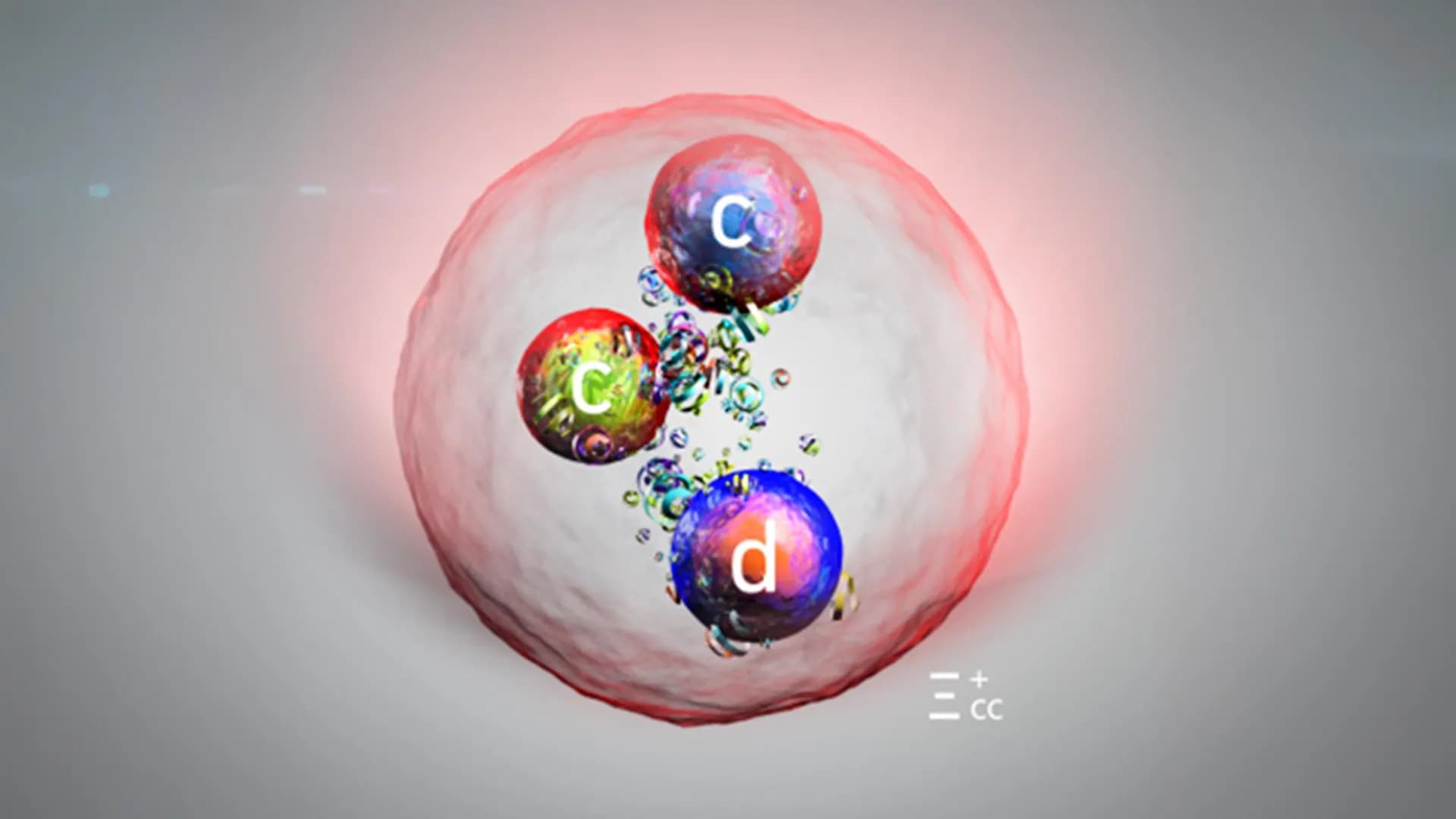
GlipzoIn a groundbreaking achievement, scientists from The University of Manchester have unveiled a previously unidentified subatomic particle at the Large Hadron Collider (LHC) in Geneva, Switzerland. This newfound particle, known as the Ξcc⁺ (Xi-cc-plus), represents a heavy cousin of the proton, comprising two charm quarks and one down quark. This discovery not only sheds light on the complexities of particle physics but also marks a significant milestone in the ongoing research at the LHC.
The discovery is particularly noteworthy as it comes from the upgraded LHCb detector, a project that involved over 1,000 researchers from 20 countries. The United Kingdom, with Manchester at the forefront, played a pivotal role in this international collaboration, contributing more resources than any other nation involved.
The Ξcc⁺ particle belongs to the same family as the proton, which was first identified by Ernest Rutherford and his team in Manchester between 1917 and 1919. While the proton is composed of two up quarks and one down quark, the Ξcc⁺ substitutes the up quarks with heavier charm quarks, adding an exciting dimension to our understanding of particle composition.
This recent discovery is a continuation of a rich legacy of particle physics research at The University of Manchester, dating back to the 1950s when researchers there first identified a member of the Ξ (Xi) particle family. This foundational work laid the groundwork for today’s advancements in particle physics.
Professor Chris Parkes, the head of the Department of Physics and Astronomy at The University of Manchester, spearheaded the international collaboration for the installation and early operation of the upgraded LHCb detector. His leadership has been instrumental over the past decade, guiding the project from its initial approval to its successful execution.
The Manchester LHCb team was responsible for designing and constructing vital components of the upgraded tracking system, including sophisticated silicon pixel detector modules created in the University’s Schuster Building. These modules are crucial for tracking particle decays and identifying significant signals, such as the Ξcc⁺.
> Professor Parkes remarked, "Rutherford's gold-foil experiment in a Manchester basement transformed our understanding of matter, and today's discovery builds on that legacy using state-of-the-art technology at CERN. Both milestones demonstrate just how far curiosity-driven research can take us. This discovery showcases the extraordinary capability of the upgraded LHCb detector and the strength of UK and Manchester contributions to the experiment."
The upgraded detector operates similarly to a high-speed camera, capturing particle collisions at an astounding rate. Dr. Stefano De Capua, who led the production of the silicon detector modules, explained that the detector acts as a 'camera' that images particles produced at the LHC, taking photographs 40 million times per second. This advanced technology utilizes a custom-designed silicon chip, which is also applicable in medical imaging.
The identification of the Ξcc⁺ particle came from observing its decay into three lighter particles: Λc⁺, K⁻, and π⁺. These decay events were recorded during proton-proton collisions at the LHC in 2024, marking the first full-capacity run of the upgraded LHCb experiment.
Researchers recorded approximately 915 decay events that yielded a mass of 3619.97 MeV/c², aligning closely with theoretical predictions based on a previously discovered related particle, the Ξcc⁺⁺.
For over 20 years, the scientific community has been engaged in a contentious debate regarding earlier claims of the Ξcc⁺’s existence, which had never been verified. The latest findings from the LHCb provide clarity, establishing a mass that diverges from the previous claims yet aligns with theoretical expectations derived from its partner particle.
As the scientific community looks to the future, The University of Manchester is poised to continue its leadership role in the next phase of the LHC program, known as LHCb Upgrade 2. This upgrade promises to harness the power of the High-Luminosity LHC accelerator to collect additional data and delve deeper into the realm of rare particles.
The details surrounding the Ξcc⁺ discovery will be presented at the Rencontres de Moriond Electroweak conference, showcasing the collaborative efforts and advancements that are reshaping our understanding of the universe.
As we look ahead, the scientific community will be watching closely for further findings from the upgraded LHC and the promising investigations into other rare particles.

Discover how the brain protein Menin could be the key to halting cognitive decline with new research that uncovers its vital role in aging.
Indian Express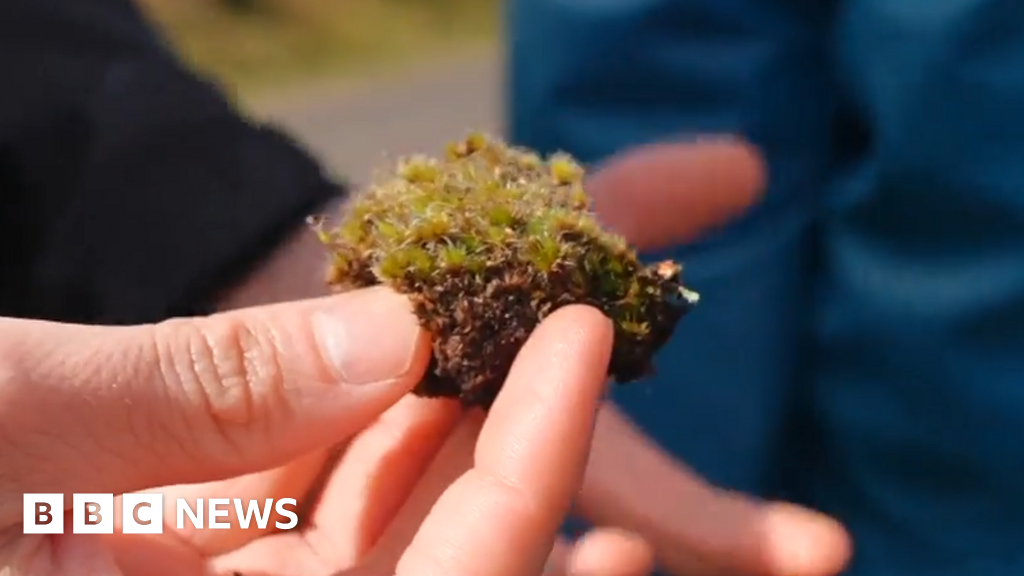
A new 'killer fungus' discovered in the UK targets invasive heath-star moss, offering hope for restoring native habitats. Will it turn the tide against invasives?
BBC Science
A Blue Origin rocket exploded during a test in Florida, prompting investigations. All personnel are safe. What does this mean for the future of space travel?
BBC Business