
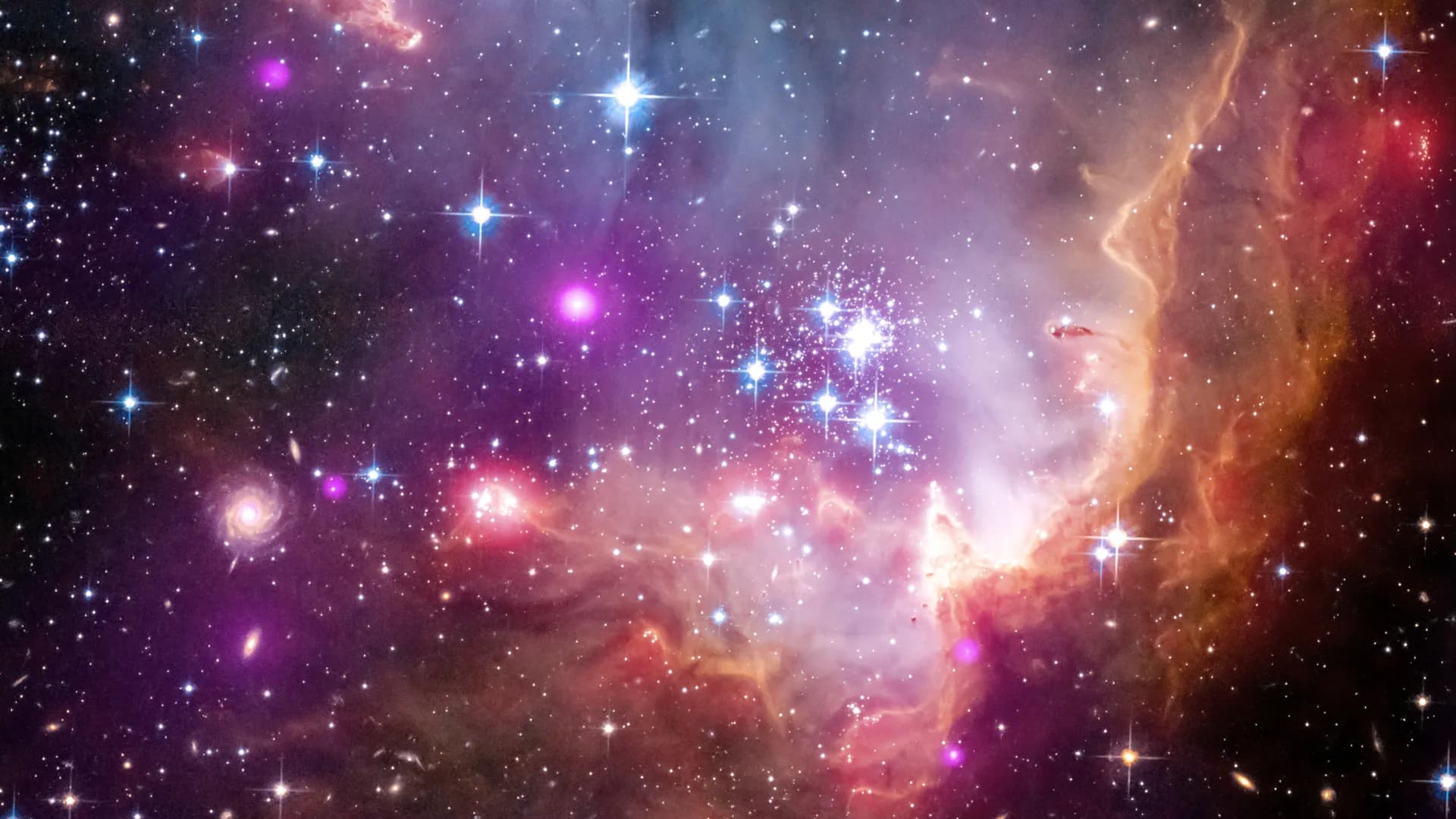
Image: Science Daily
Discover how a cosmic collision reshaped the Small Magellanic Cloud, revealing crucial insights into galaxy formation and evolution. Click to learn more!
GlipzoAstronomers have made a groundbreaking discovery regarding the Small Magellanic Cloud (SMC), a galaxy that is among the closest companions of the Milky Way. This compact, gas-rich galaxy is visible to the naked eye from the southern hemisphere and has intrigued scientists for decades. The SMC orbits alongside its larger sibling, the Large Magellanic Cloud (LMC), and the Milky Way, engaging in complex gravitational interactions that have been ongoing for millions of years. Despite extensive studies mapping its stars and gas, the SMC has harbored one significant mystery: the stars within it do not follow the orderly orbits typically expected in galaxies.
Recent research published in The Astrophysical Journal provides a compelling explanation for this anomaly. A team from the University of Arizona has concluded that the SMC’s chaotic stellar motion is the result of a catastrophic collision with the LMC that occurred several hundred million years ago. This finding is critical as it questions the SMC's longstanding role as a standard example in the study of galaxy formation and evolution.
Himansh Rathore, a graduate student at Steward Observatory and the lead author of the study, remarked, "We are witnessing a galaxy transforming in real-time. The SMC offers us a unique, front-row perspective on a pivotal process in galactic evolution."
The SMC is notably gas-rich, containing more mass in gas than in stars. Under typical circumstances, this gas cools and forms a rotating disk due to gravitational forces, much like the formation of our solar system. However, previous observations from the Hubble Space Telescope and the European Space Agency's Gaia satellite indicated that the stars in the SMC were not adhering to this expected rotational pattern.
Rathore explained that the collision with the LMC disrupted the SMC's structure. As the SMC passed through the LMC’s disk, the intense gravitational forces caused a scattering of its stars, leading to disorganized stellar motion. Additionally, the dense gas in the LMC applied pressure on the SMC’s gas, stripping away its rotation. “Imagine sprinkling water droplets on your hand and moving it through the air. The rushing air blows the droplets off. A similar phenomenon happened to the SMC's gas during the collision,” Rathore illustrated.
The recent study also clarifies a long-standing discrepancy regarding the SMC's gas motion. For years, astronomers believed that the gas within the SMC was rotating, which led to the expectation that the stars formed from this gas would exhibit a similar motion. However, this was not the case.
The new analysis indicates that the apparent rotation was an illusion created by the collision. As the SMC was stretched during the cosmic crash, gas moving toward and away from Earth could appear to be rotating when viewed from specific angles. This insight not only resolves a decades-old mystery but also alters how researchers interpret the dynamics of the SMC.
The implications of these findings are substantial. The SMC has historically been an essential benchmark for understanding star formation and galaxy evolution. The collision has fundamentally altered its characteristics, making it a unique outlier in the galaxy classification.
“The SMC experienced a catastrophic event that injected tremendous energy into its system. It is not a typical galaxy by any measure,” noted co-author Besla. The research team employed sophisticated computer simulations that mirrored the observable characteristics of both the SMC and LMC, including their gas contents and stellar masses. This allowed them to develop new methods for interpreting the disordered stellar motions resulting from the collision.
The findings surrounding the SMC highlight the dynamic and often violent nature of galaxy interactions. Understanding these processes is crucial for astronomers as they seek to comprehend the evolution of galaxies across the cosmos. The research encourages a reevaluation of how galaxies are classified, particularly those that have undergone significant disturbances.
As astronomers continue to explore the SMC and its interactions, several questions remain. How will these findings influence our understanding of other nearby galaxies? What new models will emerge to account for the effects of such collisions on galactic structures?
The SMC's unique situation offers a rare window into the transformative processes that govern galaxy evolution. Continued research may yield further insights not only about the SMC but also about the broader mechanisms at play in galaxy formation and interaction throughout the universe. The journey of discovery is far from over, and the implications of these findings are sure to resonate across the field of astrophysics for years to come.
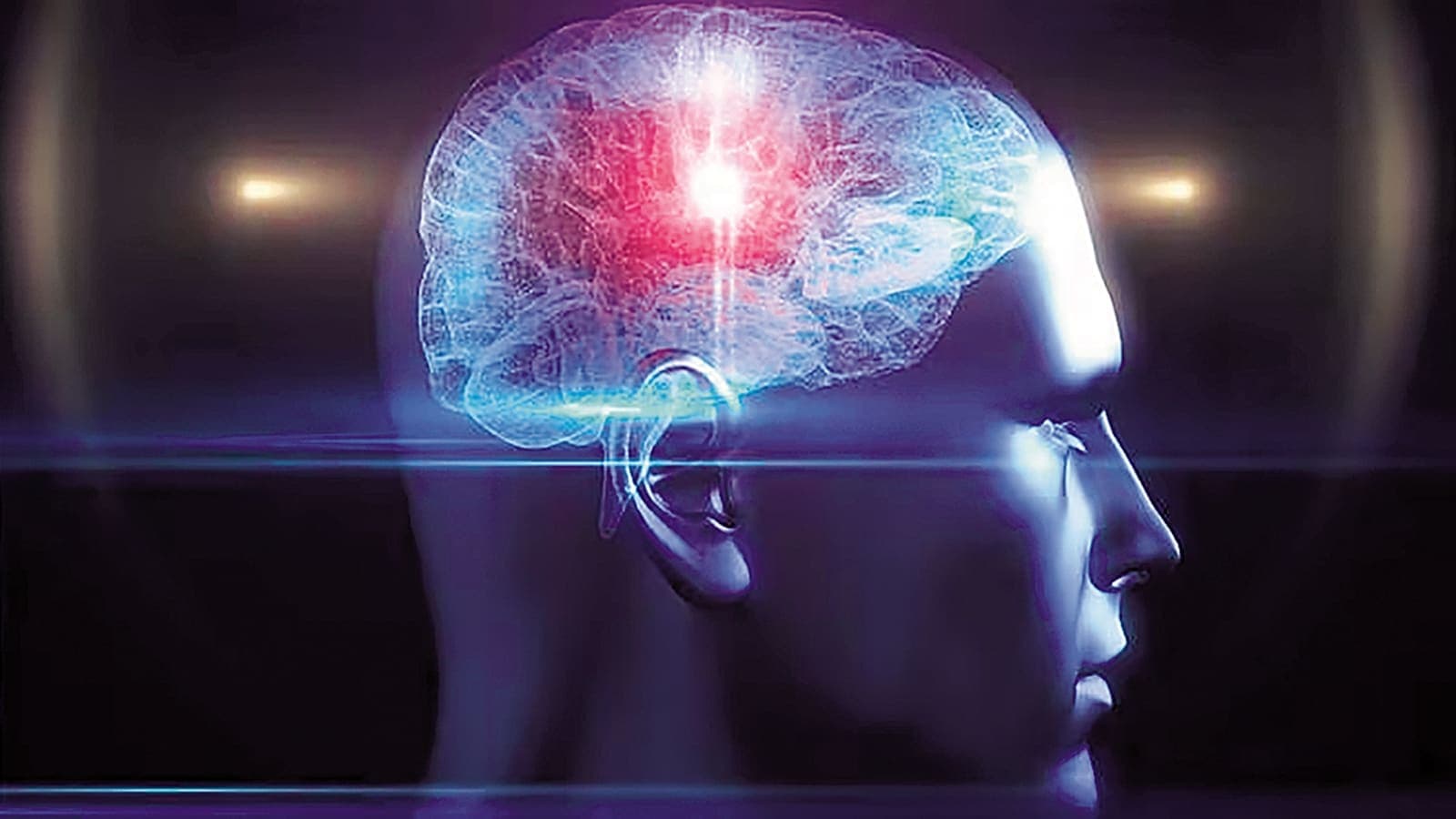
Discover how the brain protein Menin could be the key to halting cognitive decline with new research that uncovers its vital role in aging.
Indian Express
A new 'killer fungus' discovered in the UK targets invasive heath-star moss, offering hope for restoring native habitats. Will it turn the tide against invasives?
BBC Science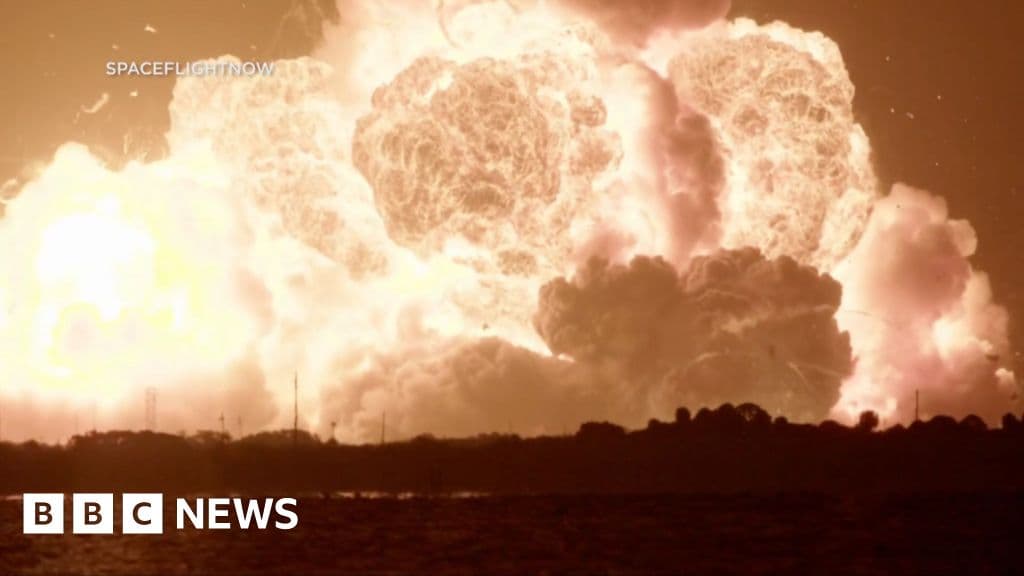
A Blue Origin rocket exploded during a test in Florida, prompting investigations. All personnel are safe. What does this mean for the future of space travel?
BBC Business