
Image: The Hindu
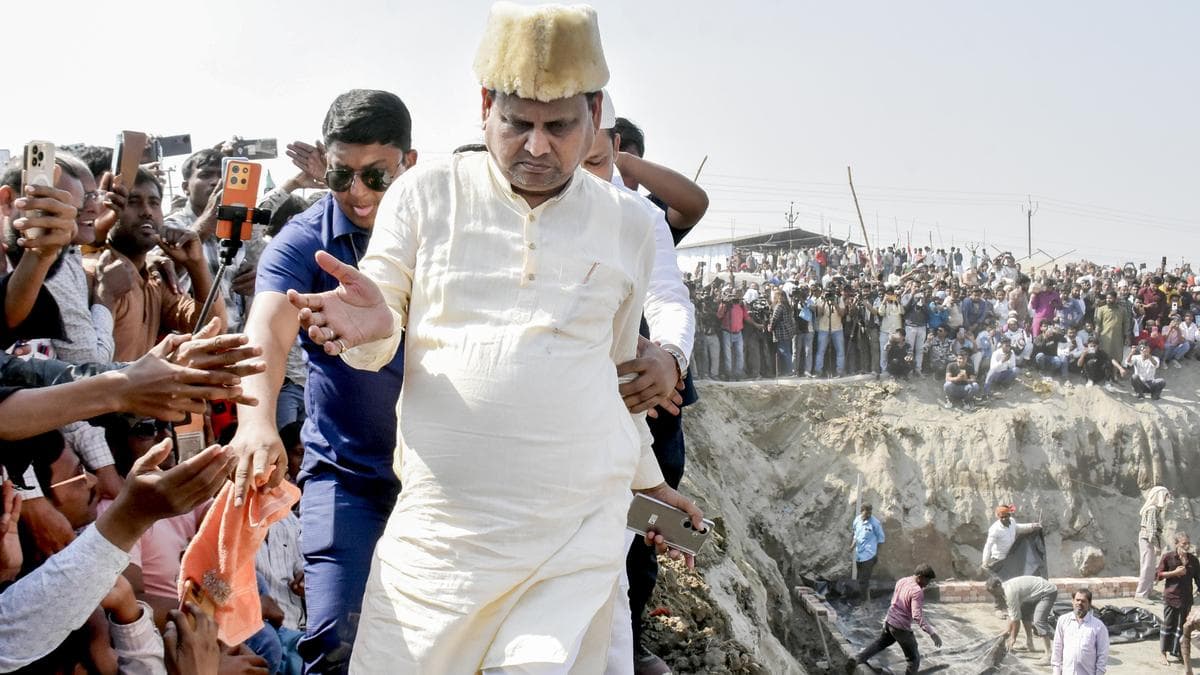
Humayun Kabir announces his party will contest 182 seats in West Bengal, including a Muslim candidate against Mamata Banerjee. What’s next?
GlipzoOn March 18, 2026, former Trinamool Congress (TMC) leader Humayun Kabir unveiled the initial list of candidates for his newly established political party, the Aam Janata Unnayan Party. At a press conference in Kolkata, Kabir announced that his party will contest 182 seats in the upcoming West Bengal Assembly election. Notably, he confirmed the party's intention to challenge the reigning Chief Minister Mamata Banerjee by fielding a Muslim candidate in the high-stakes Bhabanipur constituency.
Kabir, who was expelled from the TMC in 2025, has attracted attention for his controversial plans to erect a mosque inspired by the Babri Masjid in Murshidabad district. This initiative has sparked intense political debate throughout the state, positioning Kabir as a significant player in West Bengal's evolving political landscape.
> "We are presenting candidates for 182 seats. Today we announce nominees for Malda and Murshidabad, with the complete candidate list to follow this Sunday around 1 p.m.,” Kabir stated during the press briefing. He also hinted at a collaboration with the All India Majlis-e-Ittehadul Muslimeen (AIMIM), suggesting that they might contest several seats alongside his party.
In what is shaping up to be one of the most fiercely contested seats in the electoral race, Kabir's party will nominate Poonam Begum, a non-Bengali Muslim, to run against Mamata Banerjee in Bhabanipur. Political analysts anticipate that this contest will not only be about securing a seat but will symbolize the broader confrontation between the TMC and the BJP.
Banerjee is expected to face off against BJP leader Suvendu Adhikari, reviving the rivalry that marked the 2021 Assembly election. This upcoming election is critical, as the political dynamics in West Bengal have become increasingly intricate, with multiple parties vying for influence.
Political commentators suggest Kabir's strategy to field a Muslim candidate in Bhabanipur may be aimed at weakening the TMC's hold over minority voters, even if only slightly. This move reflects a growing trend where smaller parties seek to capitalize on perceived weaknesses in established party strongholds.
Humayun Kabir will run for election in two constituencies within Murshidabad district: Rejinagar and Naoda. This marks a shift from his previous political base in Bharatpur, where he won as a TMC candidate. His decision to contest from two neighboring areas has raised eyebrows and ignited speculation regarding his electoral strategy.
Political analysts note that his choice follows a similar tactic employed by Suvendu Adhikari, who is contesting from both Nandigram and Bhabanipur. Many are questioning whether Kabir aims to consolidate his local influence or is merely preparing for unpredictable electoral outcomes.
Among the 15 candidates announced, several notable names include: - Bapan Ghosh from Purbasthali Uttar in Purba Bardhaman - Yasin Haidar, former son-in-law of Kolkata Mayor Firhad Hakim, from Kandi - Syed Ahmed Kabir from Beldanga - Royal Islam from Ratua, Abdul Minaz Sheikh from Maltipur, and others from Malda district.
Kabir's party is attempting to position itself as a viable alternative, especially in regions with significant Muslim populations like Murshidabad and Malda. However, experts caution that the party's electoral success hinges on its ability to disrupt the traditional voting patterns that have favored the TMC.
In the backdrop of Kabir's announcement, major political entities, including the TMC, BJP, and the Left, have also unveiled their candidate lists. This escalation sets the stage for a complex electoral battle marked by shifting alliances and local contests.
Given the influx of smaller parties and new political formations, analysts expect this election to be characterized by intricate local dynamics and evolving voter sentiments. The presence of multiple candidates vying for the same voter base could lead to unpredictable results and a reconfiguration of power in West Bengal.
The emergence of Humayun Kabir's Aam Janata Unnayan Party signifies a potential shift in West Bengal's political arena, particularly concerning minority representation. As the election approaches, all eyes will be on whether Kabir can indeed fracture the TMC's stronghold on minority voters and what implications this might have for the balance of power in the state.
As we move closer to the election date, observers should keep a close watch on: - Candidate performance in key constituencies. - Voter turnout and engagement levels, especially among minority communities. - The potential collaboration between Kabir's party and AIMIM, and its effect on the electoral landscape.
The upcoming elections are set to be a defining moment for West Bengal, and it will be crucial to see how the dynamics unfold in the face of emerging political narratives and newly formed alliances.

Tensions soar as the US and Iran engage in air strikes near the Strait of Hormuz, raising concerns over global oil supply and regional stability.
BBC World
Trump's international interventions face serious stalemates. What will this mean for U.S. foreign policy? Explore the critical challenges ahead.
Indian Express
Tehran denies resignation of President Masoud Pezeshkian amid claims of IRGC influence. What does this mean for Iran's political stability? Click to learn more!
Indian Express