
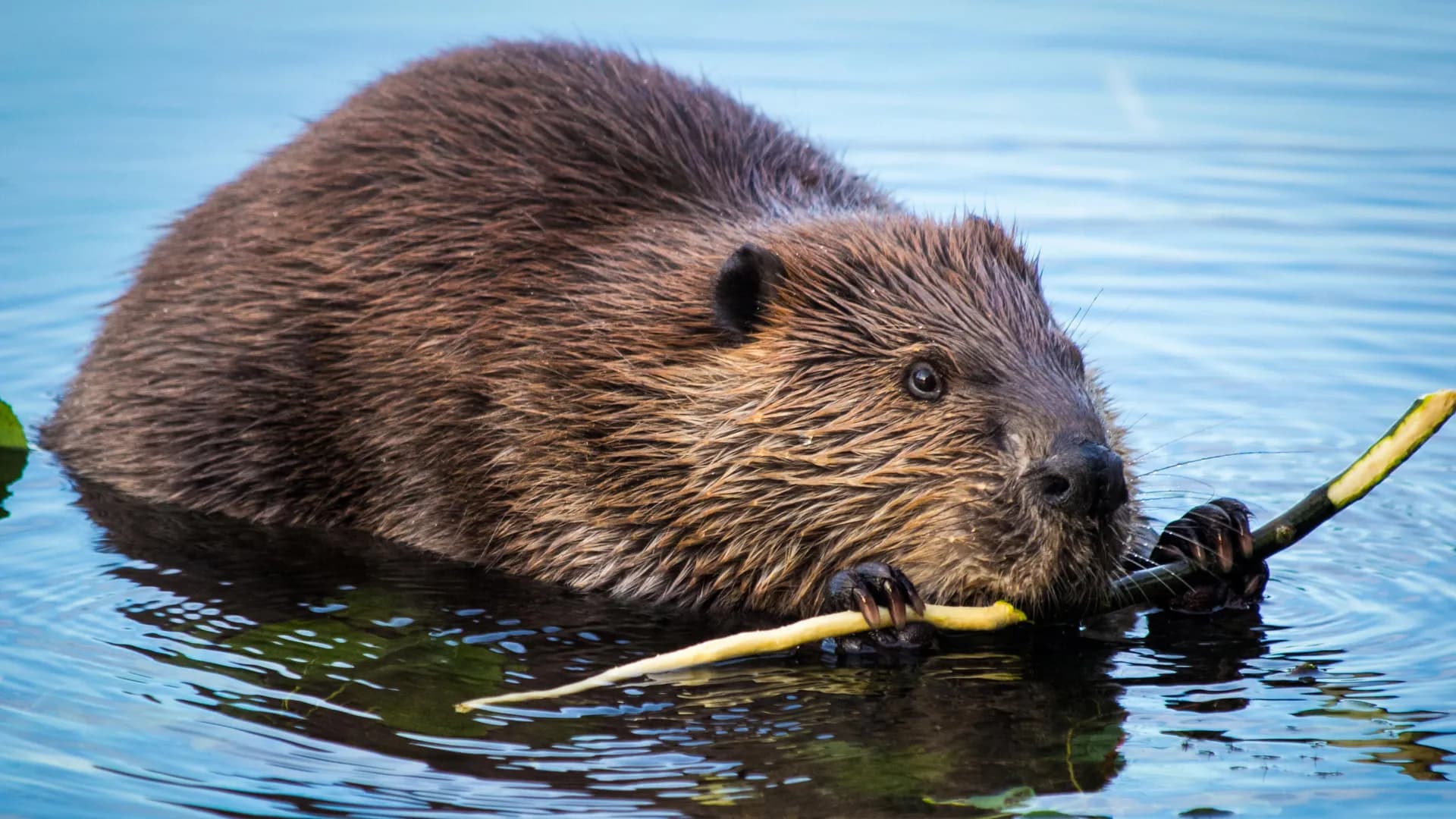
Image: Science Daily
Discover how beavers are transforming rivers into carbon sinks in a groundbreaking study, revealing their crucial role in combating climate change.
GlipzoIn a groundbreaking study published in Communications Earth & Environment, researchers from the University of Birmingham have unveiled the surprising impact beavers have on climate change. These industrious mammals are not just shaping landscapes; they are also turning rivers into effective carbon dioxide sinks. This research, which involved collaboration with Wageningen University, the University of Bern, and other international partners, was conducted in a stream corridor located in northern Switzerland, where beaver populations have thrived for over a decade.
The findings present a startling revelation: wetlands influenced by beavers can store carbon at rates up to ten times higher than similar areas devoid of beaver activity. Over a span of 13 years, the study site accumulated approximately 1,194 tonnes of carbon, translating to an impressive 10.1 tonnes of CO2 per hectare annually.
Dr. Joshua Larsen, the lead senior author from the University of Birmingham, stated, "Our findings show that beavers don't just change landscapes: they fundamentally shift how CO2 moves through them. By slowing water, trapping sediments, and expanding wetlands, they turn streams into powerful carbon sinks. This first-of-its-kind study represents an important opportunity and breakthrough for future nature-based climate solutions across Europe."
Beavers are making a significant comeback across Europe, thanks to extensive conservation efforts, and their return is reshaping our understanding of carbon movement in these ecosystems. Their dam-building activities create wetlands, redirect groundwater, and capture essential materials, including carbon dioxide.
As beavers flood adjacent lands, they drastically alter the natural flow of rivers and their capacity for carbon storage. This transformation suggests that fostering beaver populations in suitable wetland areas could yield substantial climate benefits by enhancing the amount of carbon captured and stored while minimizing its release back into the atmosphere.
To uncover the full extent of beavers’ impact on carbon dynamics, researchers employed a multi-faceted approach, integrating hydrological measurements, chemical testing, sediment analysis, greenhouse gas monitoring, and long-term modeling. This comprehensive methodology allowed scientists to construct the most thorough carbon budget to date for a beaver-influenced landscape in Europe.
The study highlighted that while CO2 emissions can rise during certain periods, especially in warmer months when water levels decline, the overall accumulation of sediments, plant matter, and deadwood results in a net positive for carbon storage. Notably, methane emissions, which often raise concerns in wetland ecosystems, were found to be minimal, constituting less than 0.1% of the total carbon budget.
Dr. Lukas Hallberg, the corresponding author of the study, remarked, "Within just over a decade, the system we studied had already transformed into a long-term carbon sink, far exceeding what we would expect from an unmanaged stream corridor. This highlights the enormous potential of beaver-led restorations and offers valuable insights into potential land-use planning, rewilding strategies, and climate policy."
As beaver-created wetlands mature, carbon becomes increasingly trapped within the ecosystem. Sediments accumulate and deadwood builds up, resulting in enhanced carbon retention. Researchers discovered that these sediments contained up to 14 times more inorganic carbon and eight times more organic carbon compared to adjacent forest soils, underscoring the vital role beavers play in carbon management.
The implications of this research extend beyond the immediate environmental benefits. With climate change posing a significant threat to ecosystems worldwide, the findings suggest that promoting beaver populations could be a strategic component of climate action plans. By restoring beaver habitats, we may not only combat climate change but also foster biodiversity, improve water quality, and enhance overall ecosystem resilience.
As the evidence mounts regarding the positive environmental impact of beavers, it raises critical questions about land management practices and conservation strategies. The study underscores the importance of integrating beavers into climate policies and recognizing their role in enhancing carbon storage capabilities.
Looking ahead, we should watch for developments in rewilding initiatives that incorporate beaver populations, as well as potential shifts in land-use planning that prioritize natural solutions for carbon sequestration. Policymakers and environmentalists alike must consider how fostering these ecosystems can contribute to broader climate goals.
In summary, beavers are not just cute and industrious; they are essential allies in the fight against climate change. As we continue to explore the intricacies of their role in carbon dynamics, one thing is clear: nurturing beaver populations represents a promising avenue for sustainable environmental management and climate adaptation.

Discover how the brain protein Menin could be the key to halting cognitive decline with new research that uncovers its vital role in aging.
Indian Express
A new 'killer fungus' discovered in the UK targets invasive heath-star moss, offering hope for restoring native habitats. Will it turn the tide against invasives?
BBC Science
A Blue Origin rocket exploded during a test in Florida, prompting investigations. All personnel are safe. What does this mean for the future of space travel?
BBC Business