
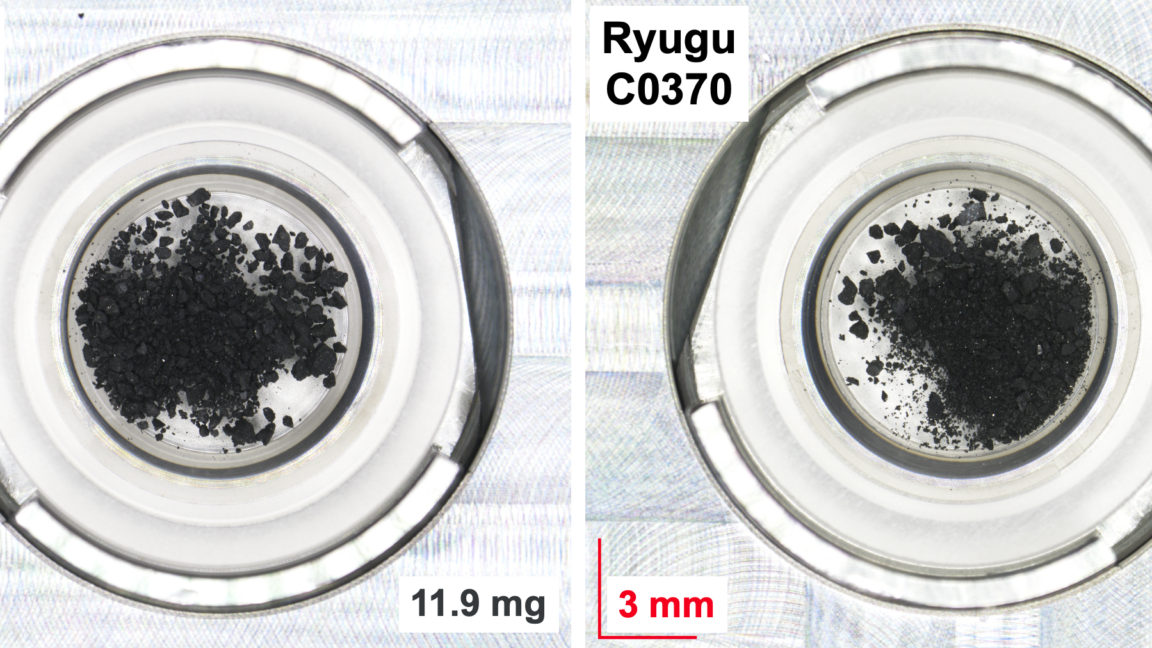
Image: Ars Technica
Asteroids continue to reveal DNA's building blocks, sparking curiosity about life's origins. What does this mean for our understanding of life beyond Earth?
GlipzoA recent study has reignited excitement in the scientific community by confirming the presence of all four bases of DNA on an asteroid. This discovery isn’t entirely new, as similar findings have emerged over the past decade. However, the latest research sheds light on a mystery that has puzzled scientists: why these bases were previously undetected on the asteroid Ryugu, despite their discovery in other asteroids.
The study, published on Monday, highlights a significant leap in our understanding of how the essential building blocks of life might have been delivered to Earth. This revelation has profound implications for astrobiology and our quest to understand the origins of life on our planet. By exploring the conditions in which these nucleic acid bases formed, researchers are piecing together the puzzle of life’s beginnings.
To grasp the importance of this discovery, it’s essential to understand what nucleic acids are. DNA (deoxyribonucleic acid) and RNA (ribonucleic acid) are fundamental molecules that carry genetic information in all known forms of life. Both share a similar composition, consisting of a backbone made up of sugars and phosphates, but differ in the specific sugars and their lengths.
The unique identities of these nucleic acids come from their bases: - In DNA: Adenine (A), Thymine (T), Cytosine (C), and Guanine (G) - In RNA: Adenine (A), Uracil (U), Cytosine (C), and Guanine (G)
These bases are crucial as they determine the genetic code and influence the biochemical processes that sustain life. Researchers hypothesize that before life emerged, the sequence of bases on RNA molecules dictated the types of chemical reactions they could catalyze, playing a vital role in the evolution of life.
The latest research builds on previous findings dating back to 2011, when scientists first identified nucleic acid bases in meteorites—fragments of asteroids that survived their fiery descent through Earth’s atmosphere. Since then, similar discoveries have been made across various asteroid samples, fueling the scientific community's interest in astrobiology.
Despite these promising results, questions linger about the origins of these compounds. The possibility that these bases could have formed through chemical reactions induced by the heat of atmospheric entry or contamination from Earth raised concerns. However, the OSIRIS-REx mission, which returned samples from the asteroid Bennu, confirmed the presence of these bases directly from space, lending credibility to the hypothesis of their extraterrestrial origins.
Interestingly, the Hayabusa2 mission, which explored Ryugu, initially reported that not all expected bases were found. This discrepancy has led to a renewed focus on understanding the nature of Ryugu’s materials. The latest study employs more robust testing methods that utilize larger sample sizes and increased sensitivity to detect these elusive components.
Upon further analysis, researchers successfully identified all five nucleic acid bases, confirming that Ryugu contains vital precursors necessary for the formation of DNA and RNA. This addition to the list of asteroids housing these critical compounds underscores the broader cosmic context of life's building blocks.
Beyond merely confirming the presence of nucleic acid bases, the new research delves into the chemical structures of these compounds. Nucleic acid bases are classified into two categories based on their structures: - Purines: Two-ringed structures such as Adenine and Guanine - Pyrimidines: Single-ringed structures like Cytosine and Thymine (or Uracil in RNA)
Researchers conducted a comparative analysis of the concentrations of purines and pyrimidines across various asteroids. This correlation could provide insights into the conditions that led to the formation of these bases, enhancing our understanding of the prebiotic chemistry that may have occurred in the early solar system.
This research is more than just a scientific curiosity; it has far-reaching implications for our understanding of life’s origins. The presence of nucleic acid bases in asteroids supports the theory that essential components for life may be widespread in the universe.
The findings raise important questions: Did these bases contribute to the emergence of life on Earth? Are asteroids like Ryugu and Bennu common carriers of life's building blocks? Understanding these questions could reshape our perspective on the potential for life beyond Earth.
As scientists continue to analyze samples from asteroids and other celestial bodies, the quest to unravel the mysteries of life’s origins is far from over. The next steps include: - Continuing to study returned samples from ongoing missions like Hayabusa2 and OSIRIS-REx. - Investigating other celestial bodies for similar or different compounds. - Conducting laboratory experiments to replicate and understand the conditions under which nucleic acids form.
These efforts will not only illuminate the past but could also help us understand the potential for life on other planets. As we uncover more about the building blocks of life in our solar system, the prospect of finding extraterrestrial life becomes increasingly plausible.
In conclusion, the discovery of DNA bases in asteroids like Ryugu is a pivotal step in understanding how the raw materials for life may have traveled through space to reach Earth. Future research will likely reveal even more exciting insights into the cosmic origins of life, further bridging the gap between chemistry and biology.

Discover how the brain protein Menin could be the key to halting cognitive decline with new research that uncovers its vital role in aging.
Indian Express
A new 'killer fungus' discovered in the UK targets invasive heath-star moss, offering hope for restoring native habitats. Will it turn the tide against invasives?
BBC Science
A Blue Origin rocket exploded during a test in Florida, prompting investigations. All personnel are safe. What does this mean for the future of space travel?
BBC Business