Glipzo
WorldTechnologyBusinessSportsEntertainmentScienceHealthPolitics
Glipzo
WorldTechnologyBusinessSportsEntertainmentScienceHealthPolitics
  1. Home
  2. /
  3. Science
  4. /
  5. Artemis II Crew Captures Stunning Earth Images from Space
Artemis II Crew Captures Stunning Earth Images from Space

Image: BBC World

Science
Saturday, April 4, 20264 min read

Artemis II Crew Captures Stunning Earth Images from Space

NASA's Artemis II crew shares stunning images of Earth from space. Discover the significance of this mission and what lies ahead for lunar exploration.

Glipzo News Desk|Source: BBC World
Share
Glipzo

Key Highlights

  • NASA's Artemis II captures stunning Earth images from space.
  • Commander Reid Wiseman shares breathtaking photos of our planet.
  • The mission marks the first human journey beyond Earth's orbit since 1972.
  • Images showcase Earth's beauty in stark contrast to the Moon.
  • Artemis II sets the stage for future lunar exploration adventures.

In this article

  • NASA's Groundbreaking Artemis II Mission NASA has made headlines with the release of breathtaking high-resolution images captured by the crew of the **Artemis II mission**. As the astronauts embark on their historic journey around the Moon, these stunning visuals showcase our planet from a perspective few have ever experienced. The images were taken after the crew completed a crucial engine burn that set them on a path toward Earth's celestial neighbor, the Moon.
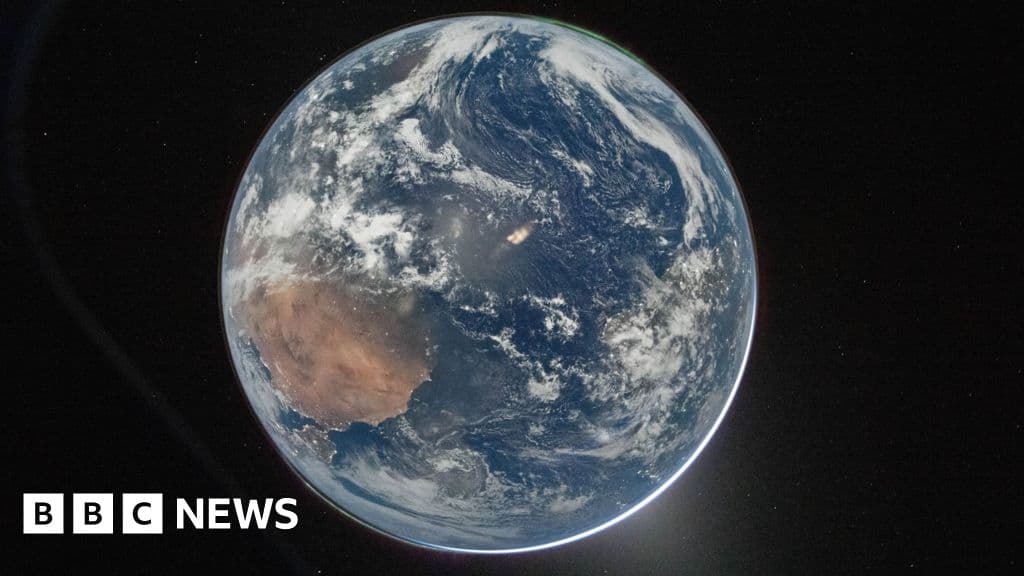
  • A Unique Perspective on Our Planet In the **Hello, World** photograph, Earth appears upside down to viewers, revealing the western Sahara and the Iberian Peninsula on the left side, while the eastern portion of South America is visible on the right. Notably, NASA identified the bright planet positioned at the bottom right of the image as **Venus**. The images were taken shortly after the crew successfully executed a **trans-lunar injection burn** in the early hours of Friday, marking a significant milestone in their journey.
  • The Excitement of Space Photography As they traveled through space, the crew was captivated by the view, with mission specialist **Jeremy Hansen** reporting that they were “**glued to the windows**,” eagerly snapping photographs. He described the awe-inspiring view of the Earth's dark side illuminated by the Moon, expressing the sheer excitement of seeing our home planet from such a unique vantage point.
  • Night and Day from Outer Space Another striking image taken by Wiseman showcased the Earth divided by the **terminator** line, which represents the boundary between day and night. This view highlighted the stark contrast between the brightly lit portions of the planet and the areas enveloped in darkness. NASA later released a photo of Earth almost entirely shrouded in darkness, revealing the electric lights of cities around the world twinkling like stars.
  • Why It Matters The significance of the Artemis II mission extends beyond stunning imagery. It represents a renewed commitment to exploring beyond our planet and reigniting human curiosity about space. As we witness the incredible advancements in technology and exploration capabilities, the mission symbolizes hope for future initiatives aimed at understanding our universe.
  • What’s Next for Artemis II? As the Artemis II mission continues, the crew is expected to pass around the far side of the Moon on **April 6**, with a planned return to Earth on **April 10**. This journey will not only mark a significant achievement in human spaceflight but will also pave the way for future missions aimed at lunar exploration and beyond.

NASA's Groundbreaking Artemis II Mission NASA has made headlines with the release of breathtaking high-resolution images captured by the crew of the **Artemis II mission**. As the astronauts embark on their historic journey around the Moon, these stunning visuals showcase our planet from a perspective few have ever experienced. The images were taken after the crew completed a crucial engine burn that set them on a path toward Earth's celestial neighbor, the Moon.

The commander of the mission, Reid Wiseman, played a pivotal role in capturing these mesmerizing photographs. One particular image, aptly named Hello, World, highlights the vast Atlantic Ocean, framed by a delicate glow of Earth's atmosphere. This image depicts the blue planet as it eclipses the Sun, with green auroras visible at both poles, creating a surreal and captivating view.

A Unique Perspective on Our Planet In the **Hello, World** photograph, Earth appears upside down to viewers, revealing the western Sahara and the Iberian Peninsula on the left side, while the eastern portion of South America is visible on the right. Notably, NASA identified the bright planet positioned at the bottom right of the image as **Venus**. The images were taken shortly after the crew successfully executed a **trans-lunar injection burn** in the early hours of Friday, marking a significant milestone in their journey.

This burn propelled the Orion spacecraft beyond Earth's orbit, allowing the four astronauts to embark on a journey of over 200,000 miles to the Moon. As part of their mission, Artemis II will follow a looping trajectory that takes the crew around the far side of the Moon and back, marking the first time humans have ventured beyond Earth's orbit since 1972.

The Excitement of Space Photography As they traveled through space, the crew was captivated by the view, with mission specialist **Jeremy Hansen** reporting that they were “**glued to the windows**,” eagerly snapping photographs. He described the awe-inspiring view of the Earth's dark side illuminated by the Moon, expressing the sheer excitement of seeing our home planet from such a unique vantage point.

Wiseman humorously reached out to mission control seeking advice on cleaning the spacecraft's windows, acknowledging that the astronauts' enthusiasm for capturing images had left them dirty. Initially, he faced challenges in photographing Earth due to exposure settings, comparing the experience to trying to capture a picture of the Moon from his backyard. However, as their journey progressed, these technical difficulties faded, allowing for remarkable images.

Night and Day from Outer Space Another striking image taken by Wiseman showcased the Earth divided by the **terminator** line, which represents the boundary between day and night. This view highlighted the stark contrast between the brightly lit portions of the planet and the areas enveloped in darkness. NASA later released a photo of Earth almost entirely shrouded in darkness, revealing the electric lights of cities around the world twinkling like stars.

In a fascinating comparison, NASA also published a side-by-side image juxtaposing Wiseman's view of Earth in 2026 with a similar photograph captured by the Apollo 17 team in 1972. This comparison served as a powerful reminder of how far humanity has come in the last 54 years, while also celebrating the beauty of Earth from space.

Why It Matters The significance of the Artemis II mission extends beyond stunning imagery. It represents a renewed commitment to exploring beyond our planet and reigniting human curiosity about space. As we witness the incredible advancements in technology and exploration capabilities, the mission symbolizes hope for future initiatives aimed at understanding our universe.

The images captured by Wiseman and the crew not only showcase Earth’s beauty but also inspire future generations to look toward the stars. They remind us of our shared home and the importance of preserving it for future exploration.

What’s Next for Artemis II? As the Artemis II mission continues, the crew is expected to pass around the far side of the Moon on **April 6**, with a planned return to Earth on **April 10**. This journey will not only mark a significant achievement in human spaceflight but will also pave the way for future missions aimed at lunar exploration and beyond.

As we look forward to the upcoming phases of the Artemis program, the excitement surrounding these space endeavors is palpable. With every image and milestone, we are reminded of the beauty of our planet and the vast possibilities that lie beyond it. The Artemis II mission is just the beginning, and the world eagerly awaits what comes next as humanity continues its quest to explore the cosmos.

Did you find this article useful? Share it!

Share

Related Articles

Critical Consultation for Golden Eagle Reintroduction in England
Science
Apr 14, 2026

Critical Consultation for Golden Eagle Reintroduction in England

Discover the critical consultation for the golden eagle reintroduction in northern England, aiming to restore this majestic species by 2027.

BBC Science
Transforming Coastal Ecosystems with Floating Wetlands
Science
Apr 14, 2026

Transforming Coastal Ecosystems with Floating Wetlands

Discover how floating wetlands aim to restore vital coastal ecosystems in the UK, offering a sustainable solution to environmental degradation.

BBC Science
Surrey's Blue Tit Leads Birdwatch Amid National Decline
Science
Apr 14, 2026

Surrey's Blue Tit Leads Birdwatch Amid National Decline

Discover why Surrey's blue tit is the top bird in a new survey while national trends show alarming declines in other species. Find out what this means.

BBC Science

Categories

  • World
  • Technology
  • Business
  • Sports

More

  • Entertainment
  • Science
  • Health
  • Politics

Explore

  • Web Stories
  • About Us
  • Contact

Legal

  • Privacy Policy
  • Terms of Service

© 2026 Glipzo. All rights reserved.