
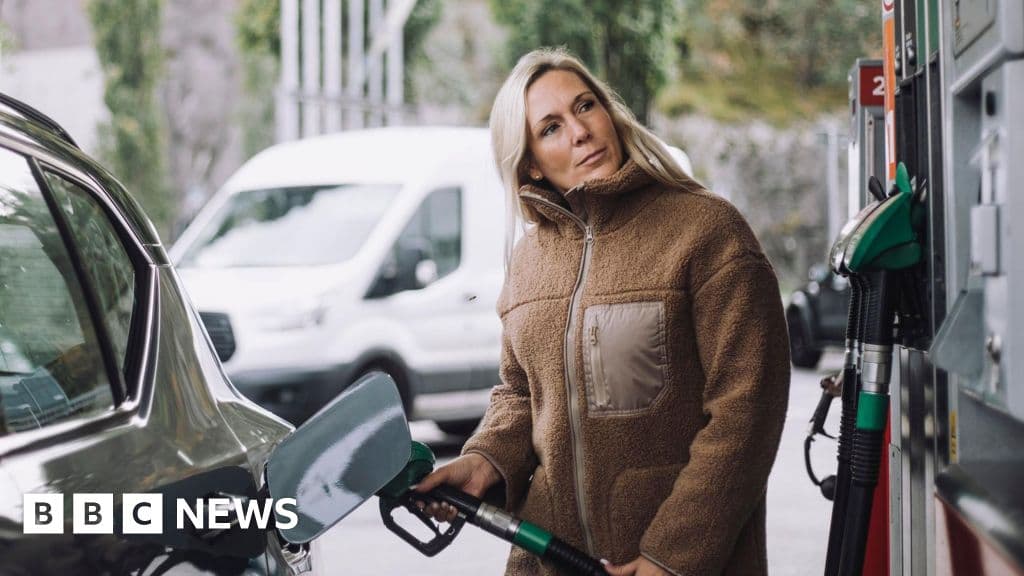
Image: BBC Business
Curious about whether UK fuel prices will fall? Discover insights on the impact of the US-Israel conflict on petrol and diesel costs.
GlipzoMotorists across the United Kingdom are grappling with rising fuel prices, a direct consequence of the escalating conflict involving the US-Israel war with Iran. Since the onset of hostilities on February 28, wholesale oil and gas prices have surged due to disruptions in energy production and transportation throughout the Middle East. Missile strikes and drone attacks have caused significant slowdowns and, in some cases, a complete halt to these essential services.
On April 7, following a temporary ceasefire announced by former US President Donald Trump, oil and gas prices saw a reduction, yet they remain considerably elevated compared to pre-conflict levels. The fluctuation of these prices directly affects the cost of petrol and diesel in the UK, making it increasingly expensive for drivers to fill their tanks.
As crude oil serves as a crucial component in the production of petrol and diesel, any increase in wholesale oil prices inevitably translates to higher costs at the pump. Analysts have indicated that for every $10 (£7.53) hike in oil prices, motorists can expect an increase of approximately 7p per litre at filling stations. Since the conflict erupted, the price of Brent crude, which is the global benchmark for oil pricing, has fluctuated dramatically, soaring from around $73 (£55) to over $110.
For families, this volatility means a significant increase in fuel expenses. Currently, filling up an average family car with petrol costs roughly £13 more than it did before the conflict began, while a full tank of diesel is about £26 pricier. As of April 8, data from the RAC indicated the average price of petrol at 157.71p per litre and diesel at 190.62p, both of which represent slight increases from the previous day.
Despite the recent increases, fuel prices are still lower than the peaks reached during the summer of 2022, which saw petrol prices soar to 191.5p and diesel to 199p per litre following Russia's invasion of Ukraine. After Trump's ceasefire announcement, oil prices briefly dipped below $100, but the slow nature of oil transportation means that any price changes in wholesale markets take time to reflect at consumer pumps. This lag complicates the situation for drivers hoping for immediate relief.
While some fuel retailers have faced allegations of price gouging amid the conflict, regulatory bodies are currently investigating these claims. As the situation unfolds, the focus remains on the Strait of Hormuz, a critical maritime passageway through which about 20% of the world’s oil and liquefied natural gas is transported. The Strait has effectively been shut down due to the ongoing conflict, heightening concerns over potential supply shortages.
Iran has tentatively agreed to reopen the Strait of Hormuz as part of the ceasefire, yet it seeks to maintain control over the area permanently, a demand that the US strongly opposes. The ceasefire arrangement appears to permit oil tankers to pass freely through the Strait; however, the details remain ambiguous, with some reports indicating the implementation of transit fees ranging from $1 to $2 million per tanker.
This uncertainty contributes to the likelihood that oil prices will remain above pre-war benchmarks. Furthermore, damage to oil and gas facilities across the Gulf has severely impacted refining capabilities, which could further strain supply chains and keep prices elevated.
According to the RAC, drivers should not anticipate immediate reductions in fuel prices. However, there is hope that the rate of price increases may stabilize. A new government initiative allows motorists to easily compare fuel prices at different stations across the UK, which could help consumers find more competitive rates.
As of April 8, the lowest petrol price in the UK was recorded at a Co-Op in Halesworth, priced at 149.9p per litre, while the cheapest diesel was found at Telscombe Service Station in Peacehaven at 168.9p. Conversely, the most expensive petrol is available at Thorn House Filling Station in Cumbria for 199.9p, and diesel at RaceTrack Crowwood Gulf near Glasgow at 209.9p.
The UK predominantly relies on oil and gas imports, with the majority sourced from the US and Norway. Although there is some oil extraction in the North Sea, most of this is exported for refining elsewhere. The fluctuations in global oil prices directly dictate what the UK pays for its fuel.
In March, the CEO of Shell voiced concerns about a potential fuel shortage in Europe as a result of the ongoing closure of the Strait of Hormuz. This warning aligns with recommendations from the International Energy Agency (IEA), which suggested various measures to curb energy consumption, including promoting remote work and carpooling.
As oil constitutes 35% of the UK's total energy supply, according to the Department for Energy Security and Net Zero, the country is mandated to hold 90 days’ worth of net oil imports. Currently, the UK exceeds this requirement, which should provide some buffer against immediate shortages.
As the situation in the Middle East continues to evolve, UK motorists should brace for continued fluctuations in fuel prices. The interplay between geopolitical tensions, supply chain disruptions, and regulatory responses will play a crucial role in determining the future of fuel costs. While immediate relief may not be on the horizon, monitoring developments in the Strait of Hormuz and broader geopolitical events will be essential for understanding the trajectory of fuel prices in the UK.
In the coming weeks, keep an eye out for updates on the ceasefire's stability and its implications for oil transport, as well as any regulatory changes that may affect pricing strategies among UK fuel retailers. The landscape of fuel pricing is complex and continuously changing, making it critical for consumers to stay informed as they navigate these challenging times.
Commercial LPG prices have risen again, with increases of ₹42 in Delhi and ₹53.50 in Kolkata impacting businesses and consumers alike. Find out more.
Indian Express
Discover how a tragic coal mine explosion in Shanxi, China, reveals ongoing safety concerns in the industry amidst a push for green energy.
BBC Business
Montek Singh Ahluwalia highlights key economic challenges for India, emphasizing the need for a strategic approach to balance payments and investment.
Indian Express