
Image: BBC Business
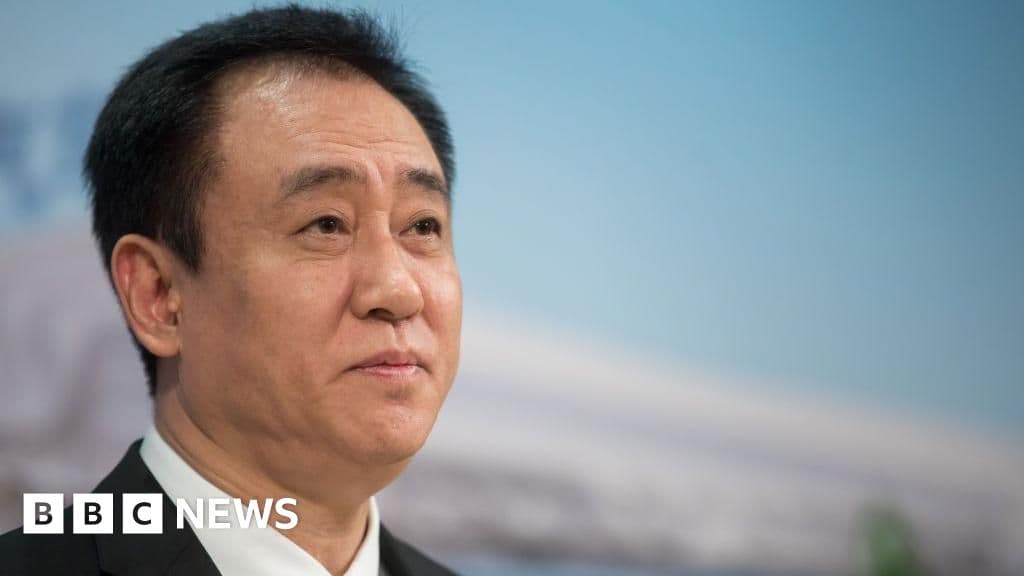
Evergrande founder Hui Ka Yan pleads guilty to fraud amid the company's collapse, impacting China's property sector. What does this mean for the future?
GlipzoIn a significant legal development, Hui Ka Yan, the founder of the beleaguered Chinese real estate titan Evergrande, has admitted guilt to multiple charges, including embezzlement and corporate bribery. This pivotal moment unfolded during a court hearing held in Shenzhen on April 13 and 14, as reported by Chinese state media.
Hui's expression of remorse adds a personal dimension to a case that has broader implications for both investors and the entire property sector in China. The court is expected to announce its verdict in the near future, leaving many to speculate about the repercussions of this ruling.
Once hailed as the largest real estate developer in China, Evergrande had a market valuation exceeding $50 billion before its dramatic decline. The company succumbed to a debt crisis in 2021, a collapse that sent shockwaves throughout the property market and left both investors and domestic banks grappling with the fallout.
The court proceedings revealed alarming practices within the company. Evergrande allegedly misappropriated millions of dollars in pre-sale funding from potential homebuyers, diverting these funds to other projects instead of using them for their intended purposes—construction. This led to hundreds of incomplete properties across the nation, raising concerns about consumer trust and confidence in the real estate market.
Born in rural China and raised by his grandmother, Hui, also known as Xu Jiayin, started his career in property development, ultimately founding Evergrande in 1996. His journey from humble beginnings to becoming Asia's wealthiest individual in 2017, with a net worth estimated at $42.5 billion, reflects the rapid economic growth fueled by heavy borrowing.
Evergrande's business empire extended beyond real estate, venturing into electric vehicles, food and beverages, and even acquiring a majority stake in Guangzhou FC, which rose to prominence as China's leading football team. However, the company’s aggressive expansion was largely financed through staggering debts, culminating in a whopping $300 billion in liabilities.
The downfall of Evergrande is often linked to regulatory changes imposed by the Chinese government. In 2020, Beijing introduced new rules aimed at curbing excessive borrowing in the property sector. Consequently, Evergrande was compelled to sell properties at steep discounts to maintain liquidity, further destabilizing the company and the market at large.
By 2024, Hui faced severe penalties, including a $6.5 million fine and a lifetime ban from China's capital markets due to Evergrande's misrepresentation of its financial health, overstating its revenue by an astonishing $78 billion. These actions have drawn significant scrutiny and raised questions about corporate governance in China’s rapidly evolving economic landscape.
Hui's guilty plea is not just a personal downfall but a critical moment for the entire Chinese property sector. Evergrande's collapse is often viewed as a catalyst for a broader slump in the market, which has continued to struggle since 2021. With around 1,300 projects across 280 cities, the company’s failure has contributed to a climate of uncertainty affecting developers, investors, and homebuyers alike.
As Evergrande’s stock market valuation plummeted by 99%, the company's shares were delisted from the Hong Kong exchange in August 2025, marking the end of an era for what was once a market leader. This significant decline serves as a cautionary tale for other real estate developers in China, highlighting the dangers of excessive leverage and mismanagement.
As we await the court's verdict, the implications of Hui's guilty plea extend beyond personal accountability. The decision will likely send ripples through the real estate industry, influencing investor sentiment and regulatory frameworks.
Key questions loom regarding the future of Evergrande's unfinished projects and the potential for recovery in China's property market. With the government’s policies evolving, stakeholders will be keenly observing how regulatory measures might reshape the landscape for property developers moving forward.
In conclusion, Hui Ka Yan's admission of guilt marks a crucial juncture in the ongoing saga of Evergrande. As the legal repercussions unfold, the broader consequences for China's economy and property sector remain to be seen. Stakeholders will be closely monitoring developments, seeking to understand how this pivotal moment will affect the future of real estate in China.

Commercial LPG prices have risen again, with increases of ₹42 in Delhi and ₹53.50 in Kolkata impacting businesses and consumers alike. Find out more.
Indian Express
Discover how a tragic coal mine explosion in Shanxi, China, reveals ongoing safety concerns in the industry amidst a push for green energy.
BBC Business
Montek Singh Ahluwalia highlights key economic challenges for India, emphasizing the need for a strategic approach to balance payments and investment.
Indian Express