
Image: BBC Business
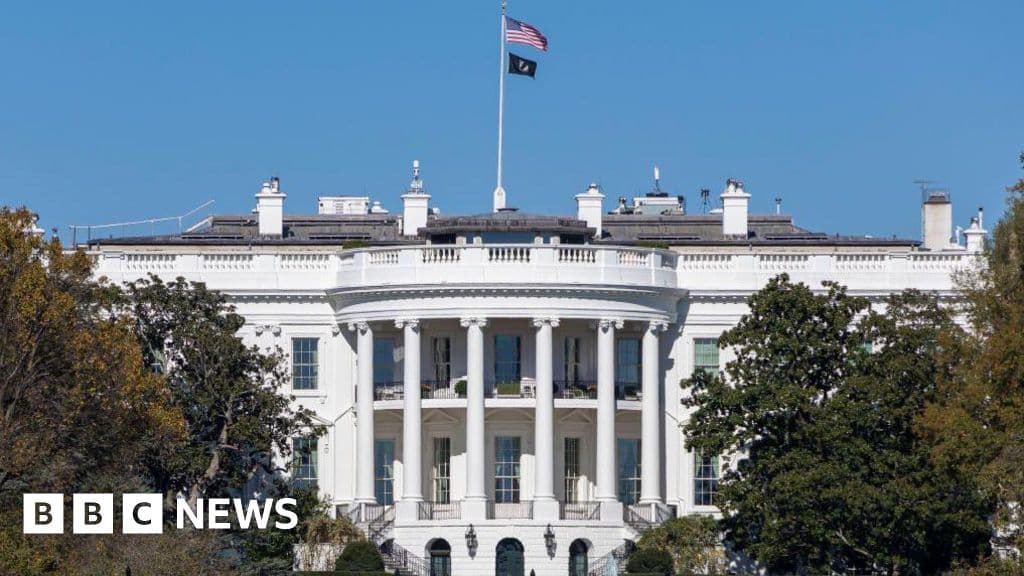
The White House warns staff against insider betting on prediction markets, highlighting ethical concerns in government and financial integrity.
GlipzoIn a surprising move, White House staff were alerted last month about the dangers of using insider information for betting in prediction markets. The cautionary email was dispatched on March 24, just one day after President Donald Trump announced a temporary halt to potential military actions against Iranian energy infrastructures. This directive raises serious ethical questions regarding the use of non-public information by government officials in financial ventures.
The warning came in response to media reports suggesting that some government employees might exploit confidential knowledge to place bets on platforms like Kalshi or Polymarket. Davis Ingle, a spokesperson for the White House, emphasized to the BBC that any insinuation of unethical behavior by administration officials is unfounded and misleading. Ingle stated, "The only special interest that will ever guide President Trump is the best interest of the American people."
The Wall Street Journal was the first to bring attention to the email, which underscores the growing concern over the intersection of betting markets and governmental ethics. Ingle reiterated that all federal employees must adhere to strict ethical guidelines, which explicitly prohibit the use of insider information for personal financial gain.
The BBC has reached out to both Kalshi and Polymarket for their reactions to this developing situation, but as of now, no comments have been provided. Polymarket itself faced scrutiny earlier this year when a massive wager of nearly $500,000 was placed on the capture of Venezuelan President Nicolás Maduro, shortly before the official announcement of his capture. The identity of the gambler remains unknown, raising questions about whether they had access to privileged information regarding the U.S. military's operations.
Prediction markets have gained significant traction over the past year, with trading volumes surpassing $44 billion (£33 billion). These platforms allow users to bet on a variety of outcomes, ranging from sports events to key economic decisions, such as whether the U.S. Federal Reserve will adjust interest rates or the outcomes of local elections.
However, the expansion of these markets has sparked a heated debate regarding their regulation, especially concerning bets placed on military conflicts and national security issues. The potential for unethical behavior has prompted U.S. Congressman Ritchie Torres, a Democrat on the House Financial Services Committee, to advocate for an investigation into what he describes as “suspicious” trading activities. Torres has formally requested that the Commodity Futures Trading Commission (CFTC) scrutinize these transactions.
In March, a group of Democratic leaders introduced legislation aimed at outright banning prediction market betting related to military actions and warfare. Senator Andy Kim of New Jersey voiced his alarm, stating, "Corruption and exploitation are thriving right now within the gaps and loopholes of prediction markets. This manipulation leaves the select few winning big, at the expense of working Americans."
The call for tighter regulations reflects widespread concern that the existing framework for prediction markets is inadequate to prevent misuse. The CFTC, responsible for overseeing derivatives trading which includes prediction markets, faces mounting pressure to address these ethical dilemmas.
The implications of this situation extend beyond the confines of financial markets and touch on the core issues of ethics in governance. The warning issued to White House staff highlights the importance of maintaining integrity within the political sphere, especially as prediction markets become increasingly intertwined with current events and national security issues.
As this situation continues to unfold, observers should keep an eye on the development of legislation aimed at regulating prediction markets. The CFTC's response to Congressman Torres's request will be pivotal in shaping the future of these platforms. Additionally, further scrutiny from both the media and the public could prompt broader discussions about ethical standards in government and the implications of insider knowledge in financial markets.
In conclusion, the ethical landscape surrounding prediction markets is evolving, and the intersection of politics and finance will remain a critical area of focus in the months to come. Stakeholders must prioritize transparency and accountability to foster trust in both prediction markets and government actions.

Tensions soar as the US and Iran engage in air strikes near the Strait of Hormuz, raising concerns over global oil supply and regional stability.
BBC World
Trump's international interventions face serious stalemates. What will this mean for U.S. foreign policy? Explore the critical challenges ahead.
Indian Express
Tehran denies resignation of President Masoud Pezeshkian amid claims of IRGC influence. What does this mean for Iran's political stability? Click to learn more!
Indian Express