
Image: BBC World
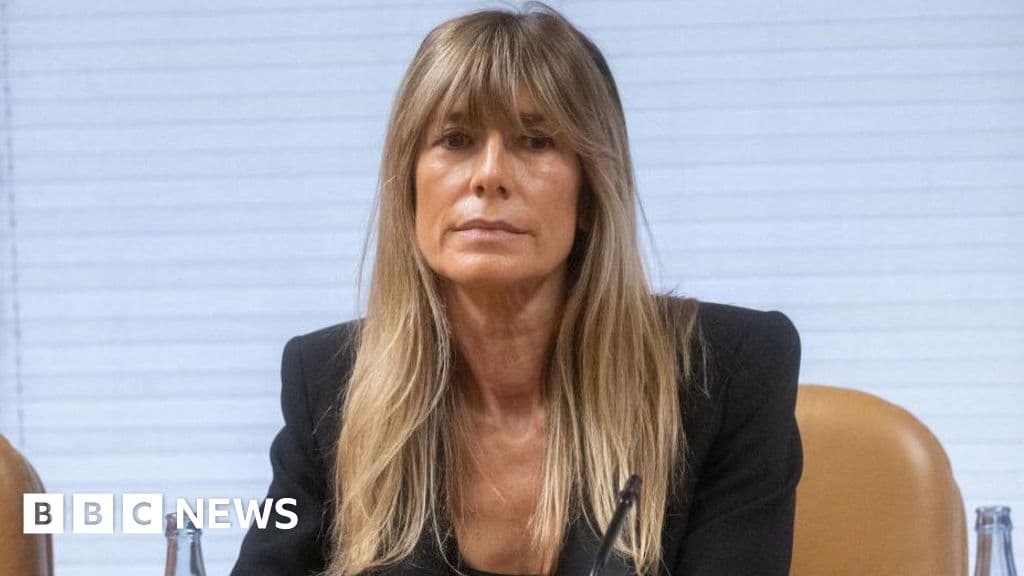
Spanish PM Pedro Sánchez's wife, Begoña Gómez, faces serious corruption charges after a two-year investigation, raising questions about political ethics.
GlipzoIn a surprising turn of events, Begoña Gómez, the wife of Spanish Prime Minister Pedro Sánchez, has been formally charged with corruption following a two-year investigation. This ruling, made public by a court, unveils a serious legal battle ahead for Gómez, raising questions about the intersection of personal and political integrity in Spain.
The investigation, which commenced in April 2024 under Judge Juan Carlos Peinado, aims to scrutinize whether Gómez misused her position as the prime minister's spouse to further her own career. Central to the allegations is her tenure at Madrid's Complutense University, where she directed a master's program in business studies without possessing the requisite qualifications.
Gómez faces multiple charges, including embezzlement, influence peddling, corruption in business dealings, and misappropriation of funds. According to the court ruling, the implications of these charges could lead to a significant trial, contingent on the court's decisions in the coming months.
The accusations suggest that Gómez leveraged her relationship with Sánchez to secure her university position, thereby using public resources to bolster her private interests. This raises critical ethical questions about the accountability of public figures and their families.
In response to the charges, Begoña Gómez has categorically denied any wrongdoing. Meanwhile, Pedro Sánchez has characterized the allegations as politically motivated attacks orchestrated by right-wing factions aiming to destabilize his coalition government. He has described the ongoing scrutiny as a “strategy of harassment”, alleging that the opposition is attempting to tarnish his reputation and that of his family.
Sánchez's government has faced criticism and challenges from various political groups since coming to power, but this incident marks a notable escalation in the political tensions within Spain. The prime minister, during the onset of the investigation, temporarily suspended his public duties to consider his position amidst what he referred to as “the mud” being thrown at him.
The allegations against Gómez were initially brought forth by Manos Limpias (Clean Hands), an anti-corruption organization led by Miguel Bernad, who has ties to the far-right. This organization has a history of filing lawsuits against politicians, many of which have been dismissed, raising questions about the motivations behind their current actions.
The investigation's focus on Gómez highlights the increased scrutiny that public officials and their families are under in a politically charged atmosphere. As the case unfolds, it serves as a reminder of the delicate balance between personal life and public duty, especially for those in high office.
In a related context, the Sánchez administration is grappling with additional controversies. David Sánchez, the prime minister's brother, has been indicted in a separate case concerning alleged influence peddling linked to his employment by a regional government. Furthermore, José Luis Ábalos, the former transport minister, is currently on trial for allegedly receiving kickbacks related to the procurement of Personal Protective Equipment during the Covid pandemic.
These developments indicate a turbulent period for Sánchez's government, with multiple family members and former officials facing serious legal challenges. As the situation evolves, the implications for the future of the Sánchez administration are profound, potentially impacting public trust and governance.
The unfolding charges against Begoña Gómez not only pose a personal crisis for the Sánchez family but also present a significant test for Spain's political landscape. The intersection of personal and professional lives of public figures is under the microscope, and the outcomes of these investigations could have lasting ramifications for political accountability in Spain.
As the case progresses, observers will be keenly watching how it affects the stability of Sánchez's coalition government and whether it will prompt broader discussions on ethics in politics. The political fallout from these events may influence public sentiment and voter behavior in upcoming elections, making it essential for both the government and opposition to navigate this sensitive issue with caution.
As Begoña Gómez prepares for a potential trial, the next few months will be critical for both her and Pedro Sánchez. Should the courts decide to move forward with the trial, it could ignite a political firestorm, affecting not just their personal lives but also the broader public perception of governance in Spain. A key question remains: will these allegations lead to a shift in the political tides, or will Sánchez weather the storm and maintain his position?
In the meantime, observers will be watching closely, not just for the developments in this particular case but also for the potential ripple effects across the Spanish political landscape. The implications of this investigation could redefine political accountability in Spain and set a precedent for future cases involving public officials and their families.

Tensions soar as the US and Iran engage in air strikes near the Strait of Hormuz, raising concerns over global oil supply and regional stability.
BBC World
Trump's international interventions face serious stalemates. What will this mean for U.S. foreign policy? Explore the critical challenges ahead.
Indian Express
Tehran denies resignation of President Masoud Pezeshkian amid claims of IRGC influence. What does this mean for Iran's political stability? Click to learn more!
Indian Express